QUESTION IMAGE
Question
document f
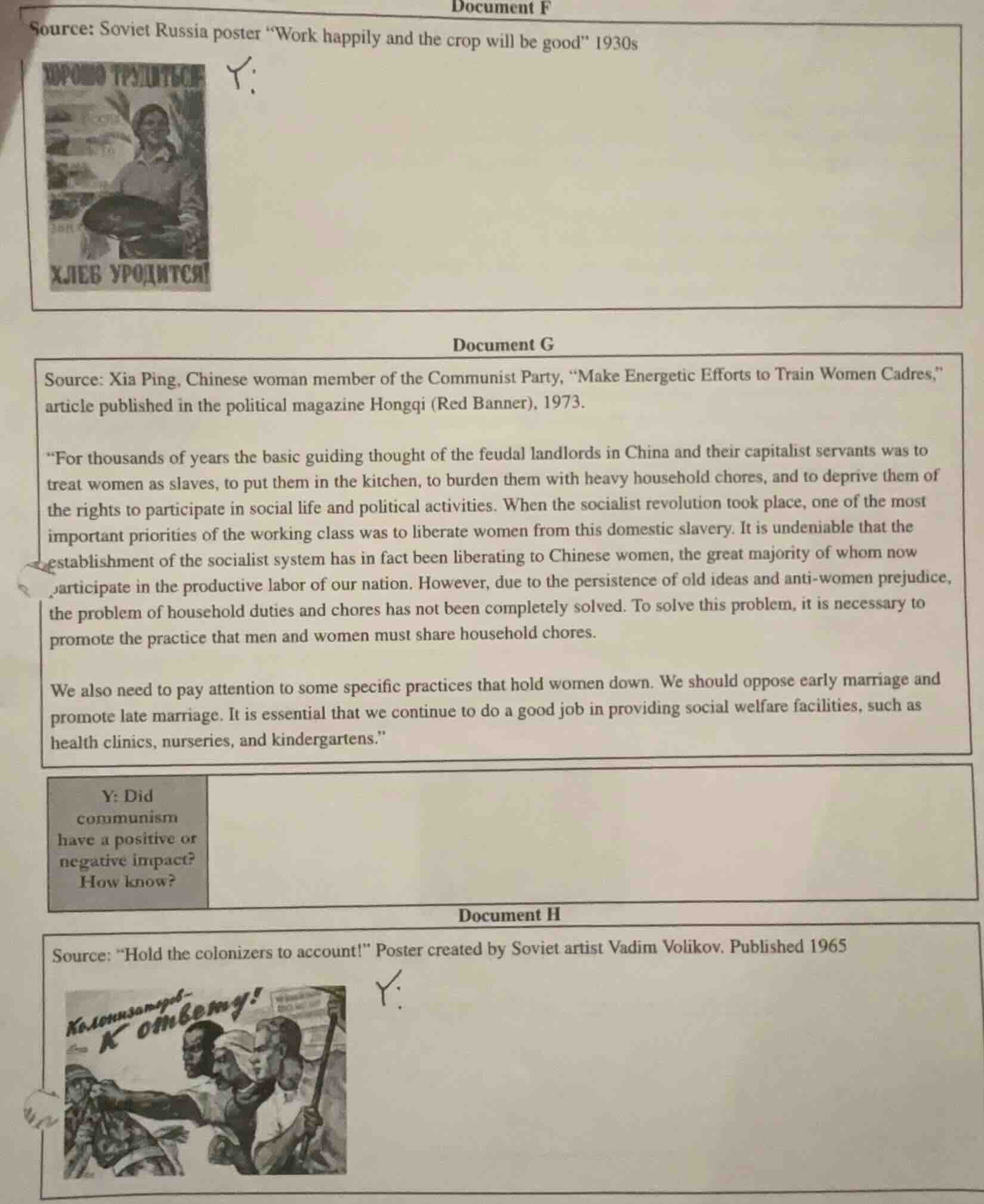
source: soviet russia poster \work happily and the crop will be good\ 1930s
document g
source: xia ping, chinese woman member of the communist party, \make energetic efforts to train women cadres,\ article published in the political magazine hongqi (red banner), 1973.
\for thousands of years the basic guiding thought of the feudal landlords in china and their capitalist servants was to treat women as slaves, to put them in the kitchen, to burden them with heavy household chores, and to deprive them of the rights to participate in social life and political activities. when the socialist revolution took place, one of the most important priorities of the working class was to liberate women from this domestic slavery. it is undeniable that the establishment of the socialist system has in fact been liberating to chinese women, the great majority of whom now participate in the productive labor of our nation. however, due to the persistence of old ideas and anti - women prejudice, the problem of household duties and chores has not been completely solved. to solve this problem, it is necessary to promote the practice that men and women must share household chores.
we also need to pay attention to some specific practices that hold women down. we should oppose early marriage and promote late marriage. it is essential that we continue to do a good job in providing social welfare facilities, such as health clinics, nurseries, and kindergartens.\
y: did
communism
have a positive or
negative impact?
how know?
document h
source: \hold the colonizers to account!\ poster created by soviet artist vadim volikov. published 1965
To determine the impact of communism, we analyze the documents:
- Document F (Soviet poster, 1930s): Promotes agricultural labor (e.g., “Work happily and the crop will be good”), suggesting communism encouraged productivity and collective effort.
- Document G (Chinese article, 1973): Highlights how socialism liberated women from “domestic slavery,” enabled their participation in labor, and addressed gender equality (e.g., shared chores, social welfare).
- Document H (Soviet poster, 1965): Opposes colonialism, showing communism’s role in anti - imperialist solidarity.
These sources indicate communism had positive impacts: empowering women, fostering economic productivity, and supporting anti - colonial struggles.

Snap & solve any problem in the app
Get step-by-step solutions on Sovi AI
Photo-based solutions with guided steps
Explore more problems and detailed explanations
Communism had a positive impact. We know this from:
- Document F: It encouraged agricultural productivity through collective labor (e.g., the poster promotes working for good crops).
- Document G: It liberated Chinese women from domestic oppression, enabled their participation in national labor, and addressed gender - related issues (e.g., shared chores, social welfare for women).
- Document H: It showed communist support for anti - colonial movements (e.g., the poster calls to hold colonizers accountable).