QUESTION IMAGE
Question
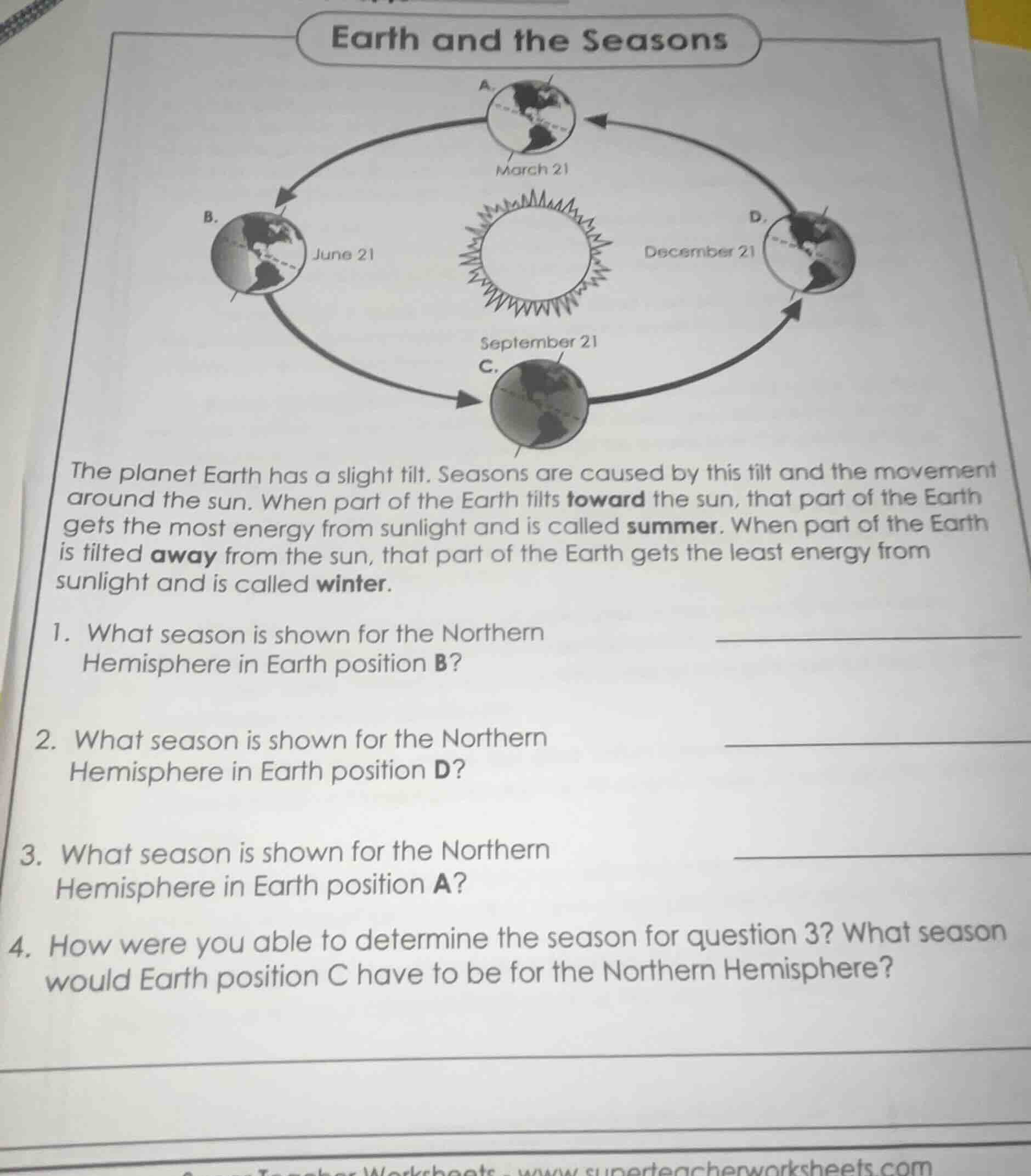
earth and the seasons
the planet earth has a slight tilt. seasons are caused by this tilt and the movement around the sun. when part of the earth tilts toward the sun, that part of the earth gets the most energy from sunlight and is called summer. when part of the earth is tilted away from the sun, that part of the earth gets the least energy from sunlight and is called winter.
- what season is shown for the northern hemisphere in earth position b?
- what season is shown for the northern hemisphere in earth position d?
- what season is shown for the northern hemisphere in earth position a?
- how were you able to determine the season for question 3? what season would earth position c have to be for the northern hemisphere?
Question 1
Position B is on June 21. The Northern Hemisphere tilts toward the sun on June 21, so it gets maximum sunlight energy, which corresponds to summer.
Position D is on December 21. The Northern Hemisphere tilts away from the sun on December 21, so it gets minimum sunlight energy, which corresponds to winter.
Position A is on March 21. March 21 is the vernal equinox, when day and night are approximately equal, and the Northern Hemisphere transitions into spring (or has spring at this time as it's the start of spring in the Northern Hemisphere's seasonal cycle, with the tilt neither fully toward nor away, and equal sunlight distribution leading to spring).

Snap & solve any problem in the app
Get step-by-step solutions on Sovi AI
Photo-based solutions with guided steps
Explore more problems and detailed explanations
Summer