QUESTION IMAGE
Question
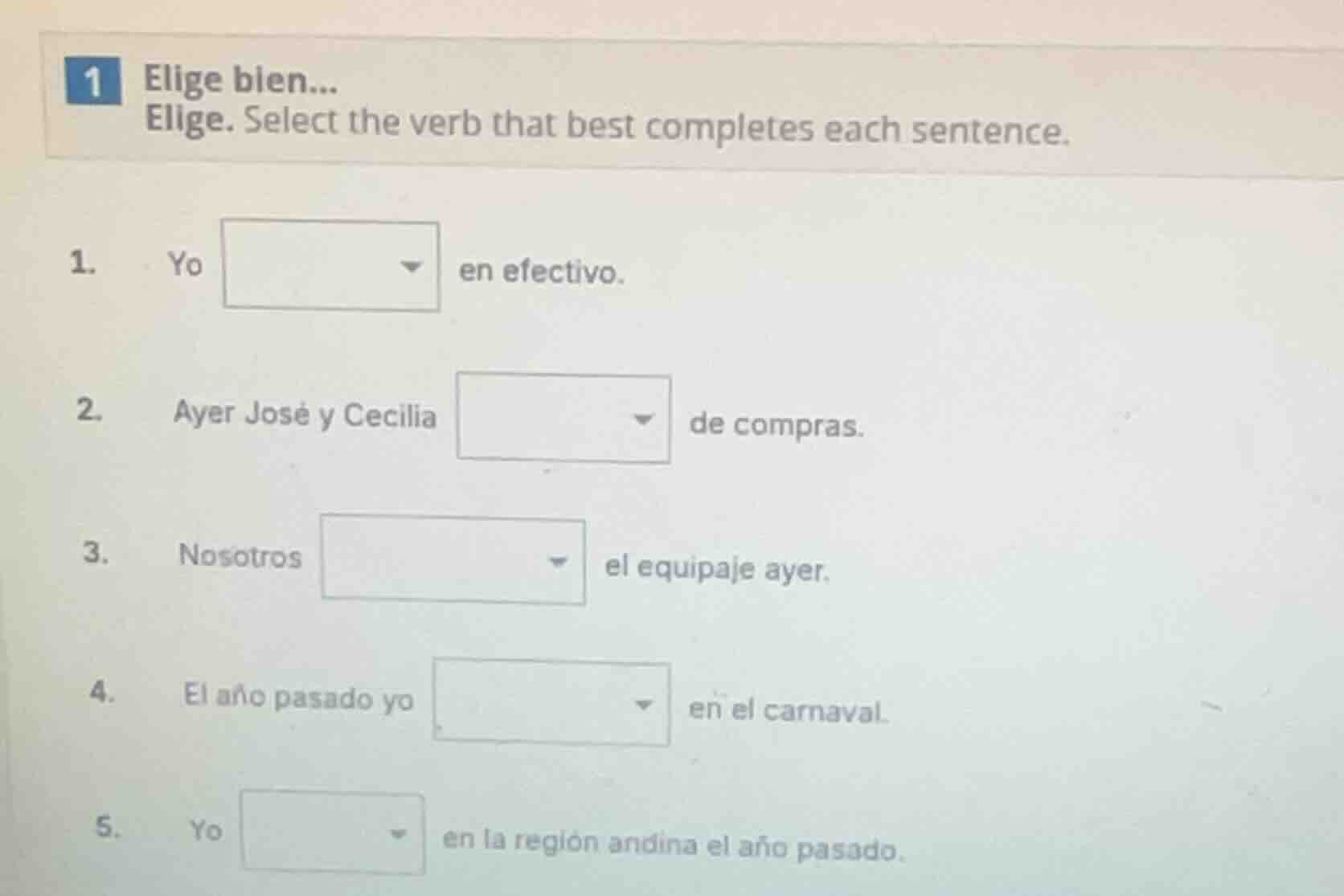
1 elige bien...
elige. select the verb that best completes each sentence.
- yo en efectivo.
- ayer josé y cecilia de compras.
- nosotros el equipaje ayer.
- el año pasado yo en el carnaval.
- yo en la región andina el año pasado.
To solve these Spanish verb - choice problems, we need to consider the subject, the tense (present or past), and the context of each sentence. However, since the verb options for each dropdown are not provided, we can't give the exact answers. Here's how we would approach each sentence:
Sentence 1: "Yo ____ en efectivo."
- The subject is "yo" (I) and the context is about a payment method (in cash). If we assume common verbs related to paying, like "pago" (present tense, I pay) or if it were a past action, "pagué". But without the options, we can't be sure.
Sentence 2: "Ayer José y Cecilia ____ de compras."
- "Ayer" (yesterday) indicates the past tense. The subject "José y Cecilia" is plural (they). Verbs related to going shopping could be "fueron" (they went, from "ir") or "hicieron" (they did, from "hacer" as in "hacer de compras").
Sentence 3: "Nosotros ____ el equipaje ayer."
- "Ayer" shows past tense. The subject "nosotros" (we) and the object "el equipaje" (the luggage) suggest a verb like "preparamos" (we prepared), "pusimos" (we put), or "recogimos" (we collected) depending on the context.
Sentence 4: "El año pasado yo ____ en el carnaval."
- "El año pasado" (last year) is past tense. The subject "yo" and the context of being at the carnival. A verb like "estuve" (I was, from "estar") or "participé" (I participated) could be appropriate.
Sentence 5: "Yo ____ en la región andina el año pasado."
- "El año pasado" is past tense. The subject "yo" and the context of being in a region. The verb "estuve" (I was, from "estar") is a common choice for indicating being in a place.
To get the correct answers, we need the list of verb options for each dropdown menu. Once we have those options, we can match the correct verb form to the subject, tense, and context of each sentence.

Snap & solve any problem in the app
Get step-by-step solutions on Sovi AI
Photo-based solutions with guided steps
Explore more problems and detailed explanations
To solve these Spanish verb - choice problems, we need to consider the subject, the tense (present or past), and the context of each sentence. However, since the verb options for each dropdown are not provided, we can't give the exact answers. Here's how we would approach each sentence:
Sentence 1: "Yo ____ en efectivo."
- The subject is "yo" (I) and the context is about a payment method (in cash). If we assume common verbs related to paying, like "pago" (present tense, I pay) or if it were a past action, "pagué". But without the options, we can't be sure.
Sentence 2: "Ayer José y Cecilia ____ de compras."
- "Ayer" (yesterday) indicates the past tense. The subject "José y Cecilia" is plural (they). Verbs related to going shopping could be "fueron" (they went, from "ir") or "hicieron" (they did, from "hacer" as in "hacer de compras").
Sentence 3: "Nosotros ____ el equipaje ayer."
- "Ayer" shows past tense. The subject "nosotros" (we) and the object "el equipaje" (the luggage) suggest a verb like "preparamos" (we prepared), "pusimos" (we put), or "recogimos" (we collected) depending on the context.
Sentence 4: "El año pasado yo ____ en el carnaval."
- "El año pasado" (last year) is past tense. The subject "yo" and the context of being at the carnival. A verb like "estuve" (I was, from "estar") or "participé" (I participated) could be appropriate.
Sentence 5: "Yo ____ en la región andina el año pasado."
- "El año pasado" is past tense. The subject "yo" and the context of being in a region. The verb "estuve" (I was, from "estar") is a common choice for indicating being in a place.
To get the correct answers, we need the list of verb options for each dropdown menu. Once we have those options, we can match the correct verb form to the subject, tense, and context of each sentence.