QUESTION IMAGE
Question
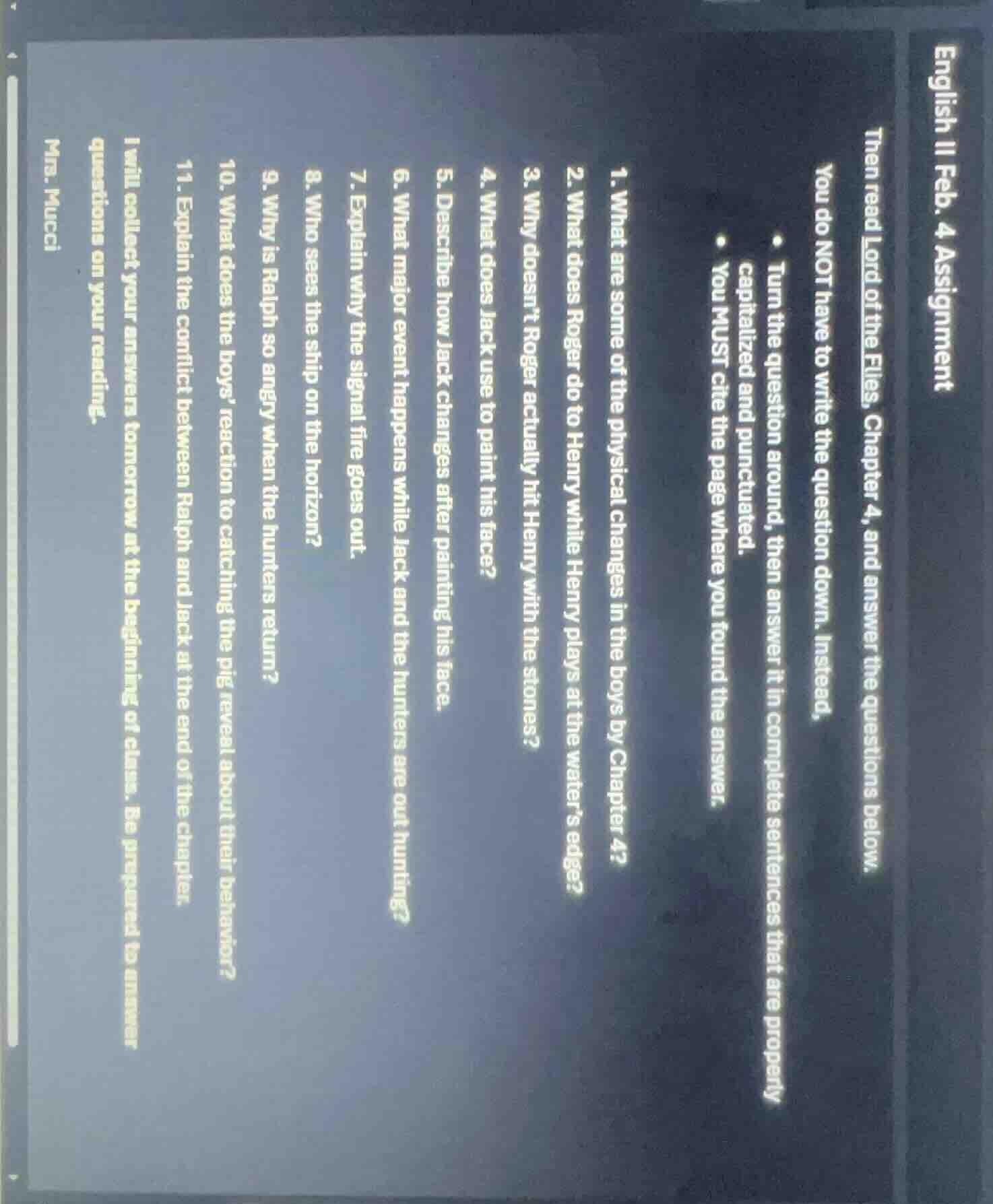
english ii feb. 4 assignment then read lord of the flies, chapter 4, and answer the questions below. you do not have to write the question down. instead, - turn the question around, then answer it in complete sentences that are properly capitalized and punctuated. - you must cite the page where you found the answer 1. what are some of the physical changes in the boys by chapter 4? 2. what does roger do to henry while henry plays at the water’s edge? 3. why doesn’t roger actually hit henry with the stones? 4. what does jack use to paint his face? 5. describe how jack changes after painting his face. 6. what major event happens while jack and the hunters are out hunting? 7. explain why the signal fire goes out. 8. who sees the ship on the horizon? 9. why is ralph so angry when the hunters return? 10. what does the boys’ reaction to catching the pig reveal about their behavior? 11. explain the conflict between ralph and jack at the end of the chapter. i will collect your answers tomorrow at the beginning of class. be prepared to answer questions on your reading. mrs. mucci
To answer these questions, we analyze each one based on Lord of the Flies Chapter 4:
Question 1: Physical Changes in the Boys
The boys’ physical changes reflect their descent into savagery. Their hair grows long and unkempt (e.g., “their hair, too, was long, wild, and ragged” (p. 59, 2020 ed.)), skin darkens from sun exposure, and they develop tans/scars. They also wear makeshift clothing (like leaves/vines) and carry spears. These changes symbolize their loss of civilization.
Question 2: Roger’s Action to Henry
Roger throws stones near Henry (not hitting him) to test boundaries. The text: “Roger stooped, picked up a stone, aimed, and threw it at Henry—threw it to miss” (p. 62). He does this to explore aggression without direct harm, showing emerging savagery.
Question 3: Why Roger Doesn’t Hit Henry
Roger restrains from hitting Henry due to lingering “civilization’s conditioning” (p. 62). The rules of society (e.g., “the taboo of the old life” (p. 62)) still influence him, so he hesitates to harm another directly.
Question 4: Jack’s Face - Painting
Jack uses “clay, charcoal, and red berries” (p. 59) to paint his face. He smears them into patterns (e.g., “red and white and black” (p. 59)) to create a mask. This camouflages him for hunting and frees him from self - consciousness, enabling his savage behavior.
Question 5: Jack’s Change After Painting
After painting, Jack becomes more confident and savage. The mask “liberated him from shame and self - consciousness” (p. 60). He acts bolder, embracing his role as a hunter, and abandons civilized restraint (e.g., leading the hunt more aggressively).
Question 6: Major Event While Hunting
While Jack and hunters are out, a “ship passes the island” (p. 64). However, the signal fire (meant to attract rescuers) has gone out, so the ship doesn’t notice them. This event highlights the conflict between hunting (savagery) and rescue (civilization).
Question 7: Why the Signal Fire Goes Out
The signal fire goes out because Jack and the hunters “let the fire go out” (p. 64) to hunt. They prioritize hunting (savagery, fulfilling primal urges) over maintaining the fire (civilization, seeking rescue), showing their shift toward savagery.
Question 8: Who Sees the Ship
“Ralph sees the ship on the horizon” (p. 64) while he is tending the (now - out) fire area. This makes him realize the hunters’ mistake.
Question 9: Ralph’s Anger at Hunters’ Return
Ralph is angry because the hunters let the signal fire go out, causing them to miss a rescue opportunity. He shouts, “You let the fire go out!” (p. 64), furious that their focus on hunting (savagery) ruined a chance to return to civilization.
Question 10: Boys’ Reaction to Catching the Pig
The boys (especially Jack) are excited and proud. They reenact the kill: “They pretended to knock him down, beat him, then rushed away” (p. 63), chanting “Kill the pig! Cut her throat!” This reveals their growing bloodlust and embrace of savagery, prioritizing hunting over rescue.
Question 11: Conflict Between Ralph and Jack (End of Chapter)
At the chapter’s end, Ralph is angry about the fire, and Jack defends the hunt, saying “I got us meat!” (p. 65). Ralph values rescue (fire), Jack values hunting (savagery). This conflict embodies the struggle between civilization (Ralph) and savagery (Jack) on the island.
(Note: Page numbers may vary by edition. Cite the edition you use for accuracy.)

Snap & solve any problem in the app
Get step-by-step solutions on Sovi AI
Photo-based solutions with guided steps
Explore more problems and detailed explanations
To answer these questions, we analyze each one based on Lord of the Flies Chapter 4:
Question 1: Physical Changes in the Boys
The boys’ physical changes reflect their descent into savagery. Their hair grows long and unkempt (e.g., “their hair, too, was long, wild, and ragged” (p. 59, 2020 ed.)), skin darkens from sun exposure, and they develop tans/scars. They also wear makeshift clothing (like leaves/vines) and carry spears. These changes symbolize their loss of civilization.
Question 2: Roger’s Action to Henry
Roger throws stones near Henry (not hitting him) to test boundaries. The text: “Roger stooped, picked up a stone, aimed, and threw it at Henry—threw it to miss” (p. 62). He does this to explore aggression without direct harm, showing emerging savagery.
Question 3: Why Roger Doesn’t Hit Henry
Roger restrains from hitting Henry due to lingering “civilization’s conditioning” (p. 62). The rules of society (e.g., “the taboo of the old life” (p. 62)) still influence him, so he hesitates to harm another directly.
Question 4: Jack’s Face - Painting
Jack uses “clay, charcoal, and red berries” (p. 59) to paint his face. He smears them into patterns (e.g., “red and white and black” (p. 59)) to create a mask. This camouflages him for hunting and frees him from self - consciousness, enabling his savage behavior.
Question 5: Jack’s Change After Painting
After painting, Jack becomes more confident and savage. The mask “liberated him from shame and self - consciousness” (p. 60). He acts bolder, embracing his role as a hunter, and abandons civilized restraint (e.g., leading the hunt more aggressively).
Question 6: Major Event While Hunting
While Jack and hunters are out, a “ship passes the island” (p. 64). However, the signal fire (meant to attract rescuers) has gone out, so the ship doesn’t notice them. This event highlights the conflict between hunting (savagery) and rescue (civilization).
Question 7: Why the Signal Fire Goes Out
The signal fire goes out because Jack and the hunters “let the fire go out” (p. 64) to hunt. They prioritize hunting (savagery, fulfilling primal urges) over maintaining the fire (civilization, seeking rescue), showing their shift toward savagery.
Question 8: Who Sees the Ship
“Ralph sees the ship on the horizon” (p. 64) while he is tending the (now - out) fire area. This makes him realize the hunters’ mistake.
Question 9: Ralph’s Anger at Hunters’ Return
Ralph is angry because the hunters let the signal fire go out, causing them to miss a rescue opportunity. He shouts, “You let the fire go out!” (p. 64), furious that their focus on hunting (savagery) ruined a chance to return to civilization.
Question 10: Boys’ Reaction to Catching the Pig
The boys (especially Jack) are excited and proud. They reenact the kill: “They pretended to knock him down, beat him, then rushed away” (p. 63), chanting “Kill the pig! Cut her throat!” This reveals their growing bloodlust and embrace of savagery, prioritizing hunting over rescue.
Question 11: Conflict Between Ralph and Jack (End of Chapter)
At the chapter’s end, Ralph is angry about the fire, and Jack defends the hunt, saying “I got us meat!” (p. 65). Ralph values rescue (fire), Jack values hunting (savagery). This conflict embodies the struggle between civilization (Ralph) and savagery (Jack) on the island.
(Note: Page numbers may vary by edition. Cite the edition you use for accuracy.)