QUESTION IMAGE
Question
english iii - semester b / unit 6 - drama and genre studies
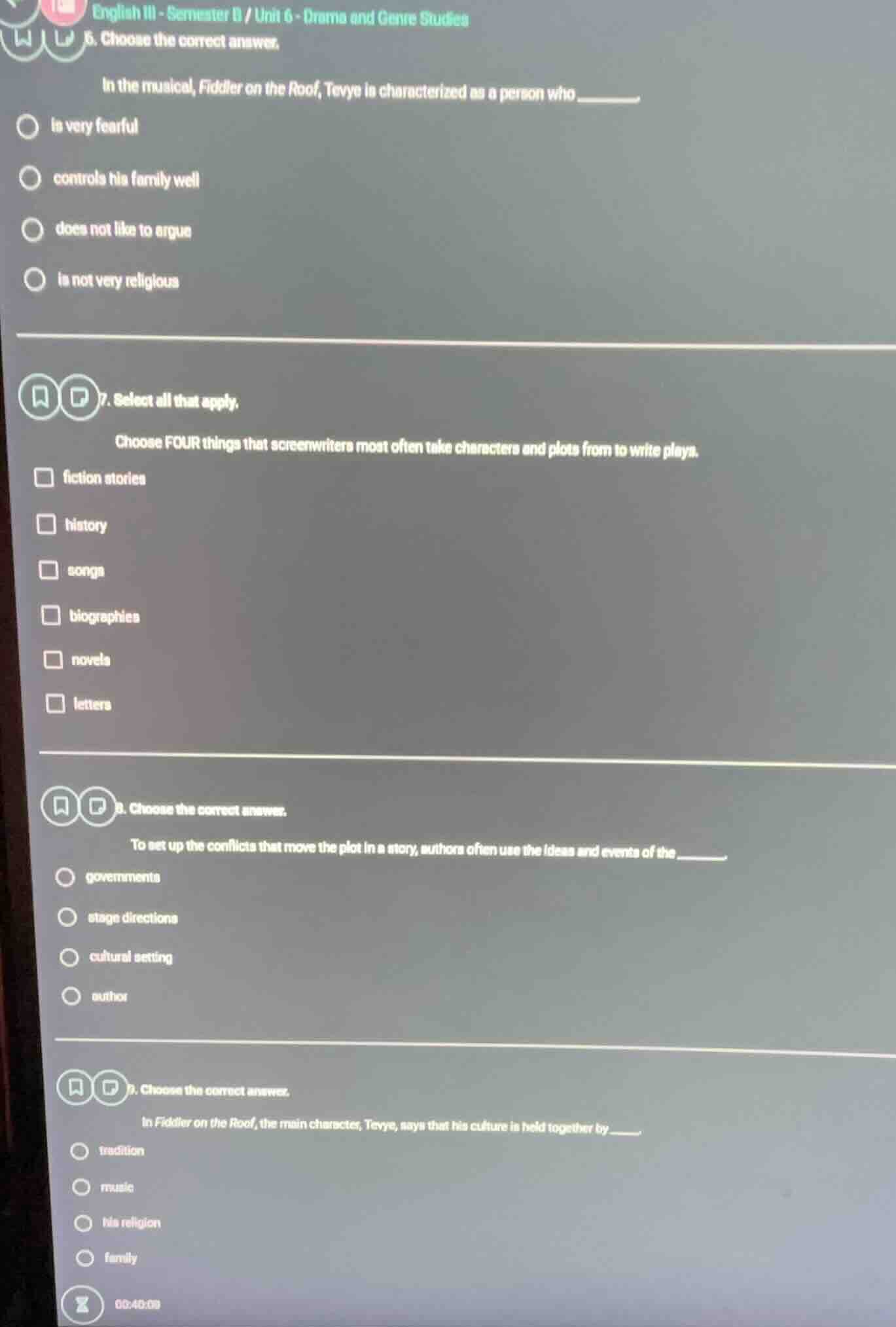
- choose the correct answer.
in the musical, fiddler on the roof, tevye is characterized as a person who ______
- is very fearful
- controls his family well
- does not like to argue
- is not very religious
- select all that apply.
choose four things that screenwriters most often take characters and plots from to write plays.
- fiction stories
- history
- songs
- biographies
- novels
- letters
- choose the correct answer.
to set up the conflicts that move the plot in a story, authors often use the ideas and events of the ______
- governments
- stage directions
- cultural setting
- suffix
- choose the correct answer.
in fiddler on the roof, the main character, tevye, says that his culture is held together by ______.
- tradition
- music
- his religion
- family
Question 6:
Tevye, from Fiddler on the Roof, is a strict, traditional head of household who maintains authority over his family. The other options are incorrect: he is not fearful, argues often, and is deeply religious.
Question 7:
Screenwriters commonly adapt established narrative sources for plays. Fiction stories, history, biographies, and novels are all standard, substantial sources for characters and plots. Songs and letters lack the full narrative structure needed for most play adaptations.
Question 8:
A story's cultural setting provides the context, norms, and events that create natural conflicts to drive the plot. Governments, stage directions, and the author do not directly supply the core ideas for plot-moving conflicts.
Question 9:
A central theme of Fiddler on the Roof is the role of tradition in holding Tevye's Jewish community together, which he explicitly references throughout the musical.

Snap & solve any problem in the app
Get step-by-step solutions on Sovi AI
Photo-based solutions with guided steps
Explore more problems and detailed explanations
- controls his family well
- fiction stories, history, biographies, novels
- cultural setting
- tradition