QUESTION IMAGE
Question
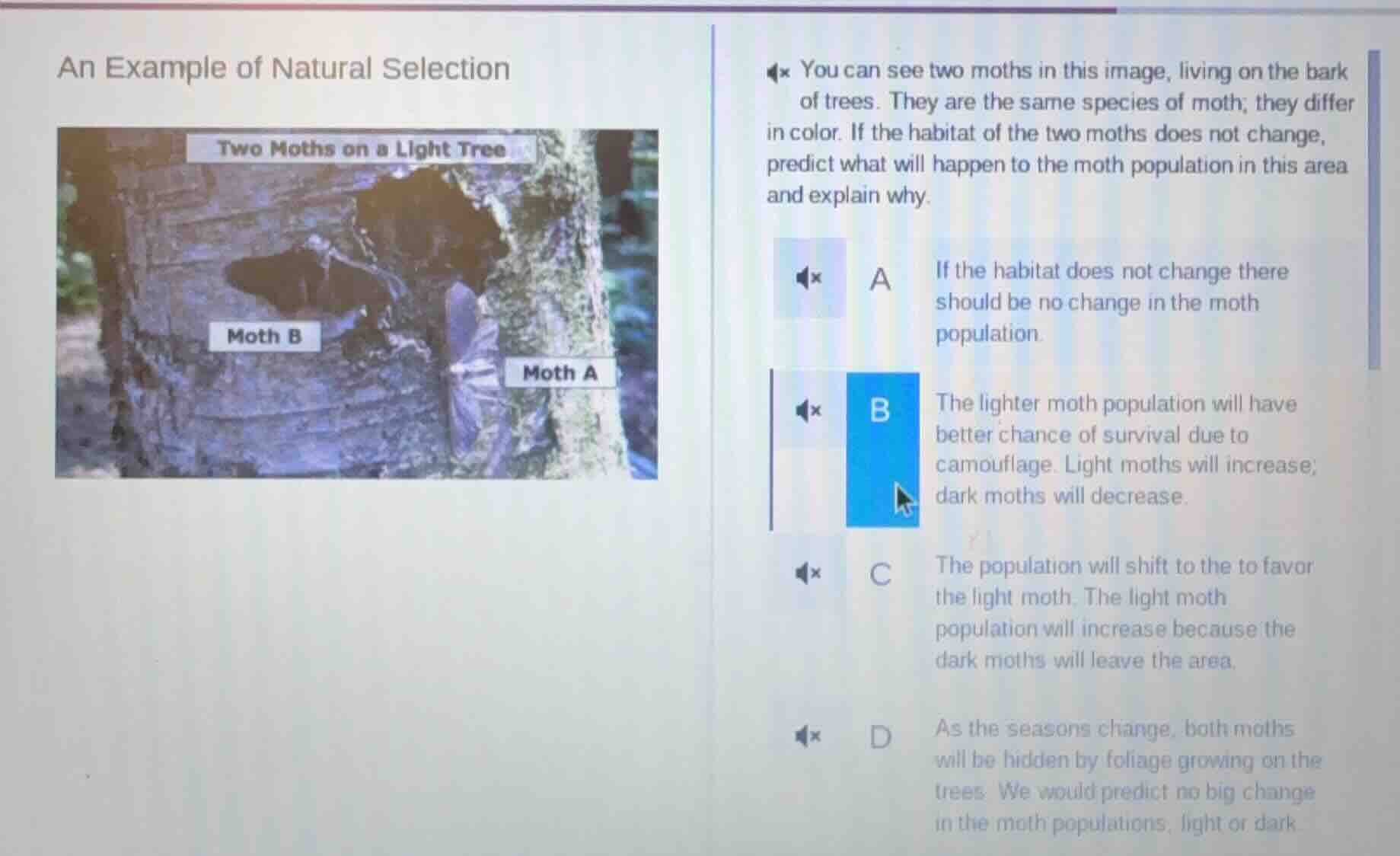
an example of natural selection
two moths on a light tree
moth b
moth a
you can see two moths in this image, living on the bark of trees. they are the same species of moth; they differ in color. if the habitat of the two moths does not change, predict what will happen to the moth population in this area and explain why.
a if the habitat does not change there should be no change in the moth population.
b the lighter moth population will have better chance of survival due to camouflage. light moths will increase; dark moths will decrease.
c the population will shift to the to favor the light moth. the light moth population will increase because the dark moths will leave the area.
d as the seasons change, both moths will be hidden by foliage growing on the trees. we would predict no big change in the moth populations, light or dark.
This is an example of natural selection, specifically industrial melanism (the peppered moth example). On light tree bark, lighter moths (Moth A) are camouflaged, making them less likely to be preyed upon. Darker moths (Moth B) are more visible to predators, so they are eaten more often. Over time, the lighter moth population will survive and reproduce more, increasing their numbers, while the dark moth population will decrease due to higher predation. Option A is wrong because natural selection will act on the population. Option C is wrong because dark moths are not leaving, they are being preyed on. Option D is wrong because the habitat is stated to not change, so seasonal foliage changes are not a factor here.

Snap & solve any problem in the app
Get step-by-step solutions on Sovi AI
Photo-based solutions with guided steps
Explore more problems and detailed explanations
B. The lighter moth population will have better chance of survival due to camouflage. Light moths will increase; dark moths will decrease.