QUESTION IMAGE
Question
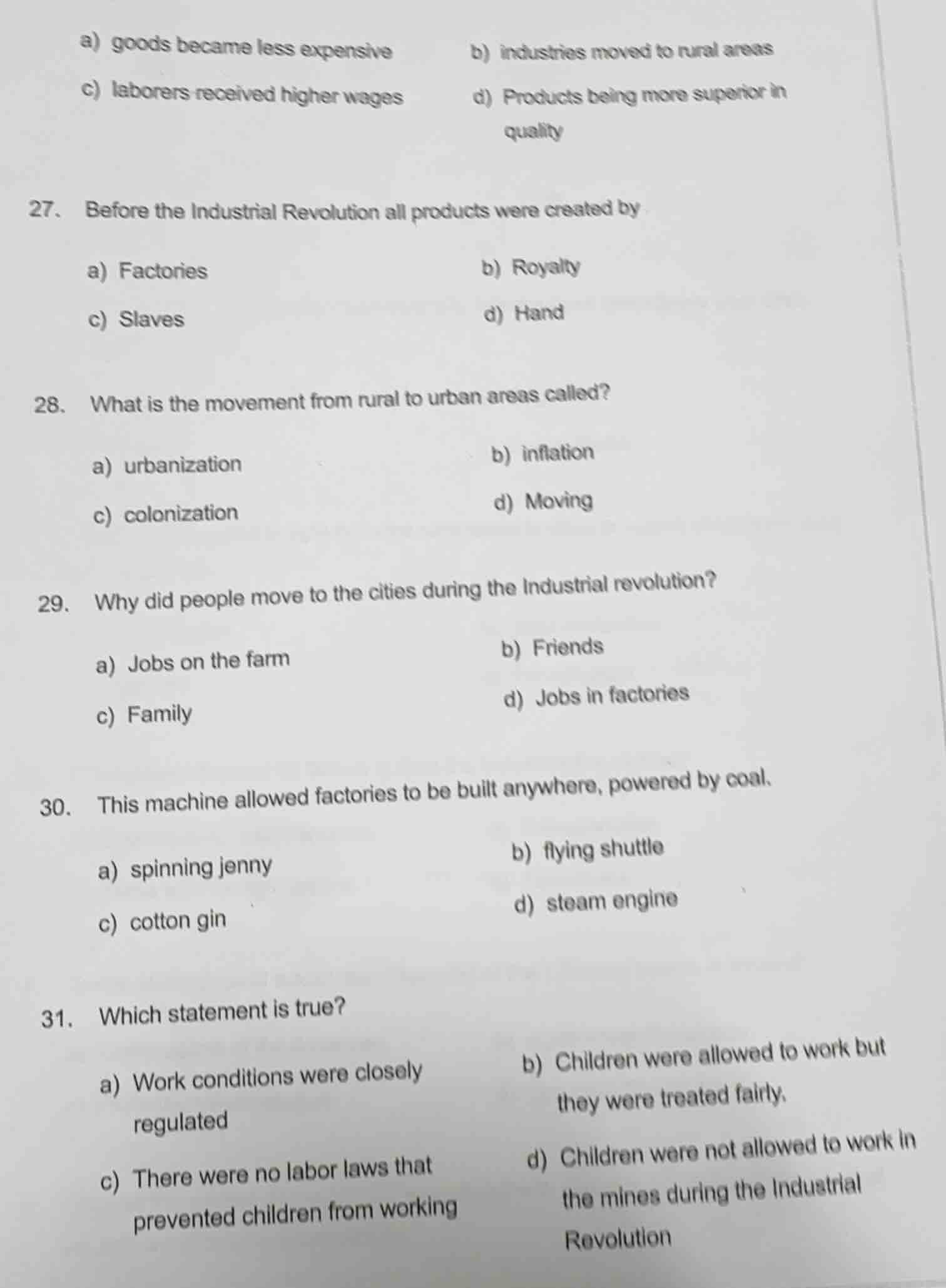
a) goods became less expensive b) industries moved to rural areas c) laborers received higher wages d) products being more superior in quality 27. before the industrial revolution all products were created by a) factories b) royalty c) slaves d) hand 28. what is the movement from rural to urban areas called? a) urbanization b) inflation c) colonization d) moving 29. why did people move to the cities during the industrial revolution? a) jobs on the farm b) friends c) family d) jobs in factories 30. this machine allowed factories to be built anywhere, powered by coal. a) spinning jenny b) flying shuttle c) cotton gin d) steam engine 31. which statement is true? a) work conditions were closely regulated b) children were allowed to work but they were treated fairly. c) there were no labor laws that prevented children from working d) children were not allowed to work in the mines during the industrial revolution
Question 27
Before the Industrial Revolution, manufacturing was done manually (by hand) as factories and mass - production methods were not yet developed. Factories came into prominence during the Industrial Revolution, royalty were not the main producers of all products, and slaves were not the primary producers of all goods in a general sense.
Urbanization is defined as the movement of people from rural (countryside) areas to urban (city) areas. Inflation is related to the increase in the general price level, colonization is about one country establishing control over another territory, and "Moving" is a very general term and not the specific term for this demographic shift.
During the Industrial Revolution, factories were set up in cities. These factories provided job opportunities, so people moved to cities to get jobs in factories. Jobs on the farm were more common in rural areas, and friends or family were not the primary reasons for the large - scale migration to cities during this period.

Snap & solve any problem in the app
Get step-by-step solutions on Sovi AI
Photo-based solutions with guided steps
Explore more problems and detailed explanations
d) Hand