QUESTION IMAGE
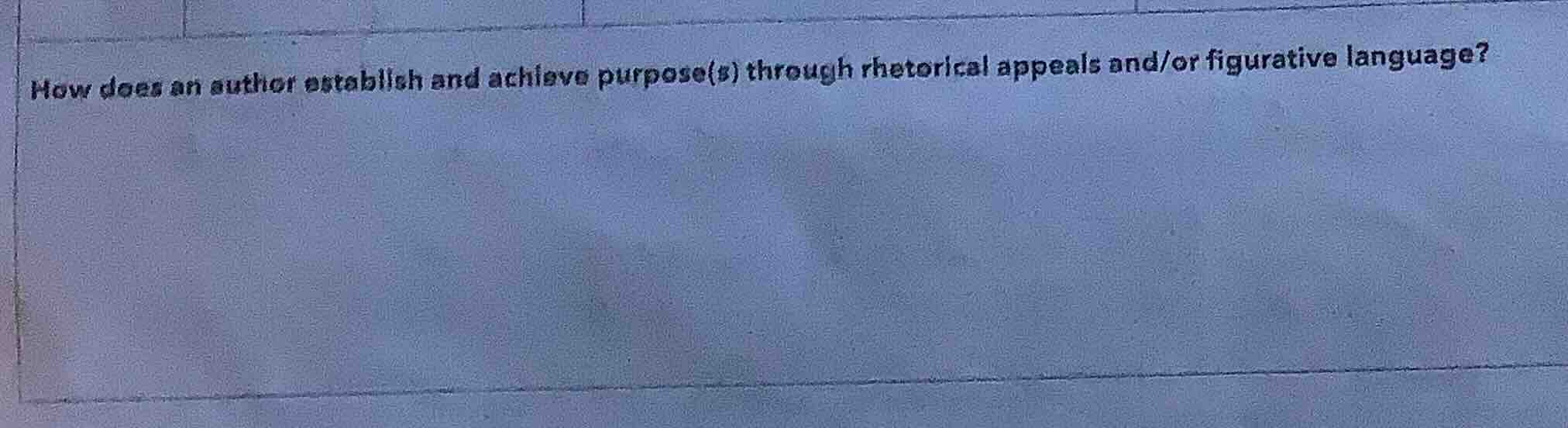
Question
how does an author establish and achieve purpose(s) through rhetorical appeals and/or figurative language?
Brief Explanations
- Rhetorical Appeals: Authors use ethos (building credibility/trust with the audience, e.g., citing expertise or demonstrating moral character) to establish authority for persuasive or informative purposes. Pathos (evoking emotions like empathy, anger, or joy) connects with the audience's values to drive action or shape opinions. Logos (using logical reasoning, facts, and evidence) convinces the audience through rationality to support a claim or explain a concept.
- Figurative Language: Tools like metaphors, similes, and personification make abstract ideas concrete, helping authors clarify complex topics (informative purpose) or make emotional, persuasive arguments more vivid and memorable. For example, a metaphor can frame a social issue in relatable terms to inspire the audience to care and act.
- Alignment with Purpose: Authors select these techniques intentionally to match their goal: to persuade, inform, entertain, or argue. They combine appeals and figurative language to tailor their message to the audience, ensuring their core purpose is clear and impactful.

Snap & solve any problem in the app
Get step-by-step solutions on Sovi AI
Photo-based solutions with guided steps
Explore more problems and detailed explanations
Authors establish and achieve their purpose by:
- Deploying rhetorical appeals: using ethos to build credibility, pathos to evoke emotional connection, and logos to present logical, evidence-based reasoning, each tailored to goals like persuading, informing, or convincing an audience.
- Utilizing figurative language (metaphors, similes, personification, etc.) to make abstract ideas tangible, enhance emotional resonance, or simplify complex concepts, which strengthens the clarity and impact of their intended purpose (whether informative, persuasive, or expressive).
- Intentionally matching these techniques to their specific audience and core goal, creating a targeted message that effectively communicates and fulfills their intended purpose.