QUESTION IMAGE
Question
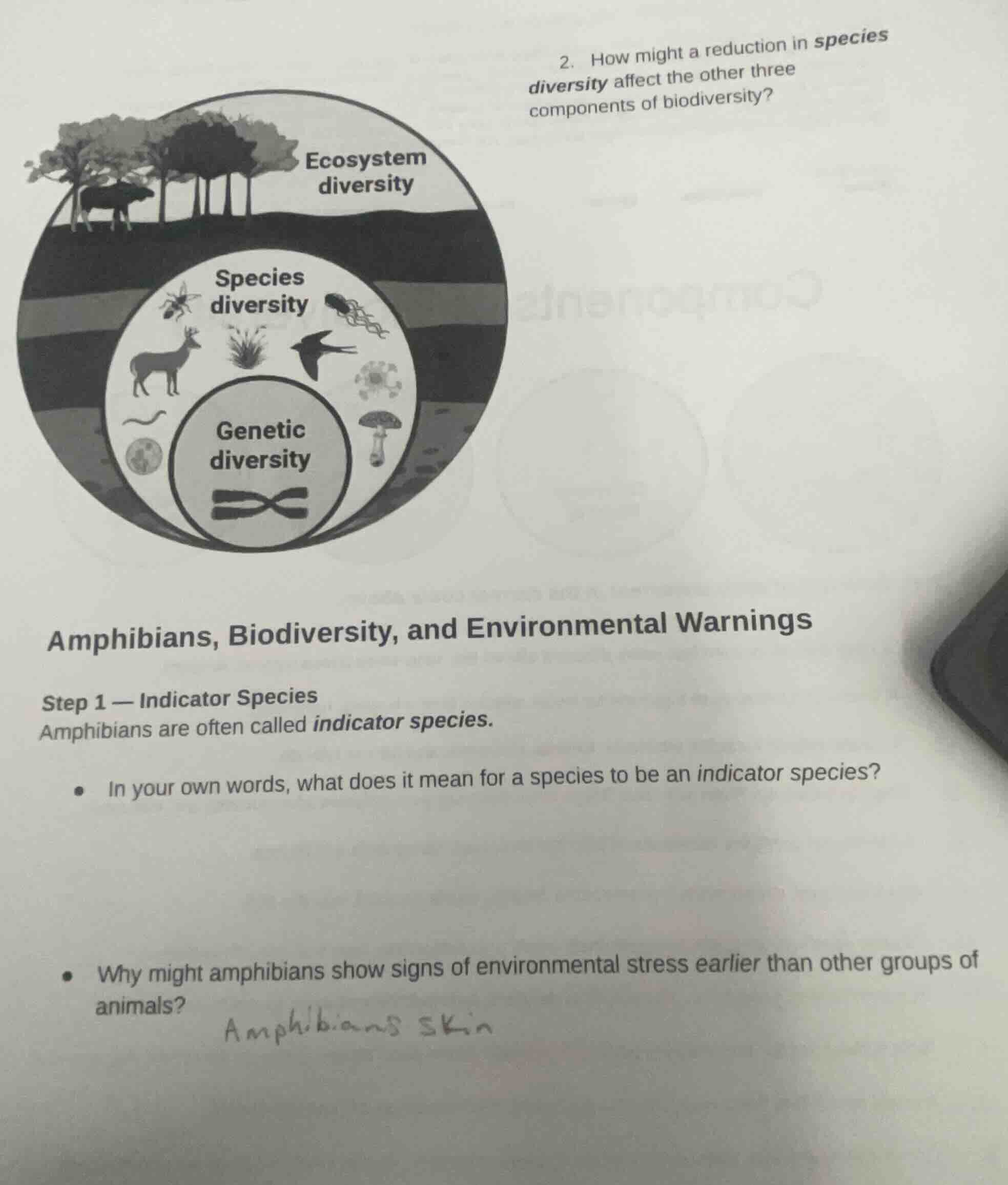
- how might a reduction in species diversity affect the other three components of biodiversity? amphibians, biodiversity, and environmental warnings step 1 — indicator species amphibians are often called indicator species. - in your own words, what does it mean for a species to be an indicator species? - why might amphibians show signs of environmental stress earlier than other groups of animals? amphibians skin
For the question "In your own words, what does it mean for a species to be an indicator species?":
An indicator species is a species whose presence, absence, or population changes can indicate the health or changes of an ecosystem. For example, if an indicator species' population declines, it may suggest that the ecosystem it lives in is facing problems like pollution, habitat loss, or climate change impacts. These species are sensitive to environmental changes, so their status reflects the overall condition of the ecosystem.
Amphibians have permeable skin, which makes them directly exposed to pollutants, chemicals, or changes in water and air quality in their environment. Also, their life cycle involves both aquatic (larval stage, like tadpoles) and terrestrial (adult stage) habitats, so they are affected by changes in both water and land ecosystems. Any disruption in either habitat (like water pollution or land development) can stress them. Their relatively simple physiological systems also make them more vulnerable to environmental changes compared to some other animal groups.
Biodiversity has four components: species, genetic, ecosystem, and functional (though the diagram shows three: species, genetic, ecosystem). 1. Genetic diversity: Each species has unique genes. A reduction in species diversity means fewer species, so the total genetic variation (from different species' gene pools) decreases. For example, if a plant species goes extinct, the unique genes it had (for traits like disease resistance) are lost, reducing genetic diversity within and across species. 2. Ecosystem diversity: Ecosystems are made up of interacting species. Fewer species can disrupt food webs, nutrient cycling, and other ecosystem processes. For instance, if pollinator species decline (species diversity reduction), plant reproduction is affected, which can change the composition of plant communities and then the entire ecosystem (like a meadow ecosystem turning into a less diverse one). Also, different species contribute to ecosystem functions; losing species can reduce the number of unique ecosystems or the complexity of existing ones. 3. Functional diversity: (If considered) Functional diversity is about the variety of ecological functions species perform. Fewer species mean fewer unique functions (like different ways of nutrient cycling, predation, or pollination), reducing functional diversity. In the context of the diagram's three components (species, genetic, ecosystem), the reduction in species diversity impacts genetic (less species - specific genes) and ecosystem (disrupted ecosystem structure and function) diversity.

Snap & solve any problem in the app
Get step-by-step solutions on Sovi AI
Photo-based solutions with guided steps
Explore more problems and detailed explanations
An indicator species is a species whose presence, absence, or population changes reflect the health or environmental changes of its ecosystem.