QUESTION IMAGE
Question
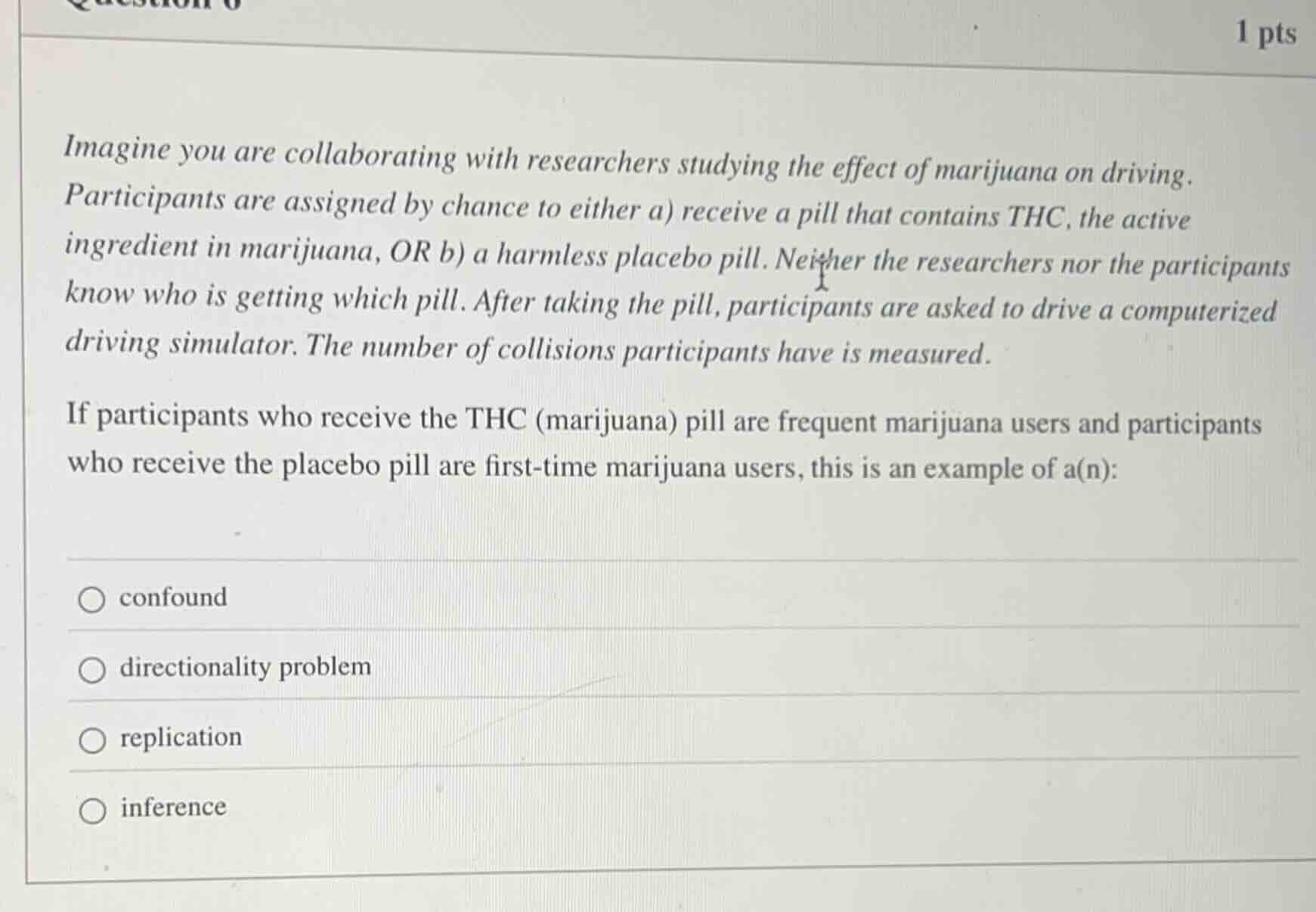
imagine you are collaborating with researchers studying the effect of marijuana on driving. participants are assigned by chance to either a) receive a pill that contains thc, the active ingredient in marijuana, or b) a harmless placebo pill. neither the researchers nor the participants know who is getting which pill. after taking the pill, participants are asked to drive a computerized driving simulator. the number of collisions participants have is measured. if participants who receive the thc (marijuana) pill are frequent marijuana users and participants who receive the placebo pill are first - time marijuana users, this is an example of a(n):
○ confound
○ directionality problem
○ replication
○ inference
A confound is an extraneous variable that differs systematically between groups in a study, which can distort the true effect of the independent variable. Here, marijuana use frequency (frequent vs. first-time) is an uncontrolled variable that differs between the THC and placebo groups, so it is a confound. A directionality problem involves unclear cause-effect order, replication is repeating a study, and inference is drawing conclusions from data—none of these fit the scenario.

Snap & solve any problem in the app
Get step-by-step solutions on Sovi AI
Photo-based solutions with guided steps
Explore more problems and detailed explanations
confound