QUESTION IMAGE
Question
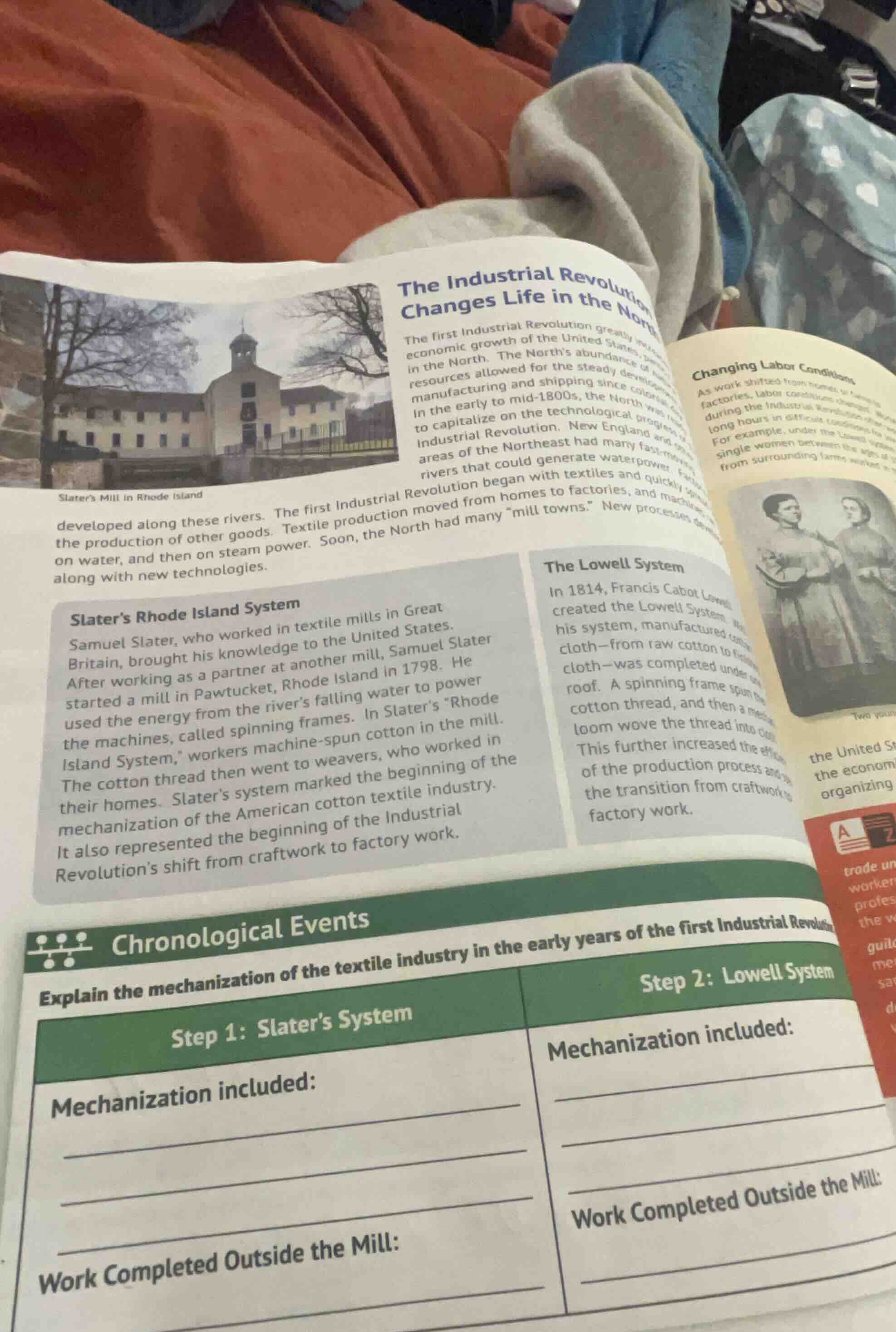
the industrial revolution changes life in the nort the first industrial revolution greatly economic growth of the united states, in the north. the norths abundance of resources allowed for the steady devel manufacturing and shipping since colo in the early to mid - 1800s, the north was to capitalize on the technological prog industrial revolution. new england and areas of the northeast had many fast - rivers that could generate waterpower. revolution began with textiles and quickl the production of other goods. textile production moved from homes to factories, and mach along with new technologies. slaters mill in rhode island slaters rhode island system samuel slater, who worked in textile mills in great britain, brought his knowledge to the united states. after working as a partner at another mill, samuel slater started a mill in pawtucket, rhode island in 1798. he used the energy from the rivers falling water to power the machines, called spinning frames. in slaters rhode island system, workers machine - spun cotton in the mill. the cotton thread then went to weavers, who worked in their homes. slaters system marked the beginning of the mechanization of the american cotton textile industry. it also represented the beginning of the industrial revolutions shift from craftwork to factory work. the lowell system in 1814, francis cabot lowell created the lowell system. his system, manufactured cloth - from raw cotton to cloth - was completed under roof. a spinning frame spun cotton thread, and then a loom wove the thread into clot this further increased the eff of the production process and the transition from craftwork factory work. chronological events explain the mechanization of the textile industry in the early years of the first industrial revol step 1: slater’s system step 2: lowell system mechanization included: mechanization included: work completed outside the mill: work completed outside the mill:
For Slater's System, mechanization relied on water-powered spinning frames for machine-spinning cotton thread in mills. Weaving the thread into cloth was done by weavers working from their homes.
For the Lowell System, mechanization covered the full textile production process under one roof: spinning frames produced cotton thread, and mechanized looms wove the thread into finished cloth. No work was completed outside the mill as the entire process was centralized in the factory.

Snap & solve any problem in the app
Get step-by-step solutions on Sovi AI
Photo-based solutions with guided steps
Explore more problems and detailed explanations
Step 1: Slater's System
Mechanization included:
- Using river water power to run spinning frames for machine-spun cotton thread in mills
Work Completed Outside the Mill:
- Weaving the cotton thread into cloth by weavers in their homes
Step 2: Lowell System
Mechanization included:
- Centralized, full-process production: spinning frames make cotton thread, mechanized looms weave thread into finished cloth (all under one mill roof)
Work Completed Outside the Mill:
- No work was completed outside the mill; the entire textile production process was done in the factory