QUESTION IMAGE
Question
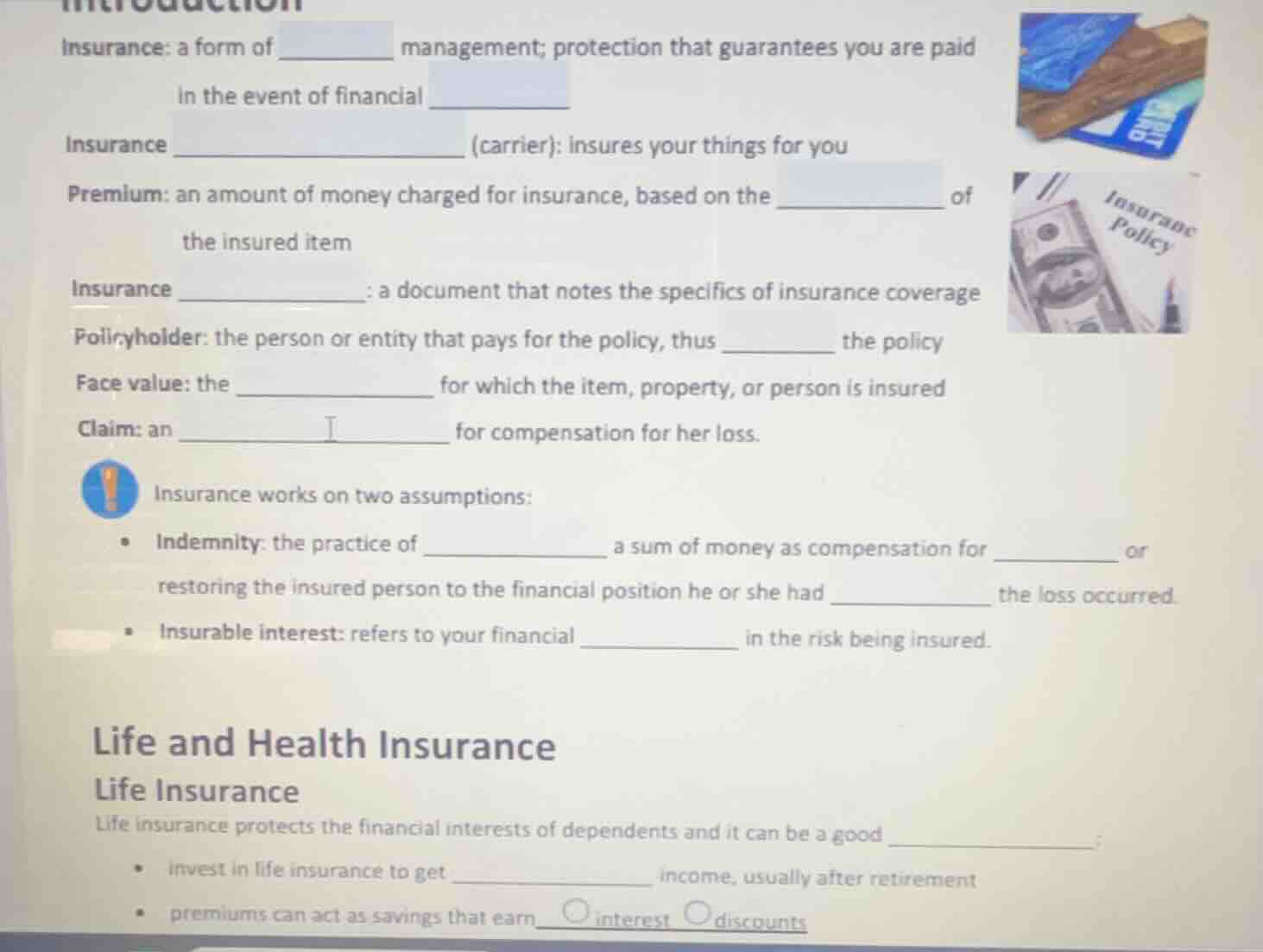
insurance: a form of ______ management; protection that guarantees you are paid
in the event of financial ______
insurance ________________ (carrier): insures your things for you
premium: an amount of money charged for insurance, based on the __________ of
the insured item
insurance ____________: a document that notes the specifics of insurance coverage
policyholder: the person or entity that pays for the policy, thus ______ the policy
face value: the ____________ for which the item, property, or person is insured
claim: an ________ ________ for compensation for her loss.
insurance works on two assumptions:
- indemnity: the practice of __________ a sum of money as compensation for ____ or
restoring the insured person to the financial position he or she had __________ the loss occurred.
- insurable interest: refers to your financial __________ in the risk being insured.
life and health insurance
life insurance
life insurance protects the financial interests of dependents and it can be a good ____________.
- invest in life insurance to get ____________ income, usually after retirement
- premiums can act as savings that earn ○ interest ○ discounts
To solve this fill - in - the - blank problem related to insurance (a business - related topic, specifically in the subfield of Finance), we analyze each blank based on insurance - related concepts:
1. Insurance: a form of ____ management; protection that guarantees you are paid in the event of financial ____
- For the first blank, insurance is a form of "risk" management. Insurance is designed to manage the risks that individuals or entities face, such as the risk of property damage, illness, or loss of life.
- For the second blank, it is "loss". The main purpose of insurance is to provide compensation when a financial loss occurs, like when a house is damaged by a fire or a person incurs medical expenses due to an illness.
2. Insurance ______ (carrier): insures your things for you
The term here is "company". An insurance company (or carrier) is the entity that provides insurance coverage and agrees to compensate the insured in case of a covered loss.
3. Premium: an amount of money charged for insurance, based on the ______ of the insured item
The blank should be "value". The premium is calculated based on how much the insured item is worth. For example, a more expensive car will generally have a higher insurance premium than a less expensive one because the potential loss (if the car is damaged or stolen) is greater.
4. Insurance ______: a document that notes the specifics of insurance coverage
The answer is "policy". An insurance policy is a legal document that outlines the terms and conditions of the insurance coverage, including what is covered, the amount of coverage, and the premiums.
5. Policyholder: the person or entity that pays for the policy, thus ______ the policy
The word is "owning". When a person or entity pays the premiums for an insurance policy, they are the owner of that policy and are entitled to the benefits specified in it.
6. Face value: the ______ for which the item, property, or person is insured
The answer is "amount". The face value of an insurance policy is the specific sum of money that the insurance company will pay out in case of a covered loss. For example, a life insurance policy might have a face value of $500,000, which is the amount that will be paid to the beneficiaries when the insured person passes away.
7. Claim: an ______ for compensation for her loss.
The word is "request". A claim is a formal request made by the insured to the insurance company to receive compensation for a loss that is covered by the insurance policy.
8. Indemnity: the practice of ____ a sum of money as compensation for __ or restoring the insured person to the financial position he or she had ____ the loss occurred.
- The first blank: "paying". Indemnity involves the insurance company paying a sum of money to the insured.
- The second blank: "loss". The indemnity is for the loss that the insured has suffered, like the loss of property or income.
- The third blank: "before". The goal of indemnity is to put the insured back in the same financial position they were in before the loss happened. For example, if a business suffers a fire and loses $100,000 worth of inventory, the insurance company will pay an amount to restore the business to its financial position before the fire (by compensating for the lost inventory).
9. Insurable interest: refers to your financial ______ in the risk being insured.
The answer is "stake". Insurable interest means that the insured has a financial stake in the thing or person being insured. For example, a person has an insurable interest…

Snap & solve any problem in the app
Get step-by-step solutions on Sovi AI
Photo-based solutions with guided steps
Explore more problems and detailed explanations
To solve this fill - in - the - blank problem related to insurance (a business - related topic, specifically in the subfield of Finance), we analyze each blank based on insurance - related concepts:
1. Insurance: a form of ____ management; protection that guarantees you are paid in the event of financial ____
- For the first blank, insurance is a form of "risk" management. Insurance is designed to manage the risks that individuals or entities face, such as the risk of property damage, illness, or loss of life.
- For the second blank, it is "loss". The main purpose of insurance is to provide compensation when a financial loss occurs, like when a house is damaged by a fire or a person incurs medical expenses due to an illness.
2. Insurance ______ (carrier): insures your things for you
The term here is "company". An insurance company (or carrier) is the entity that provides insurance coverage and agrees to compensate the insured in case of a covered loss.
3. Premium: an amount of money charged for insurance, based on the ______ of the insured item
The blank should be "value". The premium is calculated based on how much the insured item is worth. For example, a more expensive car will generally have a higher insurance premium than a less expensive one because the potential loss (if the car is damaged or stolen) is greater.
4. Insurance ______: a document that notes the specifics of insurance coverage
The answer is "policy". An insurance policy is a legal document that outlines the terms and conditions of the insurance coverage, including what is covered, the amount of coverage, and the premiums.
5. Policyholder: the person or entity that pays for the policy, thus ______ the policy
The word is "owning". When a person or entity pays the premiums for an insurance policy, they are the owner of that policy and are entitled to the benefits specified in it.
6. Face value: the ______ for which the item, property, or person is insured
The answer is "amount". The face value of an insurance policy is the specific sum of money that the insurance company will pay out in case of a covered loss. For example, a life insurance policy might have a face value of $500,000, which is the amount that will be paid to the beneficiaries when the insured person passes away.
7. Claim: an ______ for compensation for her loss.
The word is "request". A claim is a formal request made by the insured to the insurance company to receive compensation for a loss that is covered by the insurance policy.
8. Indemnity: the practice of ____ a sum of money as compensation for __ or restoring the insured person to the financial position he or she had ____ the loss occurred.
- The first blank: "paying". Indemnity involves the insurance company paying a sum of money to the insured.
- The second blank: "loss". The indemnity is for the loss that the insured has suffered, like the loss of property or income.
- The third blank: "before". The goal of indemnity is to put the insured back in the same financial position they were in before the loss happened. For example, if a business suffers a fire and loses $100,000 worth of inventory, the insurance company will pay an amount to restore the business to its financial position before the fire (by compensating for the lost inventory).
9. Insurable interest: refers to your financial ______ in the risk being insured.
The answer is "stake". Insurable interest means that the insured has a financial stake in the thing or person being insured. For example, a person has an insurable interest in their own house because they have invested money in it and would suffer a financial loss if it is damaged.
10. Life insurance protects the financial interests of dependents and it can be a good ______.
The word is "investment". Life insurance can be a good investment as it not only provides financial protection for dependents but also in some cases can offer a return on investment, like in the case of whole - life insurance which has a savings component.
11. Invest in life insurance to get ______ income, usually after retirement
The answer is "retirement". Some life insurance policies, such as annuities, are designed to provide income during retirement.
12. premiums can act as savings that earn ______ (between interest and discounts, "interest" is correct)
Premiums in some insurance policies (like whole - life insurance) can be part of a savings component that earns "interest". Discounts are not earned on insurance premiums in the context of savings; instead, the money in the savings portion of the policy can grow with interest over time.
Final Answers (filling in the blanks in order):
- risk; loss
- company
- value
- policy
- owning
- amount
- request
- paying; loss; before
- stake
- investment
- retirement
- interest