QUESTION IMAGE
Question
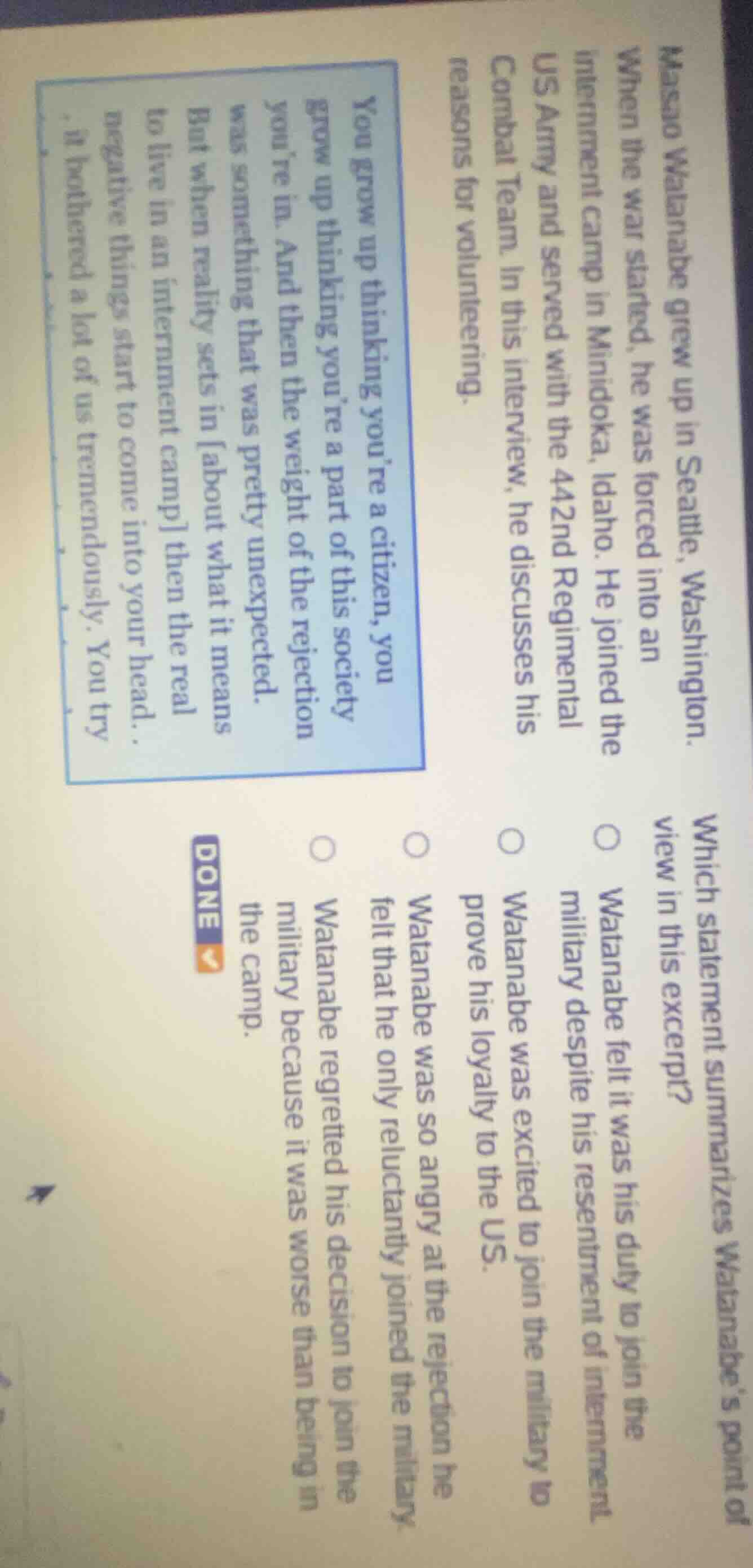
masato watanabe grew up in seattle, washington. when the war started, he was forced into an internment camp in minidoka, idaho. he joined the us army and served with the 442nd regimental combat team. in this interview, he discusses his reasons for volunteering.
you grow up thinking you’re a citizen, you grow up thinking you’re a part of this society you’re in. and then the weight of the rejection was something that was pretty unexpected.
but when reality sets in about what it means to live in an internment camp then the real negatives things start to come into your head.. it bothered a lot of us tremendously. you try
which statement summarizes watanabe’s point of view in this excerpt?
watanabe felt it was his duty to join the military despite his resentment of internment.
watanabe was excited to join the military to prove his loyalty to the us.
watanabe was so angry at the rejection he felt that he only reluctantly joined the military.
watanabe regretted his decision to join the military because it was worse than being in the camp.
- Analyze each option:
- Option 1: The excerpt mentions he joined the military despite internment (rejection), and wanting to prove loyalty (as a citizen) fits with duty, so this is a possible summary.
- Option 2: The excerpt has no indication of excitement; it talks about reality of internment and duty/loyalty, so this is incorrect.
- Option 3: The excerpt doesn't show anger at rejection leading to reluctant joining; it's about duty/loyalty and reality of internment, so incorrect.
- Option 4: The excerpt has no regret mentioned; it's about his experience and joining for duty/loyalty, so incorrect.

Snap & solve any problem in the app
Get step-by-step solutions on Sovi AI
Photo-based solutions with guided steps
Explore more problems and detailed explanations
A. Watanabe felt it was his duty to join the military despite his resentment of internment.