QUESTION IMAGE
Question
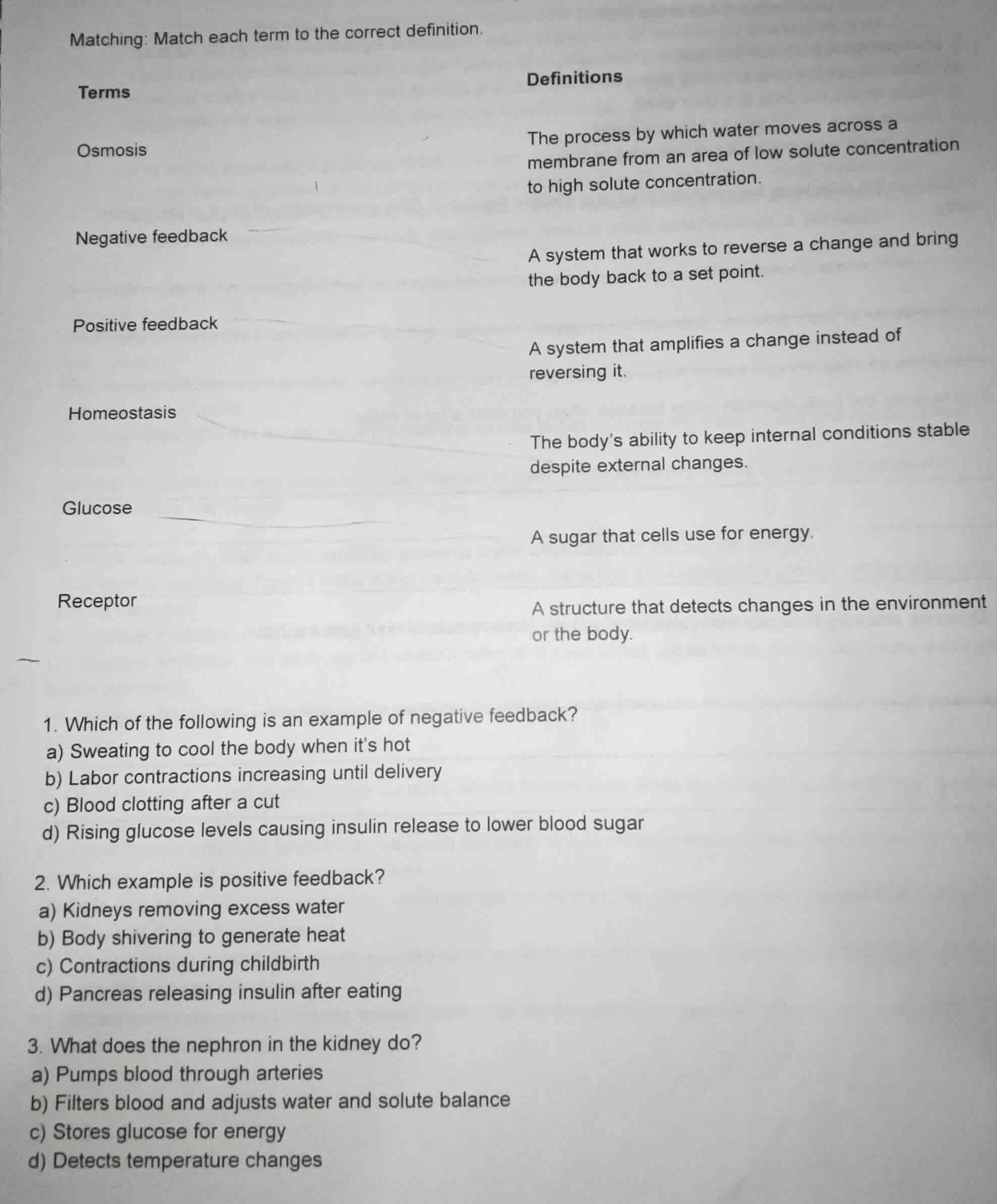
matching: match each term to the correct definition.
terms
osmosis
negative feedback
positive feedback
homeostasis
glucose
receptor
definitions
the process by which water moves across a membrane from an area of low solute concentration to high solute concentration.
a system that works to reverse a change and bring the body back to a set point.
a system that amplifies a change instead of reversing it.
the body’s ability to keep internal conditions stable despite external changes.
a sugar that cells use for energy.
a structure that detects changes in the environment or the body.
- which of the following is an example of negative feedback?
a) sweating to cool the body when it’s hot
b) labor contractions increasing until delivery
c) blood clotting after a cut
d) rising glucose levels causing insulin release to lower blood sugar
- which example is positive feedback?
a) kidneys removing excess water
b) body shivering to generate heat
c) contractions during childbirth
d) pancreas releasing insulin after eating
- what does the nephron in the kidney do?
a) pumps blood through arteries
b) filters blood and adjusts water and solute balance
c) stores glucose for energy
d) detects temperature changes
Matching Section:
- Osmosis is defined as water moving across a membrane from low to high solute concentration.
- Negative feedback reverses changes to return to a set point.
- Positive feedback amplifies changes instead of reversing them.
- Homeostasis is the body's stable internal conditions despite external changes.
- Glucose is the sugar cells use for energy.
- Receptors detect changes in the body or environment.
Multiple Choice Section:
- Negative feedback reverses changes to maintain balance; sweating cools the body, and insulin lowers high glucose to return to normal levels.
- Positive feedback amplifies changes; childbirth contractions increase until delivery.
- Nephrons in kidneys filter blood and regulate water/solute balance.

Snap & solve any problem in the app
Get step-by-step solutions on Sovi AI
Photo-based solutions with guided steps
Explore more problems and detailed explanations
Matching:
- Osmosis: The process by which water moves across a membrane from an area of low solute concentration to high solute concentration.
- Negative feedback: A system that works to reverse a change and bring the body back to a set point.
- Positive feedback: A system that amplifies a change instead of reversing it.
- Homeostasis: The body's ability to keep internal conditions stable despite external changes.
- Glucose: A sugar that cells use for energy.
- Receptor: A structure that detects changes in the environment or the body.
Multiple Choice:
- a) Sweating to cool the body when it's hot; d) Rising glucose levels causing insulin release to lower blood sugar
- c) Contractions during childbirth
- b) Filters blood and adjusts water and solute balance