QUESTION IMAGE
Question
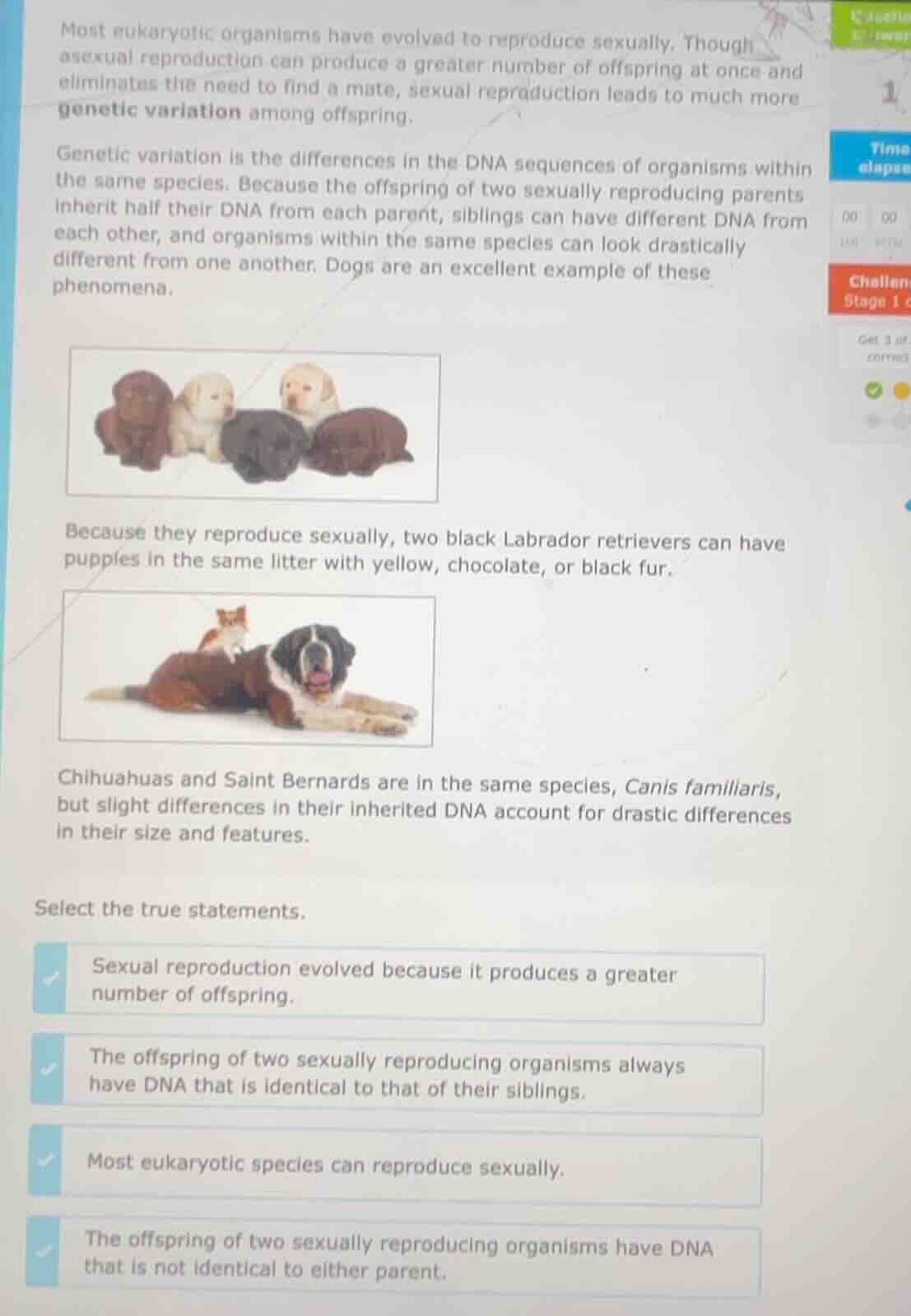
most eukaryotic organisms have evolved to reproduce sexually. though asexual reproduction can produce a greater number of offspring at once and eliminates the need to find a mate, sexual reproduction leads to much more genetic variation among offspring. genetic variation is the differences in the dna sequences of organisms within the same species. because the offspring of two sexually reproducing parents inherit half their dna from each parent, siblings can have different dna from each other, and organisms within the same species can look drastically different from one another. dogs are an excellent example of these phenomena. because they reproduce sexually, two black labrador retrievers can have puppies in the same litter with yellow, chocolate, or black fur. chihuahuas and saint bernards are in the same species, canis familiaris, but slight differences in their inherited dna account for drastic differences in their size and features. select the true statements. sexual reproduction evolved because it produces a greater number of offspring. the offspring of two sexually reproducing organisms always have dna that is identical to that of their siblings. most eukaryotic species can reproduce sexually. the offspring of two sexually reproducing organisms have dna that is not identical to either parent.
- The first statement is false: The text notes asexual reproduction produces more offspring, not sexual.
- The second statement is false: The text states siblings from sexual reproduction can have different DNA.
- The third statement is true: The opening line says most eukaryotic organisms evolved to reproduce sexually.
- The fourth statement is true: Offspring inherit half their DNA from each parent, so their DNA is a unique combination not identical to either single parent.

Snap & solve any problem in the app
Get step-by-step solutions on Sovi AI
Photo-based solutions with guided steps
Explore more problems and detailed explanations
C. Most eukaryotic species can reproduce sexually.
D. The offspring of two sexually reproducing organisms have DNA that is not identical to either parent.