QUESTION IMAGE
Question
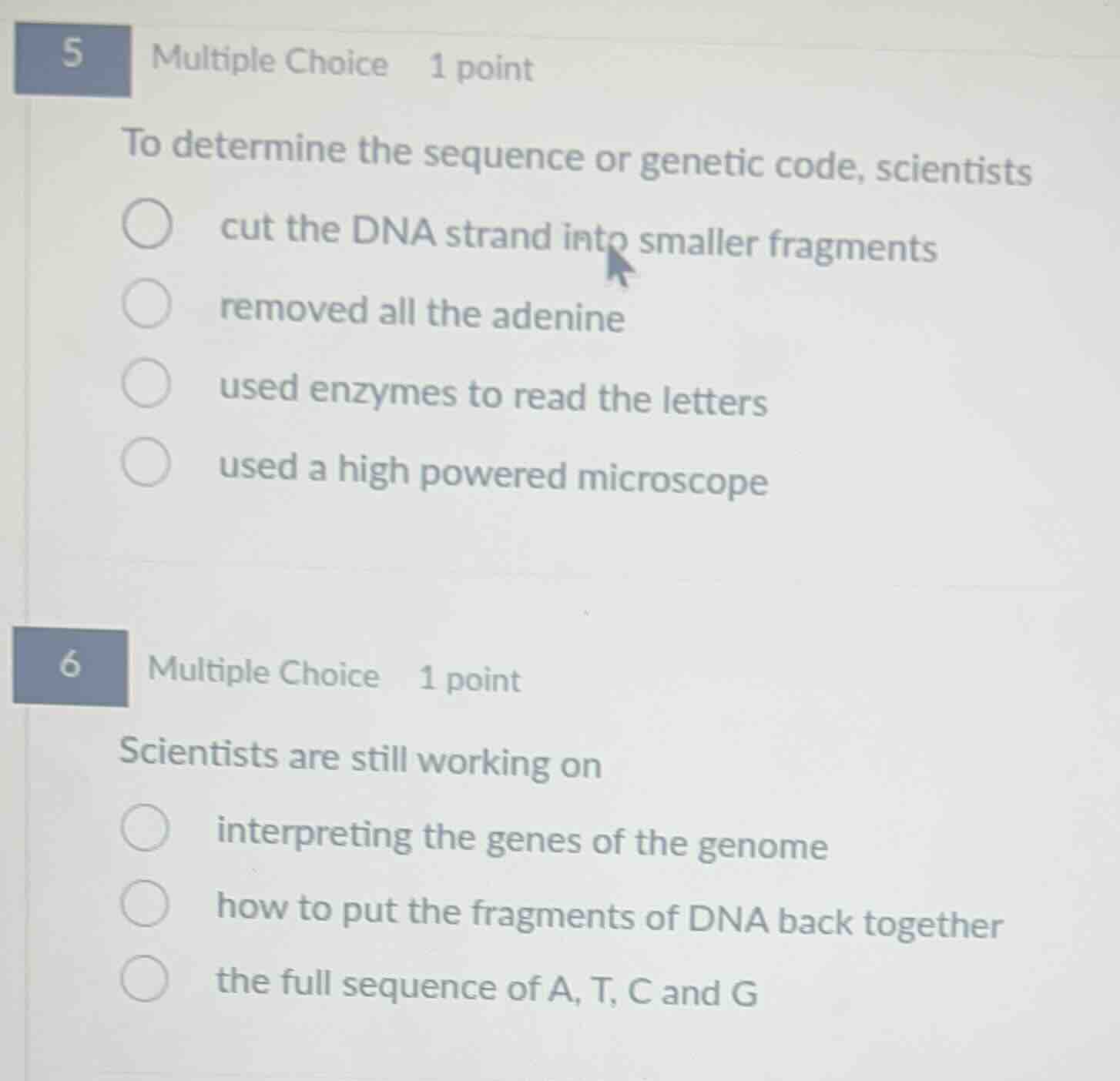
5 multiple choice 1 point to determine the sequence or genetic code, scientists cut the dna strand into smaller fragments removed all the adenine used enzymes to read the letters used a high powered microscope 6 multiple choice 1 point scientists are still working on interpreting the genes of the genome how to put the fragments of dna back together the full sequence of a, t, c and g
Question 5
To determine DNA sequence, cutting DNA into smaller fragments (e.g., via restriction enzymes) is a key step in techniques like Sanger sequencing or shotgun sequencing. Removing adenine is not a method for sequencing. Enzymes don't "read letters" directly, and DNA can't be seen at the nucleotide level with a light microscope. So the correct option is the one about cutting DNA into smaller fragments.
The full sequence of A, T, C, G (the genome sequence) has been largely determined (e.g., Human Genome Project). Putting DNA fragments back together is part of sequencing assembly, which is more established. Interpreting what genes in the genome do (functional genomics) is an ongoing area of research. So the correct option is about interpreting the genes of the genome.

Snap & solve any problem in the app
Get step-by-step solutions on Sovi AI
Photo-based solutions with guided steps
Explore more problems and detailed explanations
A. cut the DNA strand into smaller fragments (assuming the first option is A, adjust identifier if needed)