QUESTION IMAGE
Question
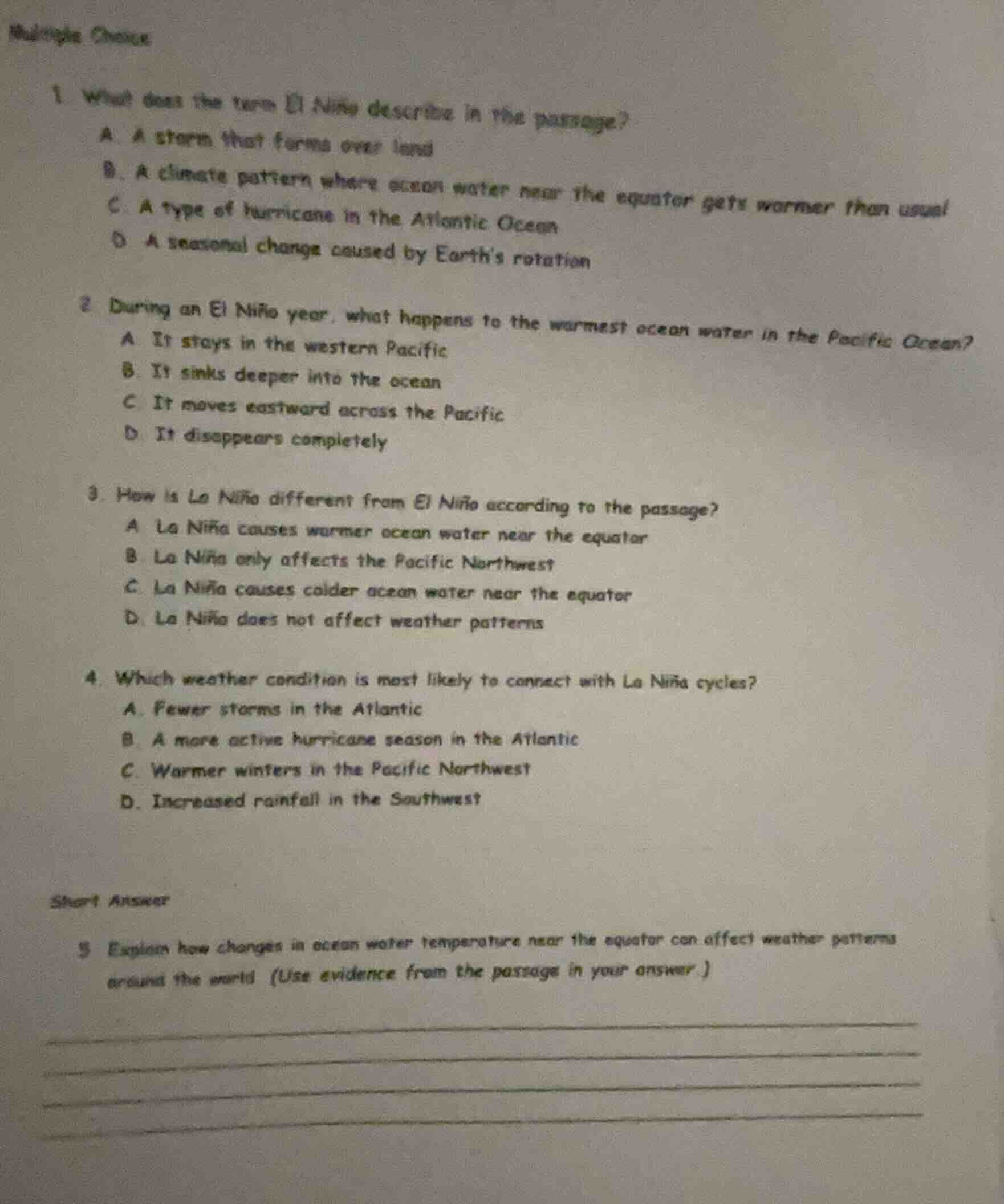
multiple choice
- what does the term el niño describe in the passage?
a. a storm that forms over land
b. a climate pattern where ocean water near the equator gets warmer than usual
c. a type of hurricane in the atlantic ocean
d. a seasonal change caused by earths rotation
- during an el niño year, what happens to the warmest ocean water in the pacific ocean?
a. it stays in the western pacific
b. it sinks deeper into the ocean
c. it moves eastward across the pacific
d. it disappears completely
- how is la niña different from el niño according to the passage?
a. la niña causes warmer ocean water near the equator
b. la niña only affects the pacific northwest
c. la niña causes colder ocean water near the equator
d. la niña does not affect weather patterns
- which weather condition is most likely to connect with la niña cycles?
a. fewer storms in the atlantic
b. a more active hurricane season in the atlantic
c. warmer winters in the pacific northwest
d. increased rainfall in the southwest
short answer
- explain how changes in ocean water temperature near the equator can affect weather patterns around the world (use evidence from the passage in your answer.)
- El Niño is defined as a climate pattern marked by above-average equatorial ocean warming.
- El Niño involves the eastward shift of warm Pacific surface waters.
- La Niña is the opposite phase of El Niño, with cooler equatorial ocean temperatures.
- La Niña suppresses wind shear in the Atlantic, creating favorable conditions for more hurricanes.
- Equatorial ocean temperature changes drive evaporation and atmospheric circulation shifts, which redistribute moisture and storm activity across the globe, with distinct regional impacts tied to El Niño/La Niña phases.

Snap & solve any problem in the app
Get step-by-step solutions on Sovi AI
Photo-based solutions with guided steps
Explore more problems and detailed explanations
- B. A climate pattern where ocean water near the equator gets warmer than usual
- C. It moves eastward across the Pacific
- C. La Niña causes colder ocean water near the equator
- B. A more active hurricane season in the Atlantic
- Changes in equatorial ocean temperatures (like El Niño's warmer waters or La Niña's cooler waters) shift atmospheric circulation: warmer waters increase evaporation, altering global wind and rain patterns. For example, El Niño can bring wetter conditions to parts of North America and drier conditions to Australia, while La Niña typically leads to more active Atlantic hurricane seasons and drier Southwest U.S. conditions, as the temperature differences drive large-scale air movement that redistributes moisture and storm systems globally.