QUESTION IMAGE
Question
name:
date:
class:
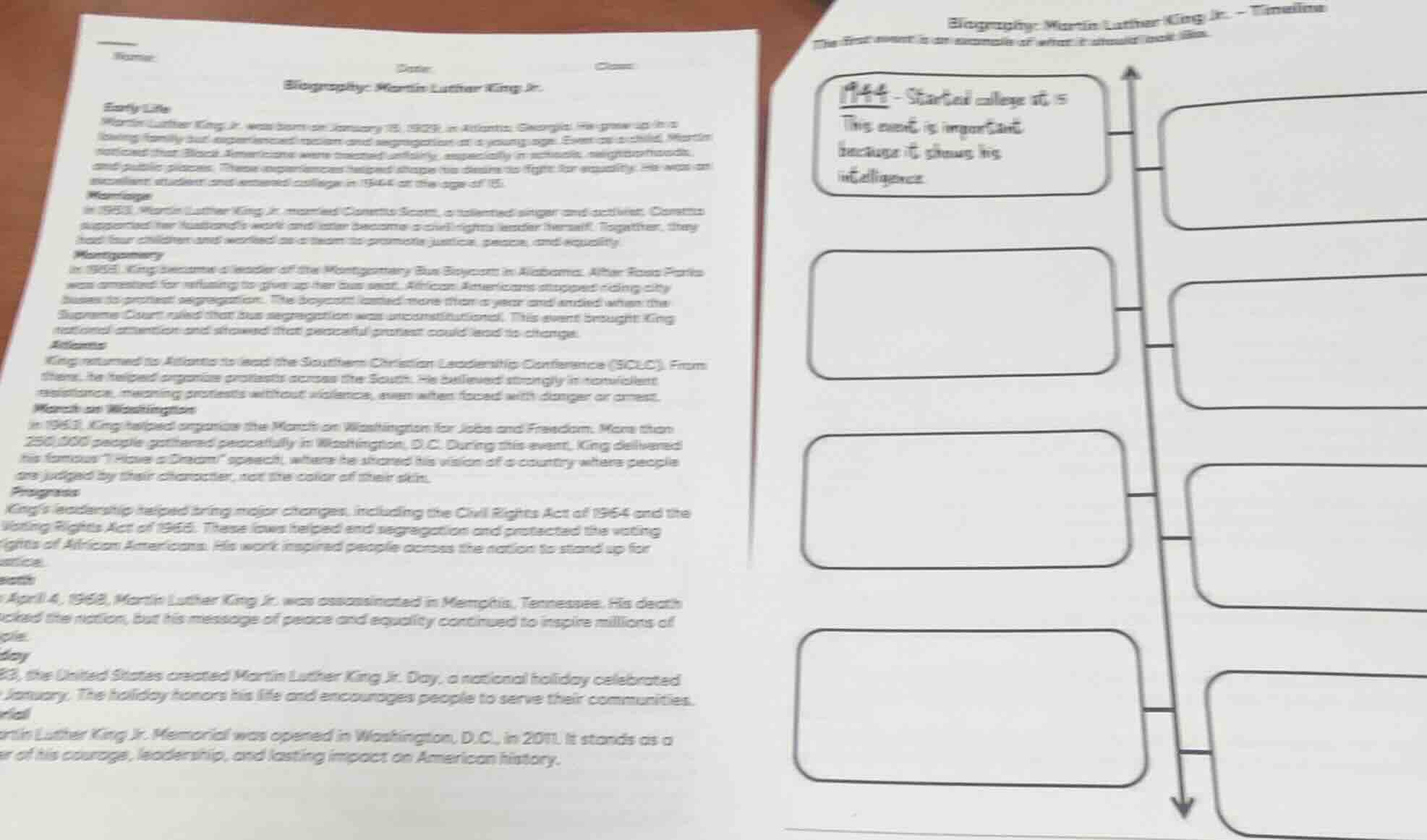
biography: martin luther king jr.
early life
martin luther king jr. was born on january 15, 1929, in atlanta, georgia. he grew up in a loving family but experienced racism and segregation at a young age. even as a child, martin noticed that black americans were treated unfairly, especially in schools, neighborhoods, and public places. these experiences helped shape his desire to fight for equality. he was an excellent student and entered college in 1944 at the age of 15.
marriage
in 1953, martin luther king jr. married coretta scott, a talented singer and activist. coretta supported her husband’s work and later became a civil rights leader herself. together, they had four children and worked as a team to promote justice, peace, and equality.
montgomery
in 1955, king became a leader of the montgomery bus boycott in alabama. after rosa parks was arrested for refusing to give up her bus seat, african americans stopped riding city buses to protest segregation. the boycott lasted more than a year and ended when the supreme court ruled that bus segregation was unconstitutional. this event brought king national attention and showed that peaceful protest could lead to change.
atlanta
king returned to atlanta to lead the southern christian leadership conference (sclc). from there, he helped organize protests across the south. he believed strongly in nonviolent resistance, meaning protests without violence, even when faced with danger or arrest.
march on washington
in 1963, king helped organize the march on washington for jobs and freedom. more than 250,000 people gathered peacefully in washington, d.c. during this event, king delivered his famous “i have a dream” speech, where he shared his vision of a country where people are judged by their character, not the color of their skin.
progress
king’s leadership helped bring major changes, including the civil rights act of 1964 and the voting rights act of 1965. these laws helped end segregation and protected the voting rights of african americans. his work inspired people across the nation to stand up for justice.
death
april 4, 1968, martin luther king jr. was assassinated in memphis, tennessee. his death shocked the nation, but his message of peace and equality continued to inspire millions of people.
today
1983, the united states created martin luther king jr. day, a national holiday celebrated in january. the holiday honors his life and encourages people to serve their communities.
memorial
martin luther king jr. memorial was opened in washington, d.c., in 2011. it stands as a symbol of his courage, leadership, and lasting impact on american history.
biography: martin luther king jr. - timeline
the first event is an example of what it should look like.
1944 - started college at 15
this event is important
because it shows his
intelligence.
To complete the timeline for Martin Luther King Jr., we analyze key events from his biography and their significance:
1. Montgomery (1955)
- Event: Became a leader of the Montgomery Bus Boycott.
- Significance: This event is important because it was a pivotal moment in the civil rights movement, showing that nonviolent protest could achieve legal change (ending bus segregation) and brought national attention to King’s leadership.
2. Atlanta (1957)
- Event: Returned to Atlanta to lead the SCLC (Southern Christian Leadership Conference) and organized nonviolent protests across the South.
- Significance: This event is important because it expanded the civil rights movement’s reach, solidifying King’s role in coordinating nationwide nonviolent resistance.
3. March on Washington (1963)
- Event: Helped organize the March on Washington and delivered the “I Have a Dream” speech.
- Significance: This event is important because it united millions in advocating for civil rights, and the speech became an iconic call for racial equality, influencing public opinion and policy.
4. Progress (1964 - 1965)
- Event: His leadership led to the Civil Rights Act (1964) and Voting Rights Act (1965).
- Significance: This event is important because these laws legally ended segregation and protected Black voters, marking major progress in civil rights.
5. Death (1968)
- Event: Assassinated in Memphis, Tennessee.
- Significance: This event is important because it tragically ended his life, but his legacy of peace and equality continued to inspire global civil rights movements.
6. Legacy (1983 - 2011)
- Event: Martin Luther King Jr. Day established (1983); MLK Memorial opened (2011).
- Significance: This event is important because it honors his life and work, ensuring his message of justice and equality remains a guiding force in society.
To format these in the timeline boxes (following the example):
- Montgomery Box:
1955 - Became leader of Montgomery Bus Boycott
This event is important because it launched nonviolent protest as a powerful civil rights tool.
- Atlanta Box:
1957 - Led SCLC, organized Southern protests
This event is important because it expanded civil rights efforts nationwide.
- March on Washington Box:
1963 - Delivered “I Have a Dream” speech
This event is important because it united millions for racial equality.
- Progress Box:
1964 - Civil Rights Act passed
This event is important because it legally ended segregation.
- Death Box:
1968 - Assassinated in Memphis
This event is important because his legacy of equality endured.
- Legacy Box:
1983 - MLK Day established
This event is important because it honors his life and inspires service.
(Note: Adjust wording to match the example’s tone and structure, focusing on clarity and conciseness for the timeline.)

Snap & solve any problem in the app
Get step-by-step solutions on Sovi AI
Photo-based solutions with guided steps
Explore more problems and detailed explanations
To complete the timeline for Martin Luther King Jr., we analyze key events from his biography and their significance:
1. Montgomery (1955)
- Event: Became a leader of the Montgomery Bus Boycott.
- Significance: This event is important because it was a pivotal moment in the civil rights movement, showing that nonviolent protest could achieve legal change (ending bus segregation) and brought national attention to King’s leadership.
2. Atlanta (1957)
- Event: Returned to Atlanta to lead the SCLC (Southern Christian Leadership Conference) and organized nonviolent protests across the South.
- Significance: This event is important because it expanded the civil rights movement’s reach, solidifying King’s role in coordinating nationwide nonviolent resistance.
3. March on Washington (1963)
- Event: Helped organize the March on Washington and delivered the “I Have a Dream” speech.
- Significance: This event is important because it united millions in advocating for civil rights, and the speech became an iconic call for racial equality, influencing public opinion and policy.
4. Progress (1964 - 1965)
- Event: His leadership led to the Civil Rights Act (1964) and Voting Rights Act (1965).
- Significance: This event is important because these laws legally ended segregation and protected Black voters, marking major progress in civil rights.
5. Death (1968)
- Event: Assassinated in Memphis, Tennessee.
- Significance: This event is important because it tragically ended his life, but his legacy of peace and equality continued to inspire global civil rights movements.
6. Legacy (1983 - 2011)
- Event: Martin Luther King Jr. Day established (1983); MLK Memorial opened (2011).
- Significance: This event is important because it honors his life and work, ensuring his message of justice and equality remains a guiding force in society.
To format these in the timeline boxes (following the example):
- Montgomery Box:
1955 - Became leader of Montgomery Bus Boycott
This event is important because it launched nonviolent protest as a powerful civil rights tool.
- Atlanta Box:
1957 - Led SCLC, organized Southern protests
This event is important because it expanded civil rights efforts nationwide.
- March on Washington Box:
1963 - Delivered “I Have a Dream” speech
This event is important because it united millions for racial equality.
- Progress Box:
1964 - Civil Rights Act passed
This event is important because it legally ended segregation.
- Death Box:
1968 - Assassinated in Memphis
This event is important because his legacy of equality endured.
- Legacy Box:
1983 - MLK Day established
This event is important because it honors his life and inspires service.
(Note: Adjust wording to match the example’s tone and structure, focusing on clarity and conciseness for the timeline.)