QUESTION IMAGE
Question
ol3063biod_biology a - g cr semester b_7
biogeographic isolation
understanding isolation and speciation
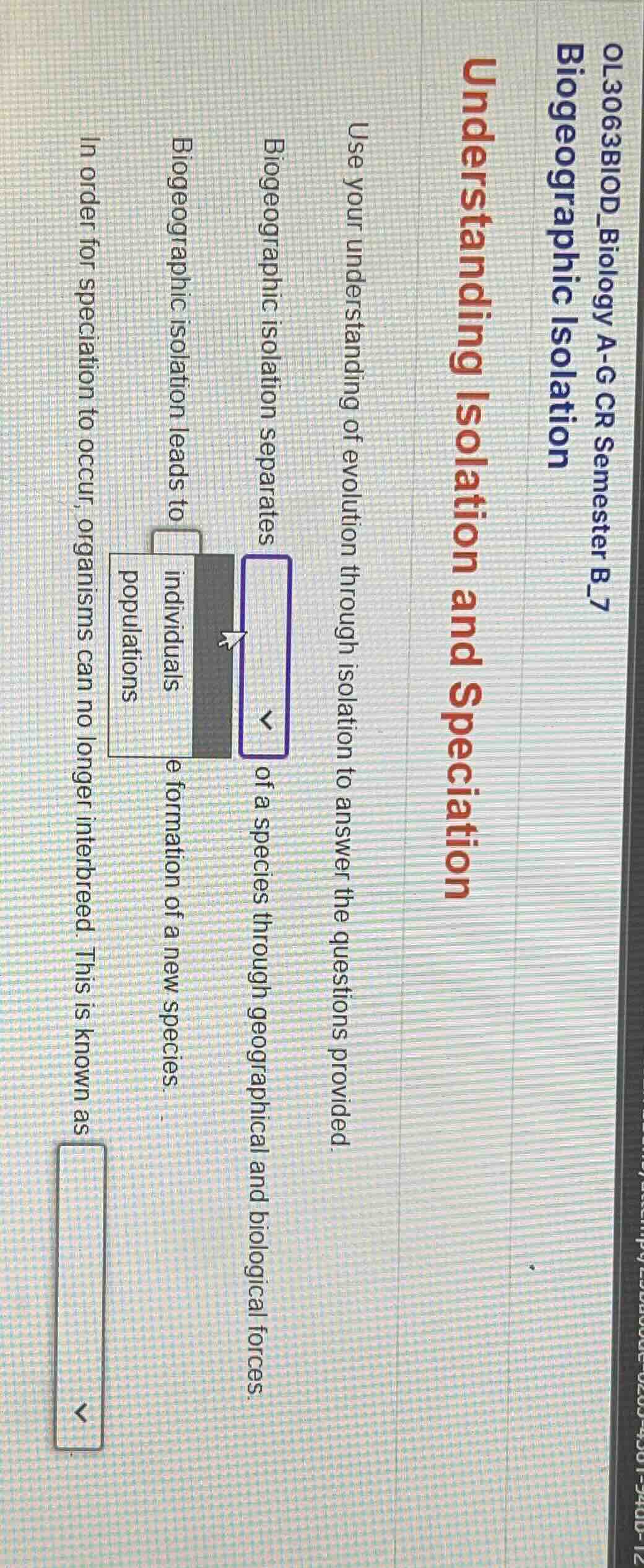
use your understanding of evolution through isolation to answer the questions provided.
biogeographic isolation separates of a species through geographical and biological forces.
biogeographic isolation leads to e formation of a new species.
in order for speciation to occur, organisms can no longer interbreed. this is known as
Brief Explanations
- Biogeographic isolation first splits a single species into distinct groups that do not interact. These groups are populations, not just individual organisms, since isolation acts on groups of the species.
- Over time, this isolation drives the formation of new species as the separated groups evolve independently.
- When populations can no longer interbreed and produce viable offspring, this reproductive barrier defines the completion of speciation.

Snap & solve any problem in the app
Get step-by-step solutions on Sovi AI
Photo-based solutions with guided steps
Explore more problems and detailed explanations
- Biogeographic isolation separates populations of a species through geographical and biological forces.
- Biogeographic isolation leads to the formation of a new species.
- In order for speciation to occur, organisms can no longer interbreed. This is known as reproductive isolation