QUESTION IMAGE
Question
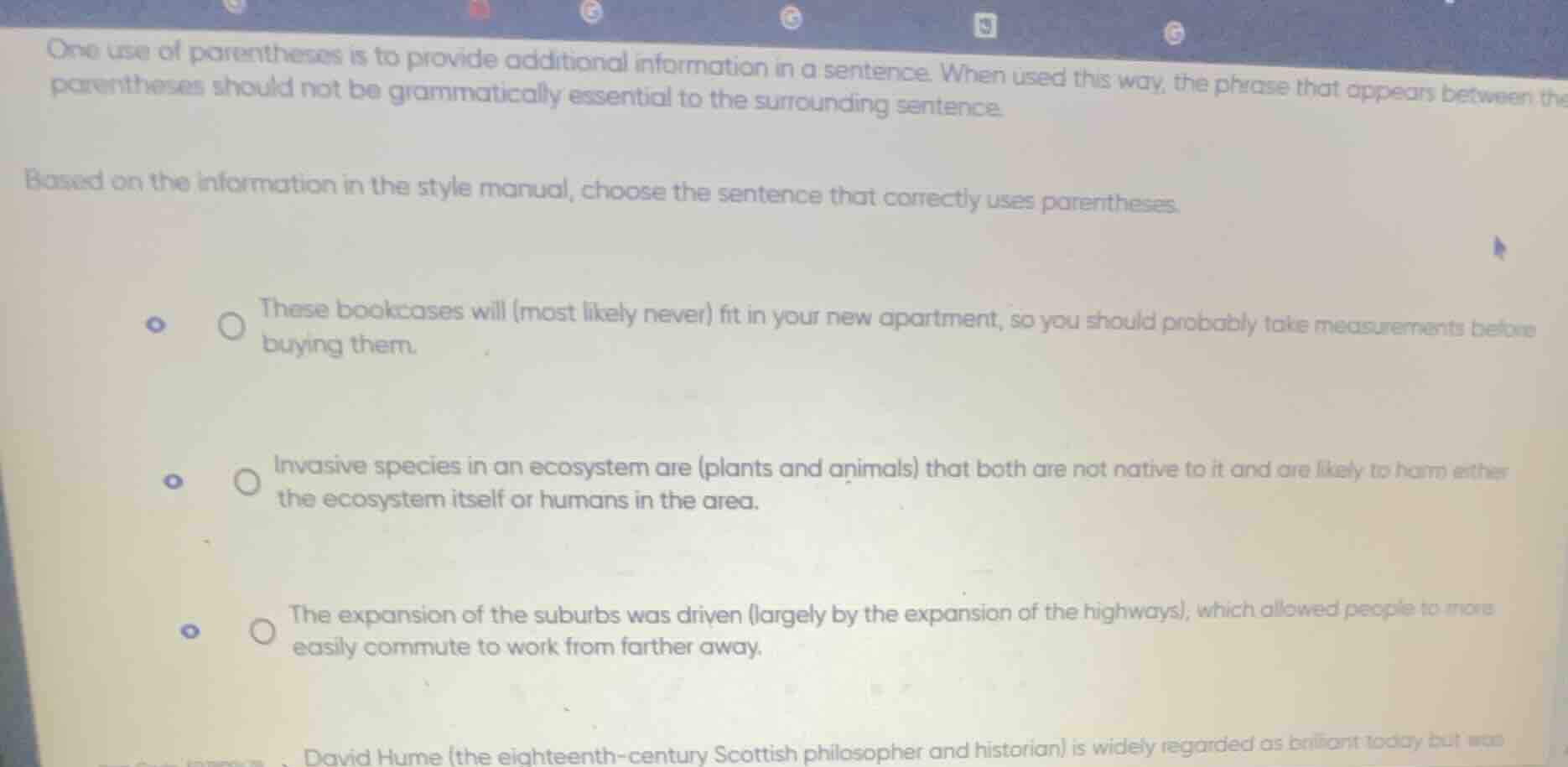
one use of parentheses is to provide additional information in a sentence. when used this way, the phrase that appears between the parentheses should not be grammatically essential to the surrounding sentence. based on the information in the style manual, choose the sentence that correctly uses parentheses. these bookcases will (most likely never) fit in your new apartment, so you should probably take measurements before buying them. invasive species in an ecosystem are (plants and animals) that both are not native to it and are likely to harm either the ecosystem itself or humans in the area. the expansion of the suburbs was driven (largely by the expansion of the highways), which allowed people to more easily commute to work from farther away. david hume (the eighteenth - century scottish philosopher and historian) is widely regarded as brilliant today but was
- For the first option: The phrase "(most likely never)" is grammatically essential to the core meaning of the clause, so parentheses are misused here.
- For the second option: "(plants and animals)" defines what invasive species are, which is grammatically essential to the sentence, so parentheses are incorrect here.
- For the third option: "(largely by the expansion of the highways)" provides key essential context for why suburban expansion happened, making parentheses an incorrect choice.
- For the fourth option: "(the eighteenth-century Scottish philosopher and historian)" is extra, non-essential information about David Hume. The core sentence "David Hume is widely regarded as brilliant today but was..." is grammatically complete and meaningful without this phrase, so parentheses are used correctly here.

Snap & solve any problem in the app
Get step-by-step solutions on Sovi AI
Photo-based solutions with guided steps
Explore more problems and detailed explanations
David Hume (the eighteenth-century Scottish philosopher and historian) is widely regarded as brilliant today but was