QUESTION IMAGE
Question
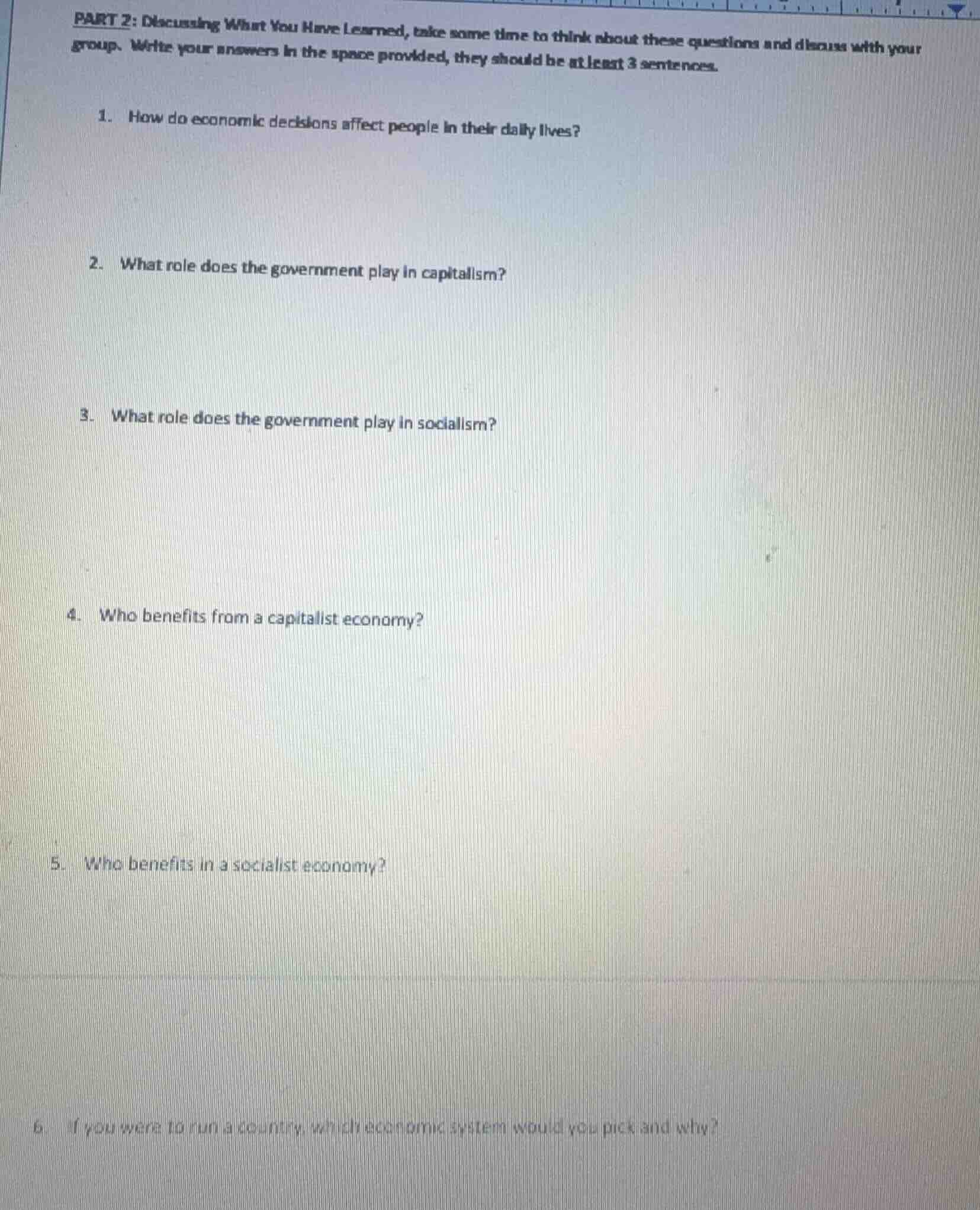
part 2: discussing what you have learned, take some time to think about these questions and discuss with your group. write your answers in the space provided, they should be at least 3 sentences.
- how do economic decisions affect people in their daily lives?
- what role does the government play in capitalism?
- what role does the government play in socialism?
- who benefits from a capitalist economy?
- who benefits in a socialist economy?
- if you were to run a country, which economic system would you pick and why?
Question 1: How do economic decisions affect people in their daily lives?
Economic decisions, like government policies on taxes or businesses’ pricing choices, impact daily life. Tax hikes can reduce disposable income, affecting spending on essentials or leisure. Business decisions on wages influence people’s ability to afford housing, food, or healthcare. Also, interest rate choices by central banks affect loan costs for mortgages or education, shaping financial plans.
In capitalism, the government’s role is limited but vital. It enforces property rights and contracts to ensure market fairness. It also regulates monopolies to prevent exploitation and provides public goods like infrastructure or education that markets might underprovide. Additionally, it offers a safety net (e.g., unemployment benefits) to address market failures and reduce inequality.
In socialism, the government has a central role in economic planning and resource distribution. It owns or controls key industries (e.g., healthcare, energy) to ensure equitable access. It plans production to meet societal needs, not just profit, and redistributes wealth through taxation and social programs to reduce class differences. The government also provides universal services like healthcare and education as a right, not a commodity.

Snap & solve any problem in the app
Get step-by-step solutions on Sovi AI
Photo-based solutions with guided steps
Explore more problems and detailed explanations
Economic decisions heavily influence daily life. For example, tax policies determine disposable income, affecting spending on needs like food or wants like entertainment. Business wage decisions impact affordability of housing or healthcare. Interest rate changes by banks alter loan costs for education or mortgages, guiding financial choices.