QUESTION IMAGE
Question
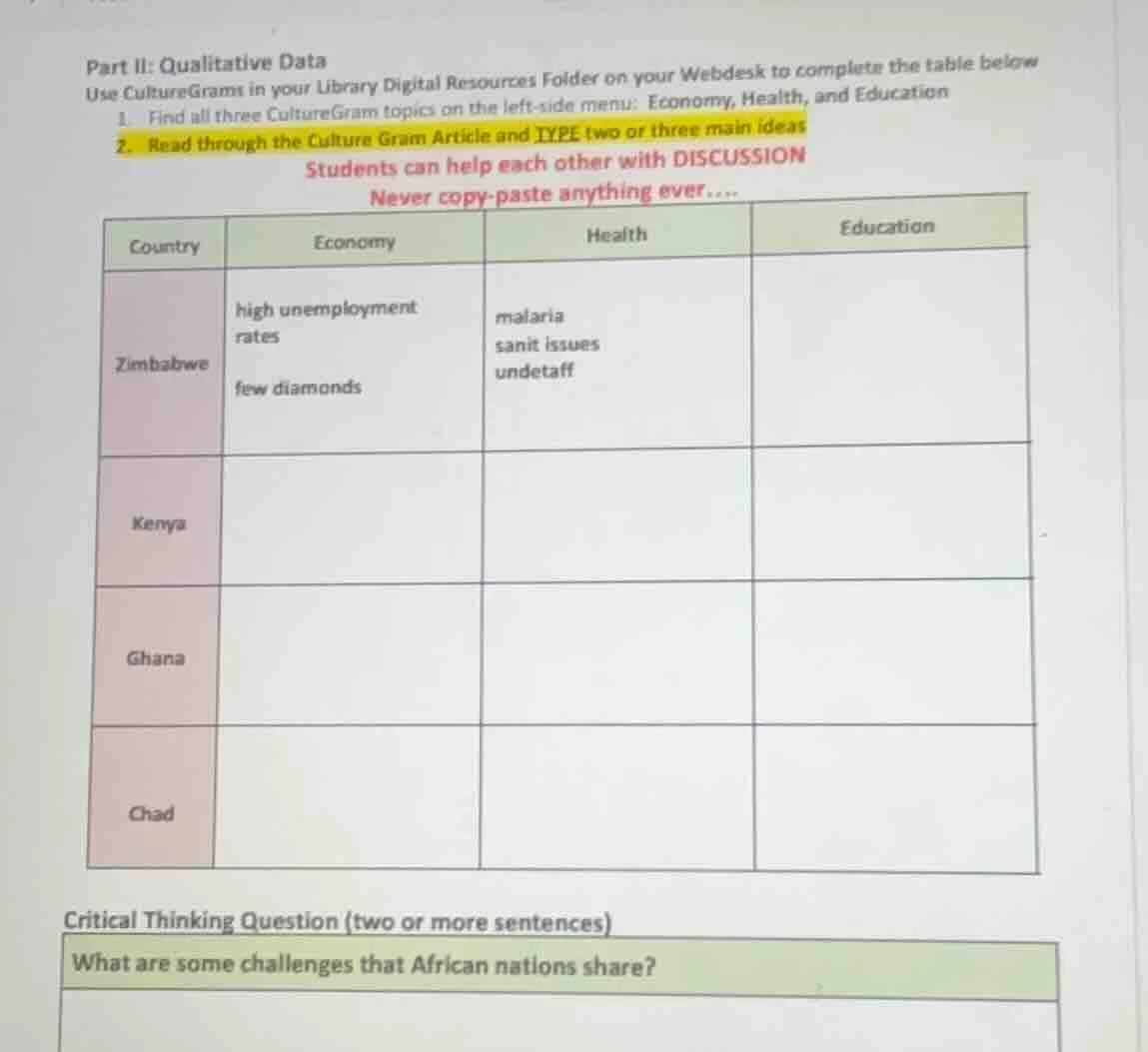
part ii: qualitative data
use culturegrams in your library digital resources folder on your webdesk to complete the table below
- find all three culturegram topics on the left - side menu: economy, health, and education
- read through the culture gram article and type two or three main ideas
students can help each other with discussion
never copy - paste anything ever....
critical thinking question (two or more sentences)
what are some challenges that african nations share?
Completing the Table (using CultureGram data, here's a summary of key points for each country):
Kenya:
- Economy: Agriculture (e.g., tea, coffee) is vital; tourism (safaris) is a major income source; some urban unemployment.
- Health: Malaria is prevalent; HIV/AIDS affects populations; improving access to healthcare in rural areas.
- Education: Free primary education; high enrollment rates but challenges with quality and access in remote regions; teacher shortages.
Ghana:
- Economy: Gold and cocoa exports drive the economy; growing service sector; some infrastructure gaps (e.g., roads).
- Health: Malaria and waterborne diseases are issues; improving healthcare infrastructure, especially in rural areas; maternal health challenges.
- Education: High literacy rates (compared to some neighbors); focus on technical/vocational training; challenges with funding for schools.
Chad:
- Economy: Oil production is a key industry; agriculture (cotton) is important; limited infrastructure hinders trade.
- Health: Malaria, malnutrition, and limited healthcare facilities (especially in rural areas); high infant mortality rates.
- Education: Low enrollment rates (especially for girls); limited resources for schools; teacher shortages in remote regions.
Critical Thinking Question (Answer):
African nations share challenges like economic vulnerability (e.g., reliance on a few exports, high unemployment), health crises (malaria, HIV/AIDS, and limited healthcare access), and educational gaps (low enrollment/quality in rural areas, teacher shortages). Additionally, many face infrastructure deficits (roads, healthcare facilities) and climate-related risks (droughts affecting agriculture). These challenges stem from historical, environmental, and resource-related factors, and addressing them requires regional collaboration and targeted investments.

Snap & solve any problem in the app
Get step-by-step solutions on Sovi AI
Photo-based solutions with guided steps
Explore more problems and detailed explanations
Completing the Table (using CultureGram data, here's a summary of key points for each country):
Kenya:
- Economy: Agriculture (e.g., tea, coffee) is vital; tourism (safaris) is a major income source; some urban unemployment.
- Health: Malaria is prevalent; HIV/AIDS affects populations; improving access to healthcare in rural areas.
- Education: Free primary education; high enrollment rates but challenges with quality and access in remote regions; teacher shortages.
Ghana:
- Economy: Gold and cocoa exports drive the economy; growing service sector; some infrastructure gaps (e.g., roads).
- Health: Malaria and waterborne diseases are issues; improving healthcare infrastructure, especially in rural areas; maternal health challenges.
- Education: High literacy rates (compared to some neighbors); focus on technical/vocational training; challenges with funding for schools.
Chad:
- Economy: Oil production is a key industry; agriculture (cotton) is important; limited infrastructure hinders trade.
- Health: Malaria, malnutrition, and limited healthcare facilities (especially in rural areas); high infant mortality rates.
- Education: Low enrollment rates (especially for girls); limited resources for schools; teacher shortages in remote regions.
Critical Thinking Question (Answer):
African nations share challenges like economic vulnerability (e.g., reliance on a few exports, high unemployment), health crises (malaria, HIV/AIDS, and limited healthcare access), and educational gaps (low enrollment/quality in rural areas, teacher shortages). Additionally, many face infrastructure deficits (roads, healthcare facilities) and climate-related risks (droughts affecting agriculture). These challenges stem from historical, environmental, and resource-related factors, and addressing them requires regional collaboration and targeted investments.