QUESTION IMAGE
Question
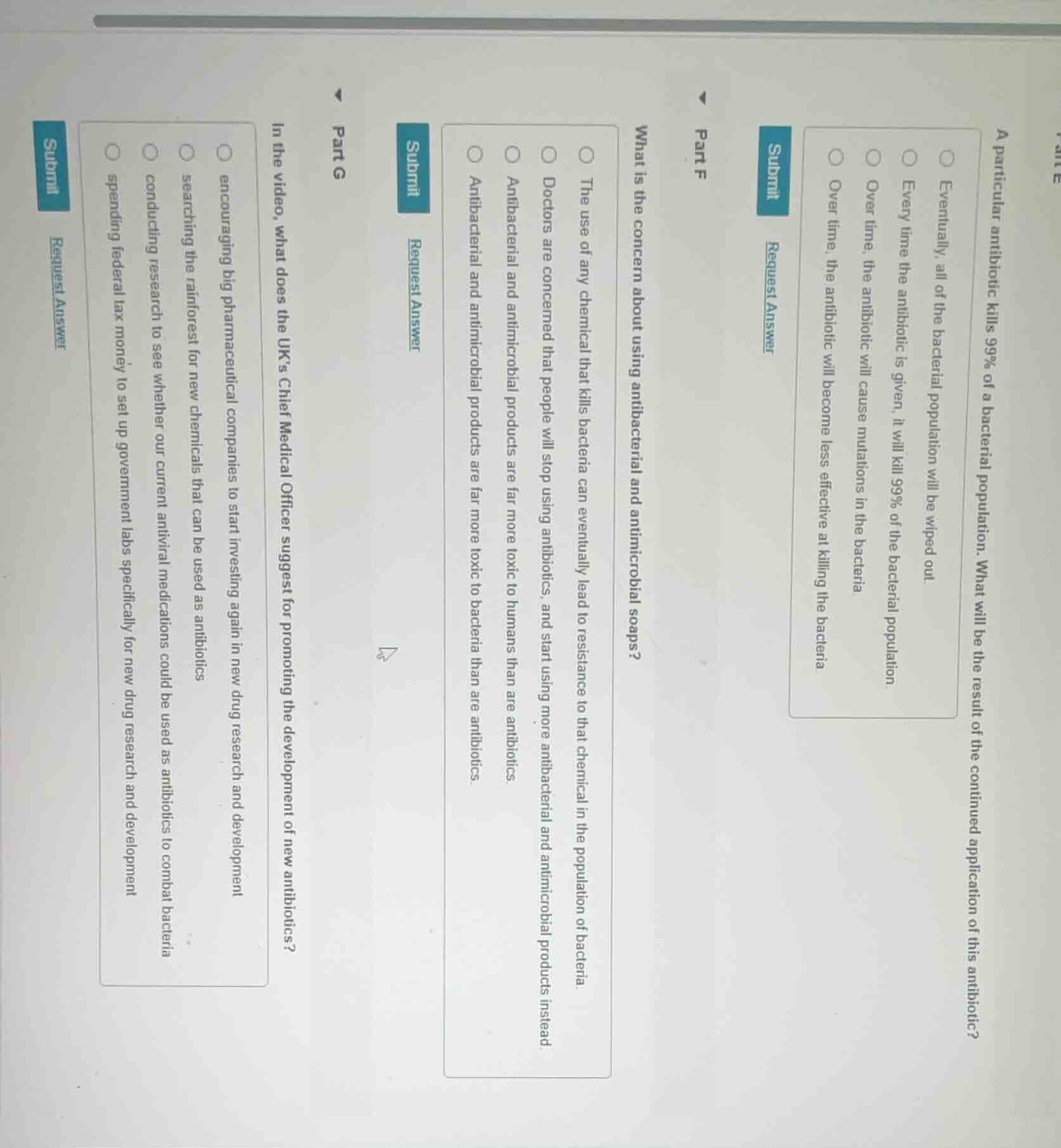
a particular antibiotic kills 99% of a bacterial population. what will be the result of the continued application of this antibiotic?
○ eventually, all of the bacterial population will be wiped out.
○ every time the antibiotic is given, it will kill 99% of the bacterial population.
○ over time, the antibiotic will cause mutations in the bacteria
○ over time, the antibiotic will become less effective at killing the bacteria
what is the concern about using antibacterial and antimicrobial soaps?
○ the use of any chemical that kills bacteria can eventually lead to resistance to that chemical in the population of bacteria.
○ doctors are concerned that people will stop using antibiotics, and start using more antibacterial and antimicrobial products instead
○ antibacterial and antimicrobial products are far more toxic to humans than are antibiotics.
○ antibacterial and antimicrobial products are far more toxic to bacteria than are antibiotics.
in the video, what does the uk’s chief medical officer suggest for promoting the development of new antibiotics?
○ encouraging big pharmaceutical companies to start investing again in new drug research and development
○ searching the rainforest for new chemicals that can be used as antibiotics
○ conducting research to see whether our current antiviral medications could be used as antibiotics to combat bacteria
○ spending federal tax money to set up government labs specifically for new drug research and development
Part E:
When an antibiotic kills 99% of bacteria, the remaining 1% are naturally resistant. With continued use, these resistant bacteria survive, reproduce, and pass on resistance traits, making the antibiotic less effective over time.
Part F:
Widespread use of antibacterial/antimicrobial soaps creates selective pressure, leading bacteria to develop resistance to the chemicals in these products, similar to how antibiotic resistance develops.
Part G:
The UK's Chief Medical Officer has publicly advocated for incentivizing large pharmaceutical companies to reinvest in research and development of new antibiotics, as private sector investment in this area has declined.

Snap & solve any problem in the app
Get step-by-step solutions on Sovi AI
Photo-based solutions with guided steps
Explore more problems and detailed explanations
Part E
Over time, the antibiotic will become less effective at killing the bacteria
Part F
The use of any chemical that kills bacteria can eventually lead to resistance to that chemical in the population of bacteria
Part G
encouraging big pharmaceutical companies to start investing again in new drug research and development