QUESTION IMAGE
Question
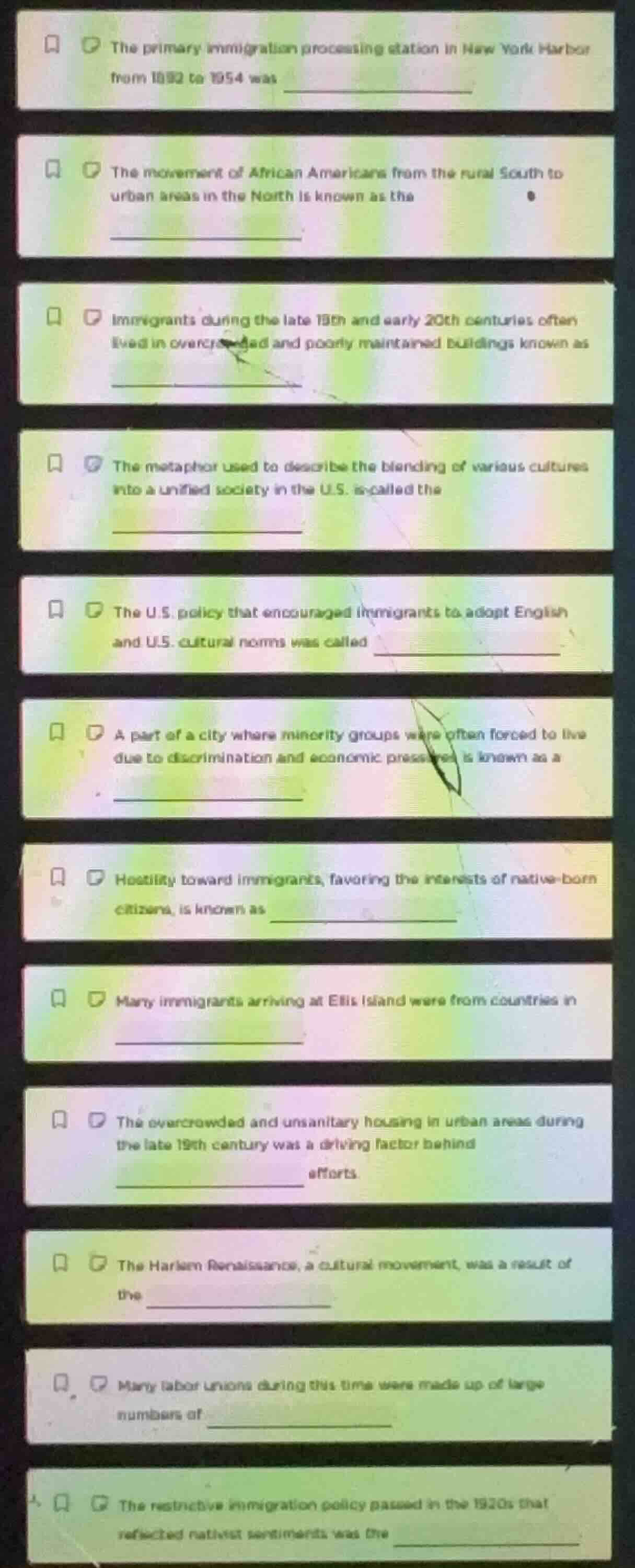
the primary immigration processing station in new york harbor from 1892 to 1954 was
the movement of african americans from the rural south to urban areas in the north is known as the
immigrants during the late 19th and early 20th centuries often lived in overcrowded and poorly maintained buildings known as
the metaphor used to describe the blending of various cultures into a unified society in the u.s. is called the
the u.s. policy that encouraged immigrants to adopt english and u.s. cultural norms was called
a part of a city where minority groups were often forced to live due to discrimination and economic pressures is known as a
hostility toward immigrants, favoring the interests of native - born citizens, is known as
many immigrants arriving at ellis island were from countries in
the overcrowded and unsanitary housing in urban areas during the late 19th century was a driving factor behind efforts.
the harlem renaissance, a cultural movement, was a result of the
many labor unions during this time were made up of large numbers of
the restrictive immigration policy passed in the 1920s that reflected nativist sentiments was the
- Ellis Island was the key U.S. immigration hub in NY Harbor for the given period.
- This large-scale internal migration of Black Americans is the Great Migration.
- These cramped, dilapidated buildings for immigrants were tenements.
- The "melting pot" is the classic metaphor for U.S. cultural assimilation.
- Americanization was the official policy to integrate immigrants into U.S. culture.
- Segregated, minority-concentrated urban areas are ghettos.
- Nativism refers to prejudice against immigrants in favor of native-born people.
- Ellis Island primarily processed immigrants from Southern and Eastern Europe in this era.
- Poor urban housing spurred progressive-era housing reform efforts.
- The Harlem Renaissance grew out of the Great Migration's cultural shift.
- Immigrants formed a major portion of 19th/early 20th century labor unions.
- The Immigration Act of 1924 imposed restrictive, nativist immigration quotas.

Snap & solve any problem in the app
Get step-by-step solutions on Sovi AI
Photo-based solutions with guided steps
Explore more problems and detailed explanations
- Ellis Island
- Great Migration
- Tenements
- Melting Pot
- Americanization
- Ghetto
- Nativism
- Southern and Eastern Europe
- Housing Reform
- Great Migration
- Immigrants
- Immigration Act of 1924 (or National Origins Act)