QUESTION IMAGE
Question
prompt:when you hear the word
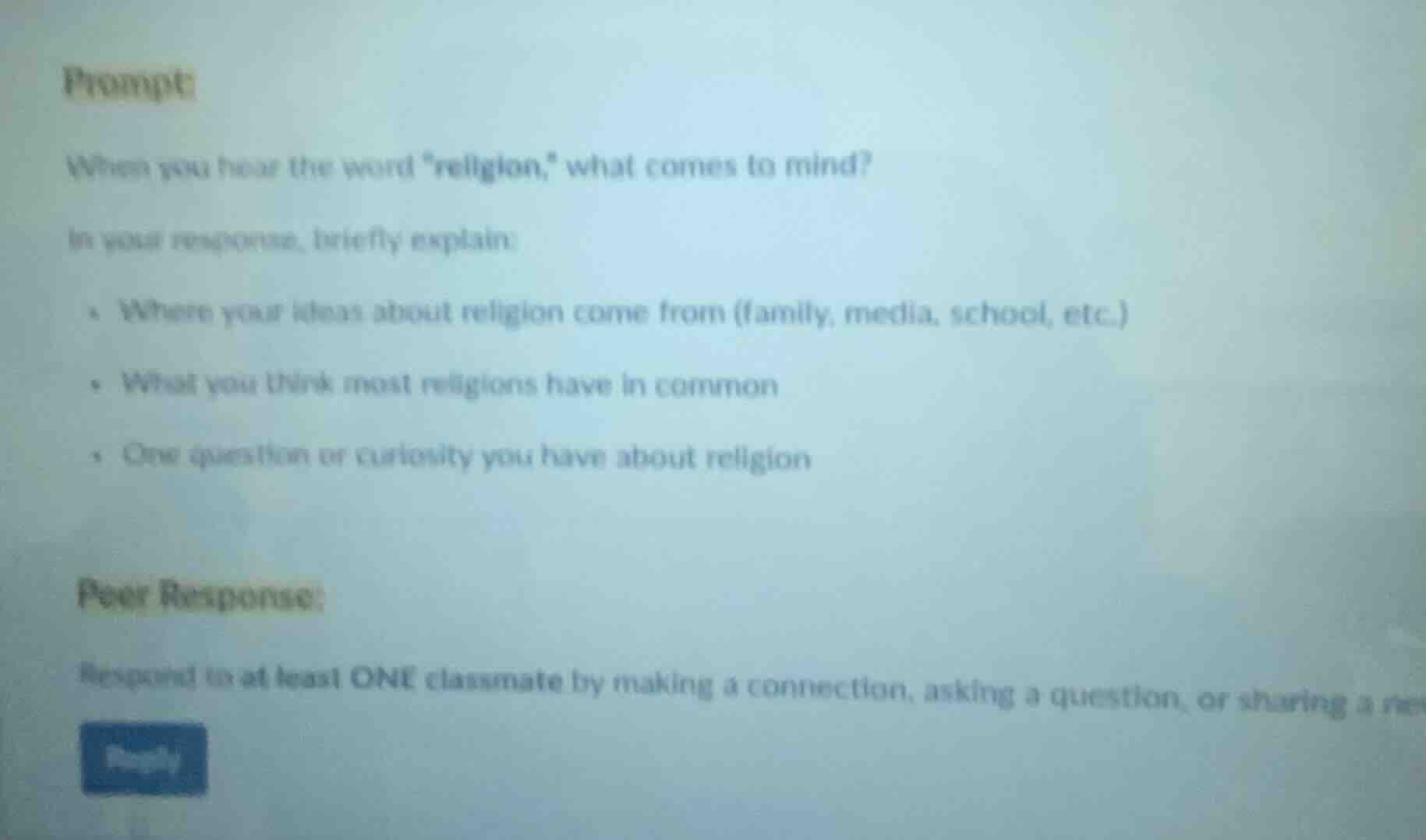
eligion,\ what comes to mind?in your response, briefly explain:- where your ideas about religion come from (family, media, school, etc.)- what you think most religions have in common- one question or curiosity you have about religionpeer response:respond to at least one classmate by making a connection, asking a question, or sharing a ne
First, address the core prompt: when hearing "religion," structured responses cover origin of ideas, common religious traits, and a curiosity.
- Idea Origin: My understanding of religion comes primarily from family (growing up with Buddhist practices and discussions) and school (world religion classes that covered diverse faiths).
- Common Traits: Most religions share a focus on moral frameworks to guide behavior, concepts of a higher power or spiritual force, and communal rituals to foster group identity.
- Curiosity: I am curious about how religions adapt their core beliefs to fit modern social norms, like shifting views on gender equality.
For a peer response example (assuming a peer said their ideas come from media and they wonder about religious conflict): I connect with your point about media shaping views— I’ve also noticed media often highlights religious conflict over cooperation. I’m curious: do you think media representation impacts how people from different faiths interact in daily life?

Snap & solve any problem in the app
Get step-by-step solutions on Sovi AI
Photo-based solutions with guided steps
Explore more problems and detailed explanations
Core Response to Prompt:
- My ideas about religion come from family (Buddhist upbringing) and school world religion courses.
- Most religions share moral guidelines, spiritual/higher power beliefs, and communal rituals.
- I wonder how religions adapt core beliefs to modern social norms like gender equality.
Example Peer Response:
I connect with your point about media shaping religious views— I’ve also noticed media often highlights religious conflict over cooperation. Do you think this skewed representation impacts how people from different faiths interact in daily life?