QUESTION IMAGE
Question
question 10 of 10
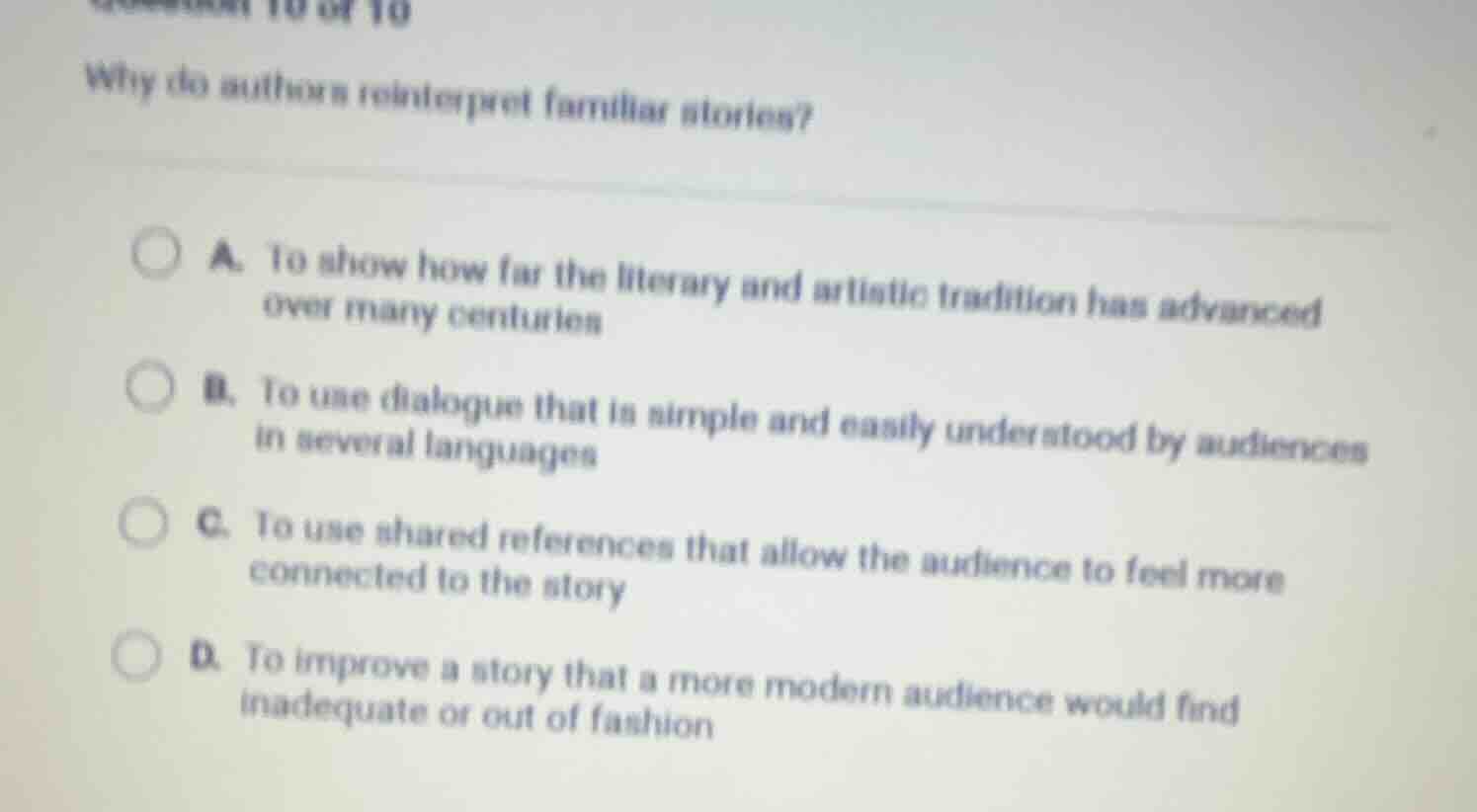
why do authors reinterpret familiar stories?
a. to show how far the literary and artistic tradition has advanced over many centuries
b. to use dialogue that is simple and easily understood by audiences in several languages
c. to use shared references that allow the audience to feel more connected to the story
d. to improve a story that a more modern audience would find inadequate or out of fashion
Reinterpreting familiar stories leverages the audience's pre-existing knowledge of the original work. This shared reference point creates immediate familiarity, helping audiences engage more deeply and feel connected to the new retelling, as they can draw parallels and recognize core elements while experiencing fresh perspectives. Other options are less accurate: Option A focuses on tradition advancement, which is not the primary goal; Option B is unrelated to reinterpreting familiar stories; Option D incorrectly frames the goal as "fixing" the original rather than building on shared familiarity.

Snap & solve any problem in the app
Get step-by-step solutions on Sovi AI
Photo-based solutions with guided steps
Explore more problems and detailed explanations
C. To use shared references that allow the audience to feel more connected to the story