QUESTION IMAGE
Question
question 9 of 25
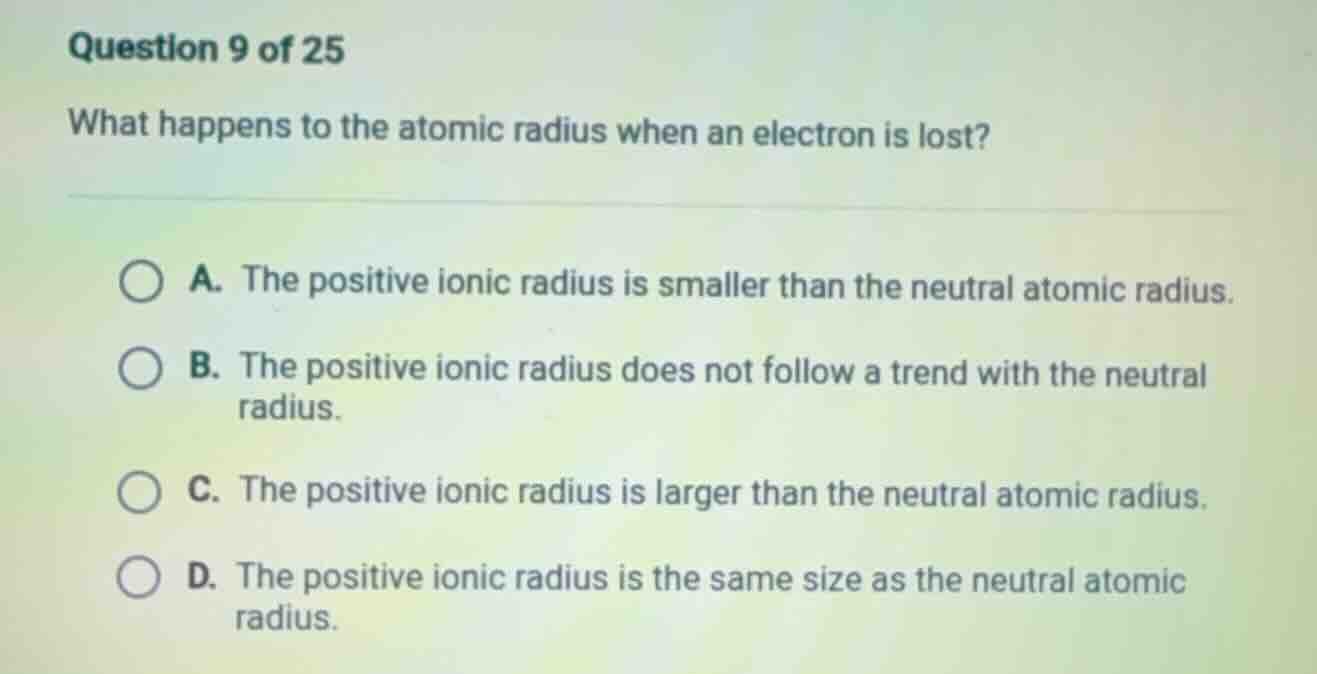
what happens to the atomic radius when an electron is lost?
a. the positive ionic radius is smaller than the neutral atomic radius.
b. the positive ionic radius does not follow a trend with the neutral
radius.
c. the positive ionic radius is larger than the neutral atomic radius.
d. the positive ionic radius is the same size as the neutral atomic
radius.
When an atom loses an electron, it forms a positive ion (cation). The atomic radius is determined by the electron cloud and the attraction between protons in the nucleus and electrons. In a neutral atom, the number of protons and electrons is equal. When an electron is lost, the number of protons (positive charge) remains the same, but the number of electrons (negative charge) decreases. This means the remaining electrons are pulled more strongly towards the nucleus because there is less electron - electron repulsion. As a result, the electron cloud shrinks, and the ionic radius of the positive ion is smaller than the atomic radius of the neutral atom. Option B is incorrect because there is a clear trend. Option C is wrong as the positive ion radius is smaller, not larger. Option D is incorrect as the radius changes due to the loss of an electron and the resulting change in electrostatic forces.

Snap & solve any problem in the app
Get step-by-step solutions on Sovi AI
Photo-based solutions with guided steps
Explore more problems and detailed explanations
A. The positive ionic radius is smaller than the neutral atomic radius.