QUESTION IMAGE
Question
question 36
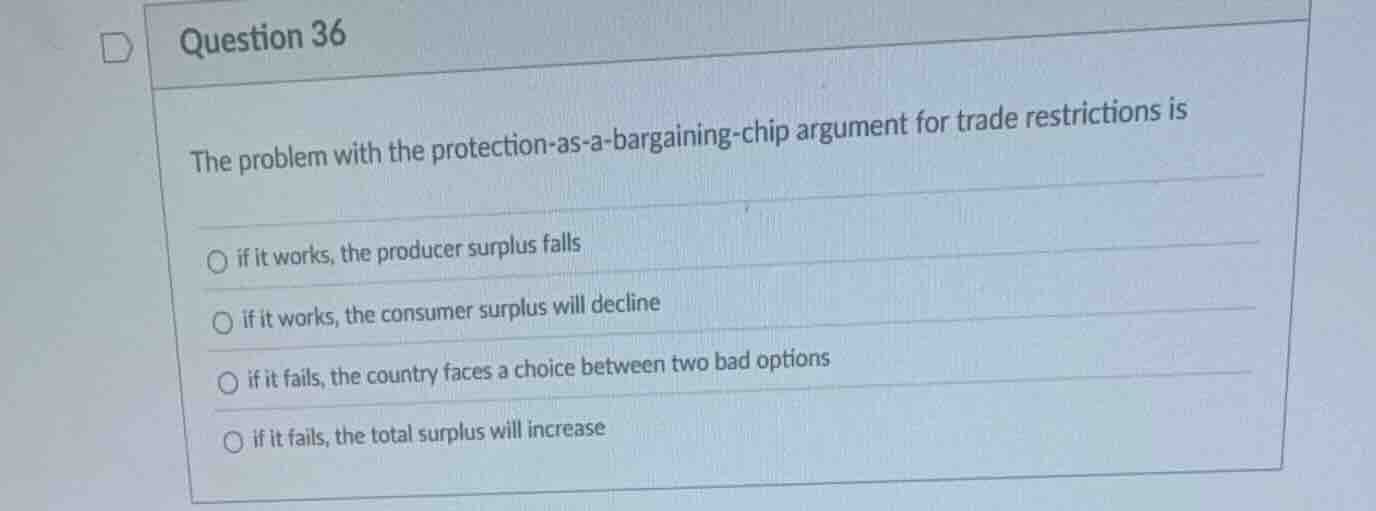
the problem with the protection-as-a-bargaining-chip argument for trade restrictions is
○ if it works, the producer surplus falls
○ if it works, the consumer surplus will decline
○ if it fails, the country faces a choice between two bad options
○ if it fails, the total surplus will increase
The protection - as - a - bargaining - chip argument for trade restrictions is about using trade restrictions to get other countries to open their markets. If the argument fails (the other country doesn't concede), the country that imposed the restrictions has to choose between two bad options: either keep the trade restrictions (which harms consumers and reduces total surplus) or remove the restrictions (which makes the initial threat look empty and may lead to other issues).
- Option 1: If the argument works, producer surplus usually rises (due to protection), so this is wrong.
- Option 2: While consumer surplus may decline if it works, this is not the main problem with the bargaining - chip argument. The main problem is about what happens when it fails.
- Option 4: If it fails, total surplus will decrease (due to trade restrictions), not increase, so this is wrong.

Snap & solve any problem in the app
Get step-by-step solutions on Sovi AI
Photo-based solutions with guided steps
Explore more problems and detailed explanations
C. if it fails, the country faces a choice between two bad options