QUESTION IMAGE
Question
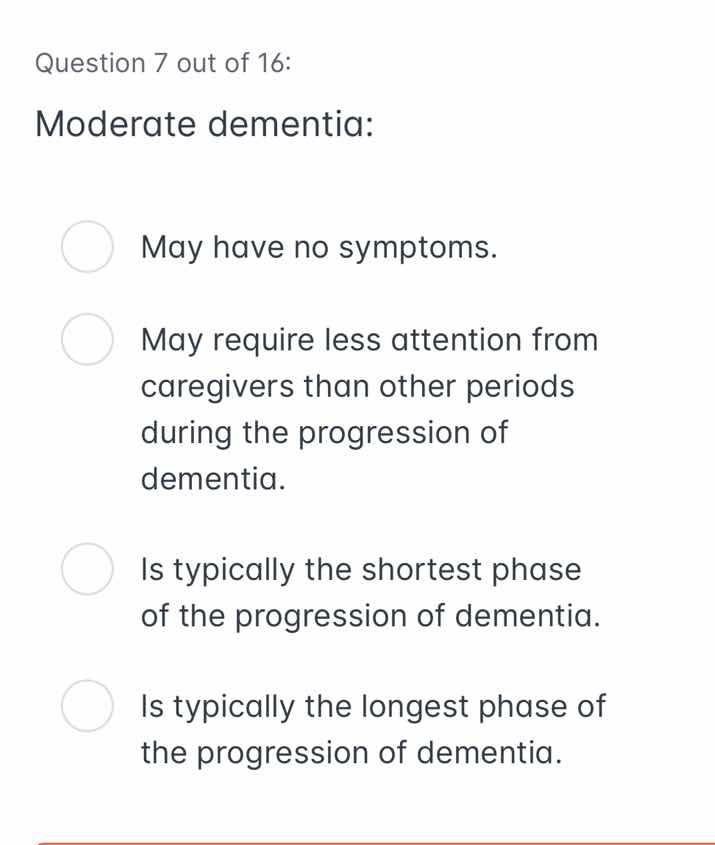
question 7 out of 16:
moderate dementia:
may have no symptoms.
may require less attention from caregivers than other periods during the progression of dementia.
is typically the shortest phase of the progression of dementia.
is typically the longest phase of the progression of dementia.
Brief Explanations
- "May have no symptoms" is incorrect as moderate dementia has noticeable symptoms like memory loss, confusion.
- "May require less attention" is wrong; moderate dementia patients need more care as symptoms worsen.
- "Is typically the shortest phase" is incorrect. The moderate phase of dementia (e.g., in Alzheimer's - related dementia) is generally longer than the early (mild) and can be longer than late in some cases, but the key is that it's often the longest phase in terms of duration compared to mild (which is initial, longer in some but moderate is a prolonged symptomatic phase) and late (which is more severe but shorter in duration for many). The late stage is more rapid in decline and shorter. So "Is typically the longest phase of the progression of dementia" is correct as the moderate stage (e.g., in Alzheimer's disease progression) lasts for a significant period (often years) with worsening symptoms, and is longer than the late stage (which is more rapid and shorter - lived in terms of time spent in that stage for many patients).

Snap & solve any problem in the app
Get step-by-step solutions on Sovi AI
Photo-based solutions with guided steps
Explore more problems and detailed explanations
D. Is typically the longest phase of the progression of dementia.