QUESTION IMAGE
Question
questions based on the fresh water image:
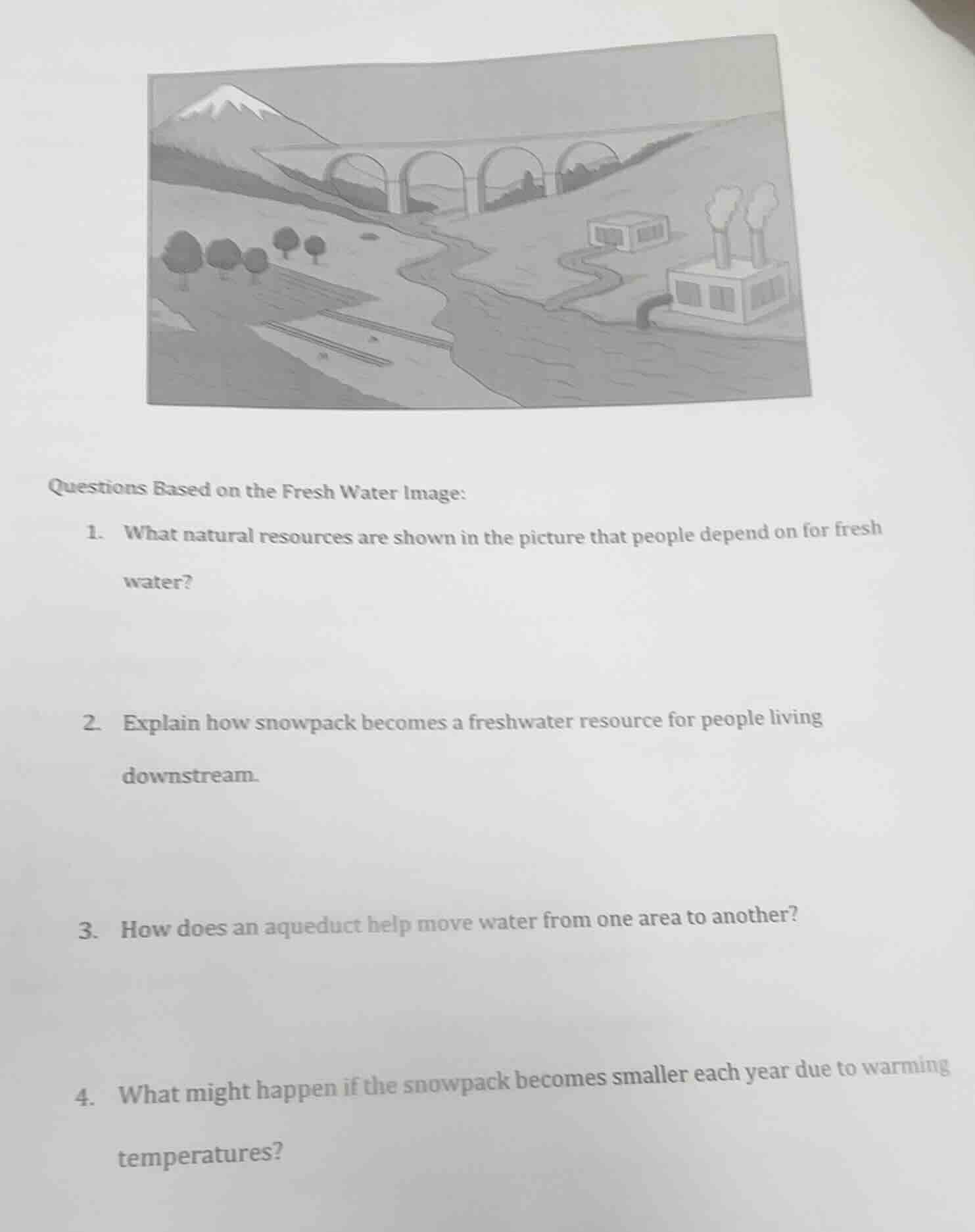
- what natural resources are shown in the picture that people depend on for fresh water?
- explain how snowpack becomes a freshwater resource for people living downstream.
- how does an aqueduct help move water from one area to another?
- what might happen if the snowpack becomes smaller each year due to warming temperatures?
Brief Explanations
- Identified visible freshwater sources in the image: the mountain snowpack acts as a stored freshwater reserve, and the river is the surface freshwater that people access.
- Outlined the hydrological process of snowpack melting and flowing downstream.
- Described the aqueduct's structural function for water transfer using gravity.
- Listed key impacts of reduced snowpack on water supply, ecosystems, and human activities.

Snap & solve any problem in the app
Get step-by-step solutions on Sovi AI
Photo-based solutions with guided steps
Explore more problems and detailed explanations
- The natural freshwater resources shown are the mountain snowpack (stored freshwater) and the river (surface freshwater).
- When temperatures rise, the mountain snowpack melts. The melted snow flows downhill as runoff, feeding into the river that flows to downstream areas, providing a continuous freshwater supply.
- Aqueducts are built on a gentle downward slope. This allows water to flow through the channel from a higher elevation (where the water source is) to a lower elevation (the target area) using gravity, without needing mechanical pumps for basic transfer.
- If the snowpack shrinks annually due to warming:
- Downstream areas will face reduced and less reliable freshwater supplies for drinking, agriculture, and industry.
- River levels will drop, harming aquatic ecosystems and reducing habitats for fish and other wildlife.
- There may be more frequent drought conditions, and agricultural yields could decrease due to insufficient irrigation water.
- Some hydroelectric power production (if dependent on river flow from snowmelt) may decline, reducing available energy.