QUESTION IMAGE
Question
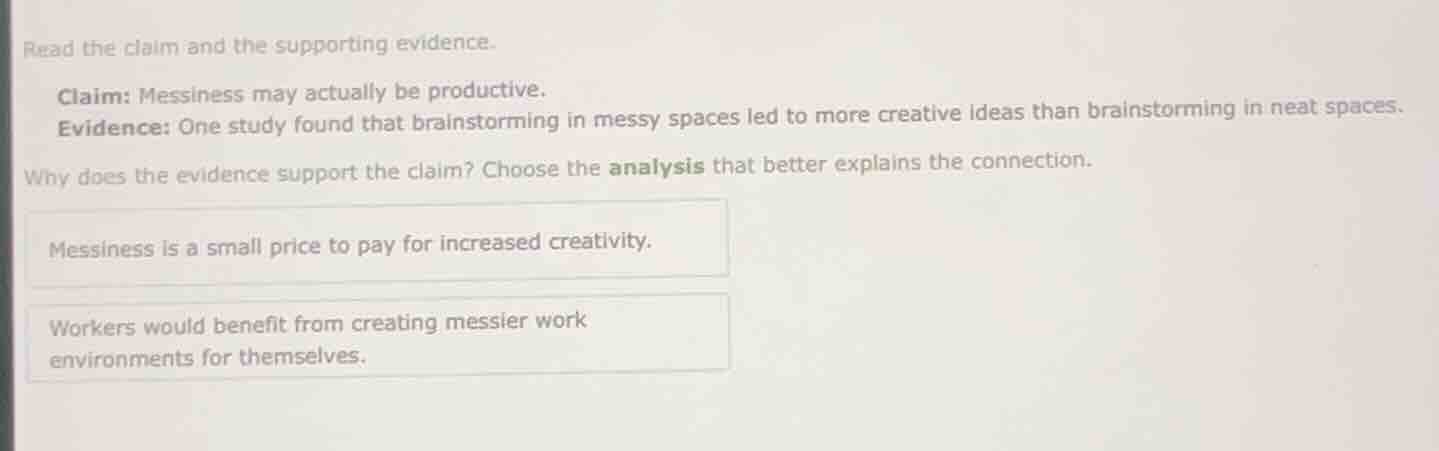
read the claim and the supporting evidence.
claim: messiness may actually be productive.
evidence: one study found that brainstorming in messy spaces led to more creative ideas than brainstorming in neat spaces.
why does the evidence support the claim? choose the analysis that better explains the connection.
messiness is a small price to pay for increased creativity.
workers would benefit from creating messier work environments for themselves.
The claim is that messiness may be productive. The evidence shows messy spaces lead to more creative ideas. The first option says messiness is a small price for increased creativity, directly linking messiness (the "price") to productivity (via creativity). The second option is about workers creating messy environments, which is a recommendation, not an explanation of how the evidence supports the claim about messiness being productive. So the first analysis better explains the connection as it ties messiness to the productive outcome (increased creativity).

Snap & solve any problem in the app
Get step-by-step solutions on Sovi AI
Photo-based solutions with guided steps
Explore more problems and detailed explanations
Messiness is a small price to pay for increased creativity.