QUESTION IMAGE
Question
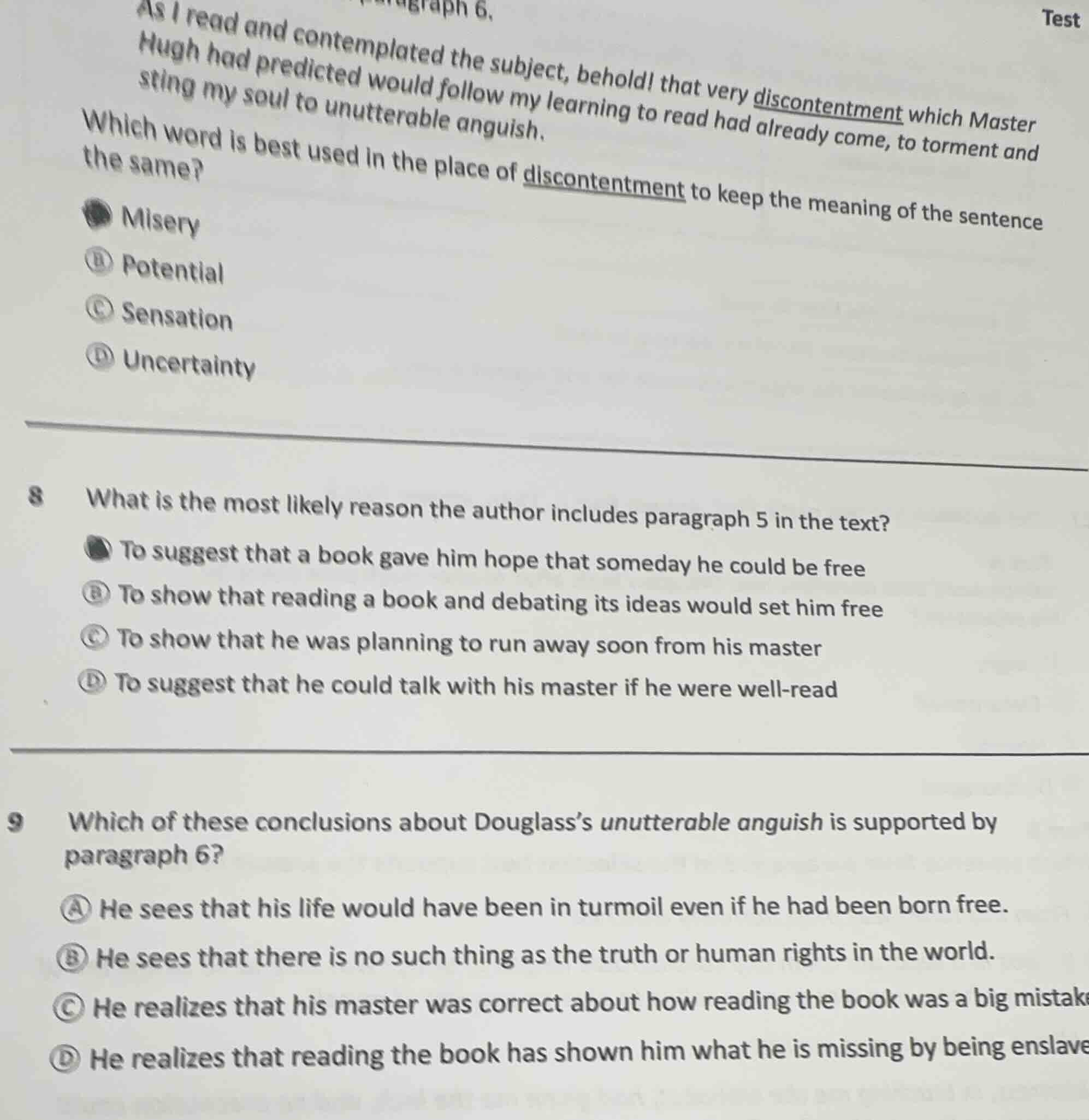
as i read and contemplated the subject, behold! that very discontentment which master hugh had predicted would follow my learning to read had already come, to torment and sting my soul to unutterable anguish. which word is best used in the place of discontentment to keep the meaning of the sentence the same? a misery b potential c sensation d uncertainty 8 what is the most likely reason the author includes paragraph 5 in the text? a to suggest that a book gave him hope that someday he could be free b to show that reading a book and debating its ideas would set him free c to show that he was planning to run away soon from his master d to suggest that he could talk with his master if he were well - read 9 which of these conclusions about douglass’s unutterable anguish is supported by paragraph 6? a he sees that his life would have been in turmoil even if he had been born free. b he sees that there is no such thing as the truth or human rights in the world. c he realizes that his master was correct about how reading the book was a big mistak d he realizes that reading the book has shown him what he is missing by being enslave
Question 7 (Word Replacement)
To determine the best replacement for "discontentment", we analyze the meaning of each option:
- "Misery" means great unhappiness or suffering, which aligns with the context of "torment and stinging my soul to unutterable anguish" as "discontentment" here conveys a negative, unhappy feeling.
- "Potential" refers to capacity for growth, not related to the negative emotion in the sentence.
- "Sensation" is a feeling or perception, not matching the meaning of dissatisfaction or unhappiness.
- "Uncertainty" is about doubt or lack of certainty, not related to the emotional tone of the sentence.
We analyze each option based on typical authorial purposes in literary texts (especially from Douglass's narrative, which is about his journey to freedom):
- Option A: A book giving hope of future freedom matches the theme of Douglass's narrative, where reading opened his eyes to the possibility of freedom.
- Option B: The text doesn't suggest debating ideas would set him free; it's more about the hope from the book's content.
- Option C: There's no indication of immediate escape planning in paragraph 5 (from typical knowledge of Douglass's narrative structure).
- Option D: The focus isn't on talking with the master, but on freedom from slavery.
We analyze the options against the context of paragraph 6 (from Douglass's experience with reading and slavery):
- Option A: The paragraph doesn't discuss life if born free, so this is irrelevant.
- Option B: The text doesn't claim there's no truth or human rights, just his personal anguish from slavery.
- Option C: The master's view was that reading was bad, but Douglass's anguish comes from realizing what he's missing, not agreeing the master was correct.
- Option D: Reading the book showed him the freedom he was denied, leading to his anguish as he realizes what slavery has cost him, which aligns with the context.

Snap & solve any problem in the app
Get step-by-step solutions on Sovi AI
Photo-based solutions with guided steps
Explore more problems and detailed explanations
A. Misery