QUESTION IMAGE
Question
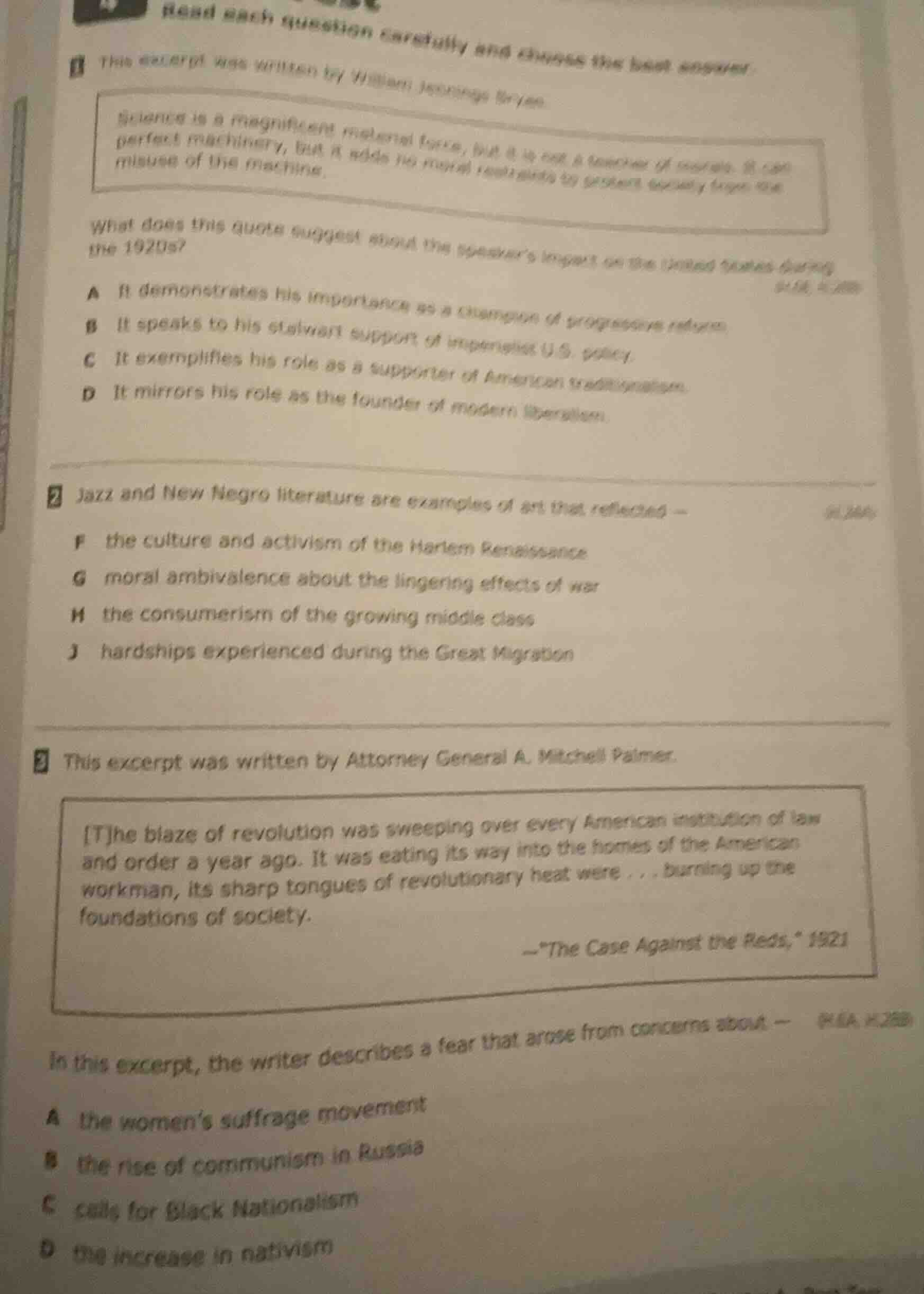
read each question carefully and choose the best answer.
1 this excerpt was written by william jennings bryan
science is a magnificent material force, but it is not a teacher of morals. it can perfect machinery, but it adds no moral restraints to prevent the misuse of the machine.
what does this quote suggest about the speaker’s impact on the united states during the 1920s?
a it demonstrates his importance as a champion of progressive reform
b it speaks to his stalwart support of imperialist u.s. policy.
c it exemplifies his role as a supporter of american traditionalism.
d it mirrors his role as the founder of modern liberalism.
2 jazz and new negro literature are examples of art that reflected —
f the culture and activism of the harlem renaissance
g moral ambivalence about the lingering effects of war
h the consumerism of the growing middle class
j hardships experienced during the great migration
3 this excerpt was written by attorney general a. mitchell palmer.
the blaze of revolution was sweeping over every american institution of law and order a year ago. it was eating its way into the homes of the american workman, its sharp tongues of revolutionary heat were... burning up the foundations of society.
—\the case against the reds,\ 1921
in this excerpt, the writer describes a fear that arose from concerns about —
a the women’s suffrage movement
b the rise of communism in russia
c calls for black nationalism
d the increase in nativism
- For question 1: William Jennings Bryan was a prominent figure of American traditionalism in the 1920s, opposing the overreach of secular science (seen in the Scopes Trial) and emphasizing traditional moral values, which aligns with the quote's view that science lacks moral guidance.
- For question 2: Jazz and New Negro literature were core artistic expressions of the Harlem Renaissance, a cultural movement centered in Harlem that celebrated Black culture and included activist undertones.
- For question 3: A. Mitchell Palmer's "The Case Against the Reds" references fears of revolutionary upheaval tied to the spread of communism from Russia, which fueled the Red Scare of the 1920s.

Snap & solve any problem in the app
Get step-by-step solutions on Sovi AI
Photo-based solutions with guided steps
Explore more problems and detailed explanations
- C. It exemplifies his role as a supporter of American traditionalism.
- F. the culture and activism of the Harlem Renaissance
- B. the rise of communism in Russia