QUESTION IMAGE
Question
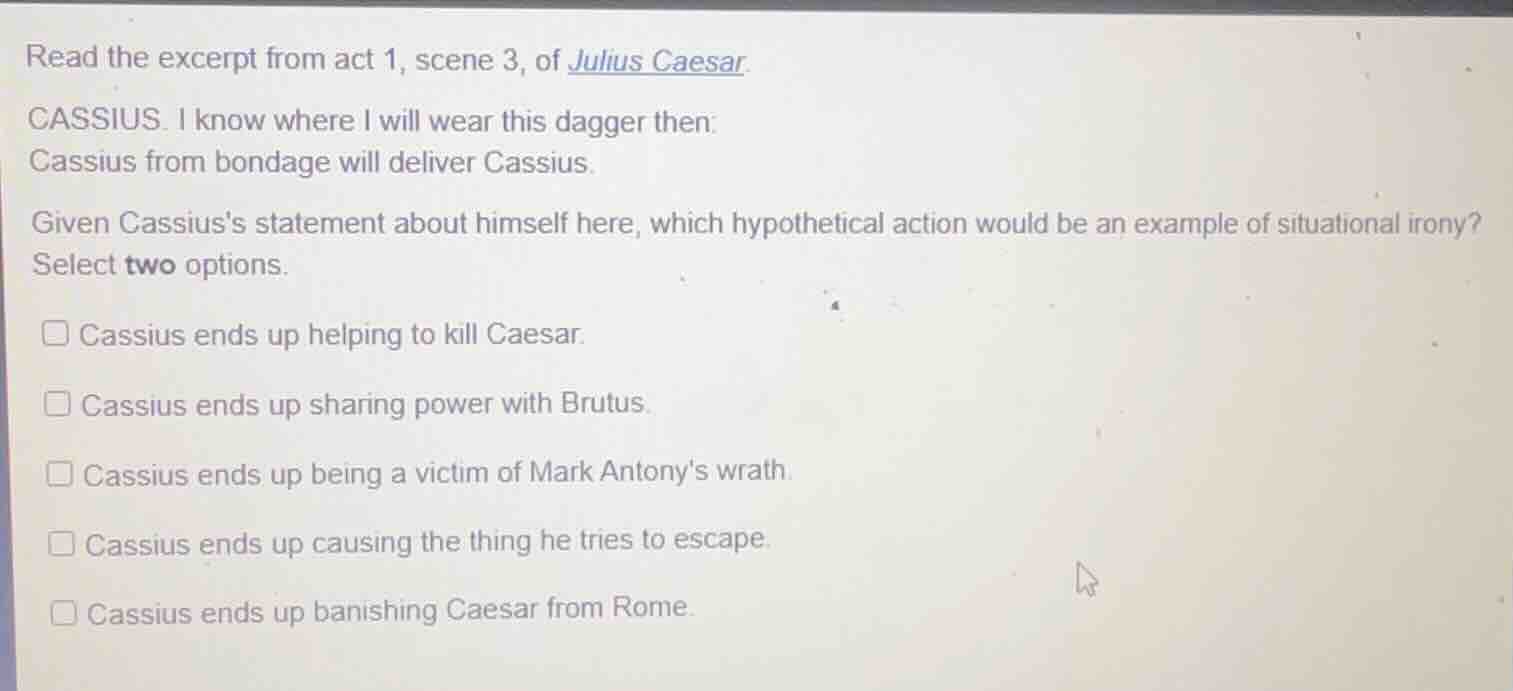
read the excerpt from act 1, scene 3, of julius caesar. cassius. i know where i will wear this dagger then: cassius from bondage will deliver cassius. given cassiuss statement about himself here, which hypothetical action would be an example of situational irony? select two options. □ cassius ends up helping to kill caesar. □ cassius ends up sharing power with brutus. □ cassius ends up being a victim of mark antonys wrath. □ cassius ends up causing the thing he tries to escape. □ cassius ends up banishing caesar from rome.
Situational irony occurs when the outcome is the opposite of what a character intends or expects. Cassius states he will free himself from "bondage" (oppression/loss of freedom) with his dagger.
- If Cassius becomes a victim of Mark Antony's wrath, this would likely subject him to the very bondage he sought to escape, creating irony.
- If Cassius causes the exact thing he tried to escape, this directly contradicts his goal, fitting the definition of situational irony.
The other options align with or do not oppose his goal of freeing himself from subjugation.

Snap & solve any problem in the app
Get step-by-step solutions on Sovi AI
Photo-based solutions with guided steps
Explore more problems and detailed explanations
- Cassius ends up being a victim of Mark Antony's wrath
- Cassius ends up causing the thing he tries to escape