QUESTION IMAGE
Question
read the information below and then answer the questions:
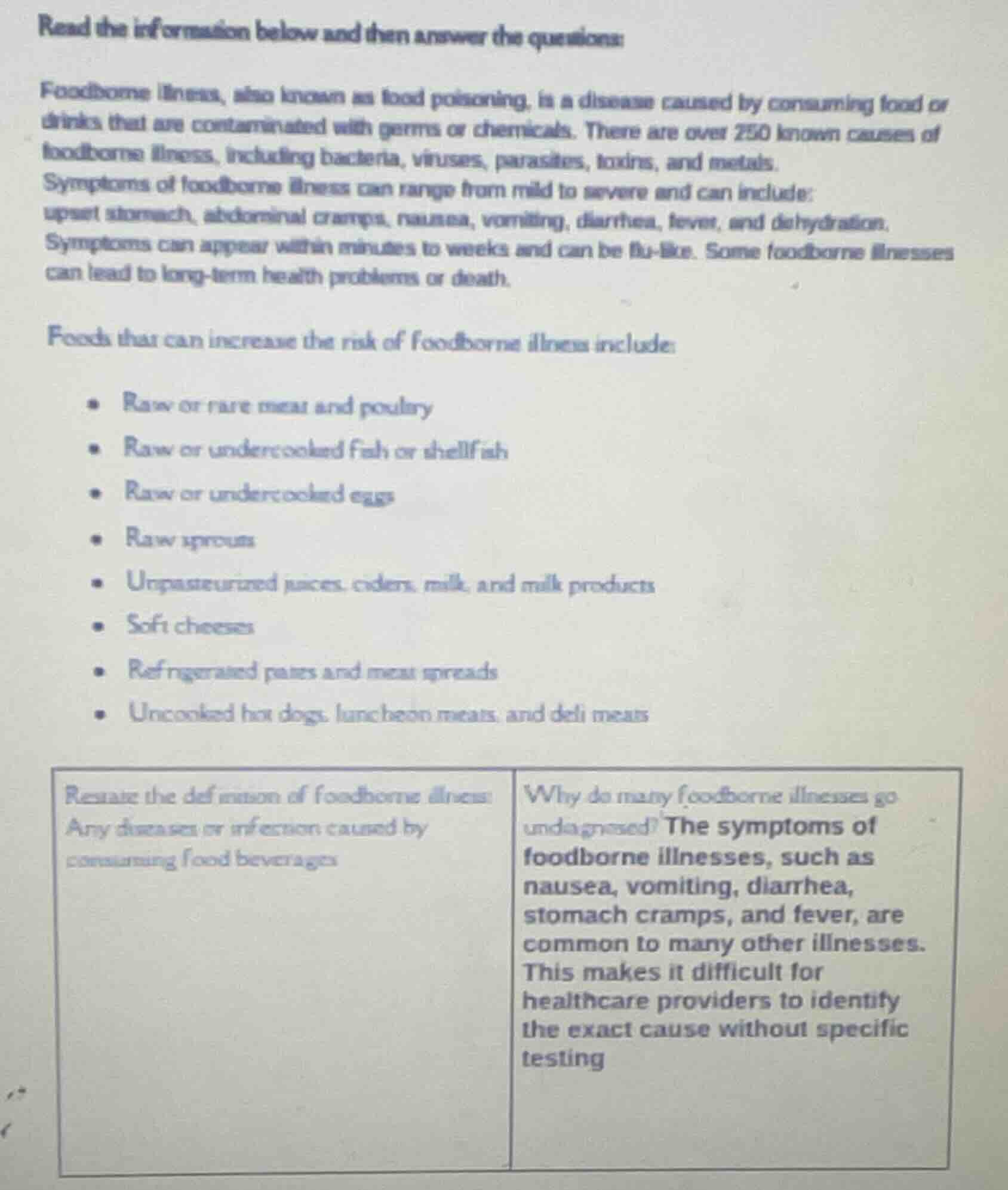
foodborne illness, also known as food poisoning, is a disease caused by consuming food or drinks that are contaminated with germs or chemicals. there are over 250 known causes of foodborne illness, including bacteria, viruses, parasites, toxins, and metals.
symptoms of foodborne illness can range from mild to severe and can include: upset stomach, abdominal cramps, nausea, vomiting, diarrhea, fever, and dehydration. symptoms can appear within minutes to weeks and can be flu - like. some foodborne illnesses can lead to long - term health problems or death.
foods that can increase the risk of foodborne illness include:
- raw or rare meat and poultry
- raw or undercooked fish or shellfish
- raw or undercooked eggs
- raw sprouts
- unpasteurized juices, ciders, milk, and milk products
- soft cheeses
- refrigerated pates and meat spreads
- uncooked hot dogs, luncheon meats, and deli meats
restate the definition of foodborne illness:
any diseases or infection caused by consuming food beverages
why do many foodborne illnesses go undiagnosed? the symptoms of foodborne illnesses, such as nausea, vomiting, diarrhea, stomach cramps, and fever, are common to many other illnesses. this makes it difficult for healthcare providers to identify the exact cause without specific testing
- For restating the definition, refine the provided draft to match the detailed definition from the text, which specifies contamination by germs or chemicals.
- For the underdiagnosis question, use the reasoning given in the text about shared symptoms with other illnesses.

Snap & solve any problem in the app
Get step-by-step solutions on Sovi AI
Photo-based solutions with guided steps
Explore more problems and detailed explanations
- Restated definition of foodborne illness: Foodborne illness (or food poisoning) is a disease caused by consuming food or drinks contaminated with germs, chemicals, bacteria, viruses, parasites, toxins, or metals.
- Many foodborne illnesses go undiagnosed because their symptoms (like nausea, vomiting, diarrhea, stomach cramps, and fever) are common to many other illnesses, making it hard for healthcare providers to identify the exact cause without specific testing.