QUESTION IMAGE
Question
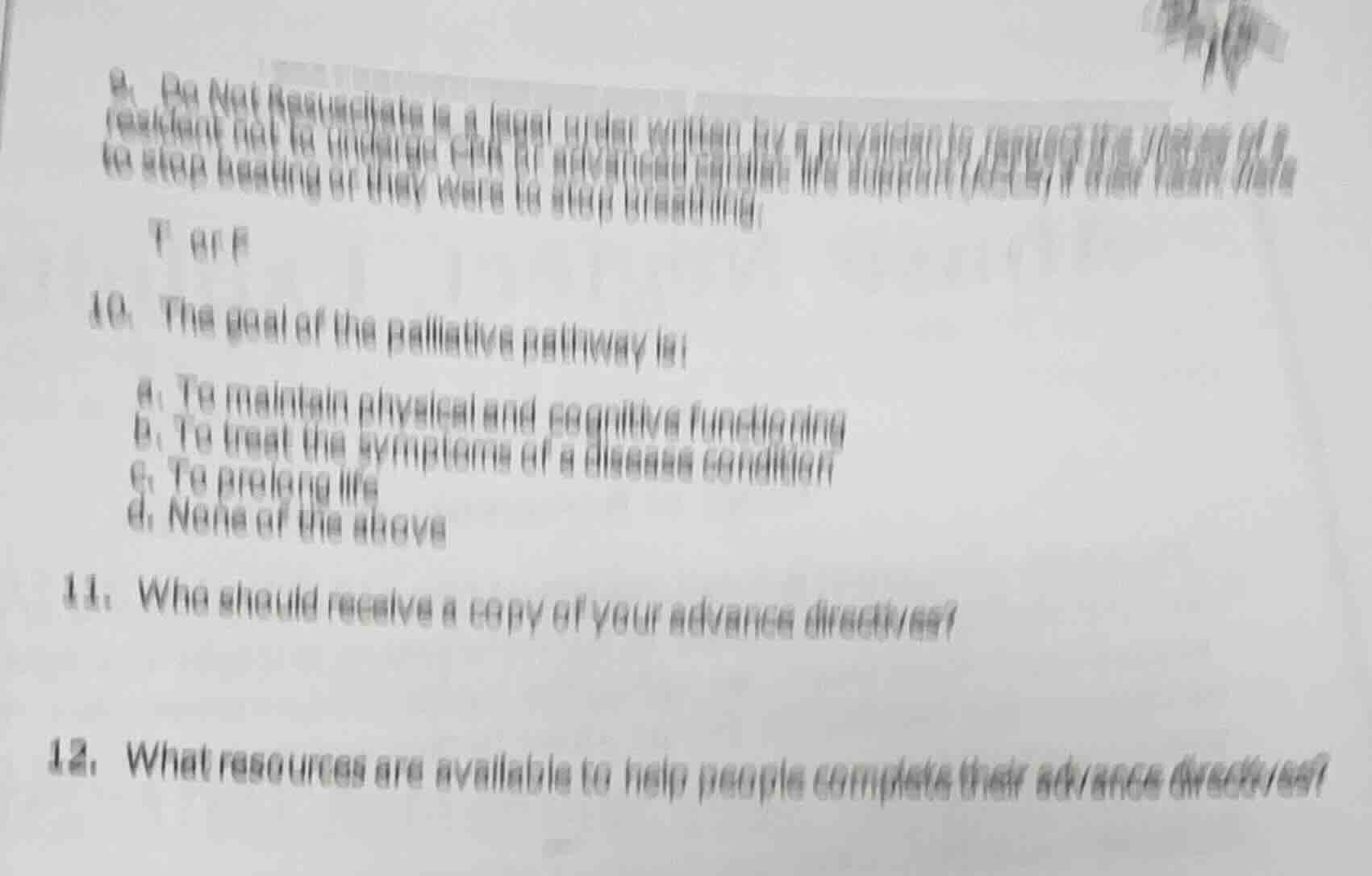
- do not resuscitate is a legal order written by a physician, designed to inform medical staff that in the event of cardiac or respiratory arrest, the patient should not receive treatment to restart the heart or restore breathing. t or f 10. the goal of the palliative pathway is: a: to maintain physical and cognitive functioning b: to treat the symptoms of a disease condition c: to prolong life d: none of the above 11. who should receive a copy of your advance directives? 12. what resources are available to help people complete their advance directives?
Question 10
Palliative care focuses on relieving symptoms and improving quality of life for patients with serious illnesses, rather than curing the disease, maintaining physical/cognitive function (more for rehabilitation), or prolonging life (more for curative or life - extending treatments). So the goal is to treat symptoms.
Advance directives (like living wills, power of attorney for healthcare) should be given to healthcare providers (to follow wishes during care), family members (to be aware of patient's decisions), and possibly legal representatives. Common recipients include doctors, nurses, family, and the healthcare facility's records department.
Resources to help with advance directives include healthcare providers (who can explain options), legal professionals (for legal advice on documents), online tools/forms (many states have official advance directive forms online), and organizations like AARP (provide guides), and hospice or palliative care teams (offer support and resources).

Snap & solve any problem in the app
Get step-by-step solutions on Sovi AI
Photo-based solutions with guided steps
Explore more problems and detailed explanations
B. To treat the symptoms of a disease condition