QUESTION IMAGE
Question
review paragraph 3.
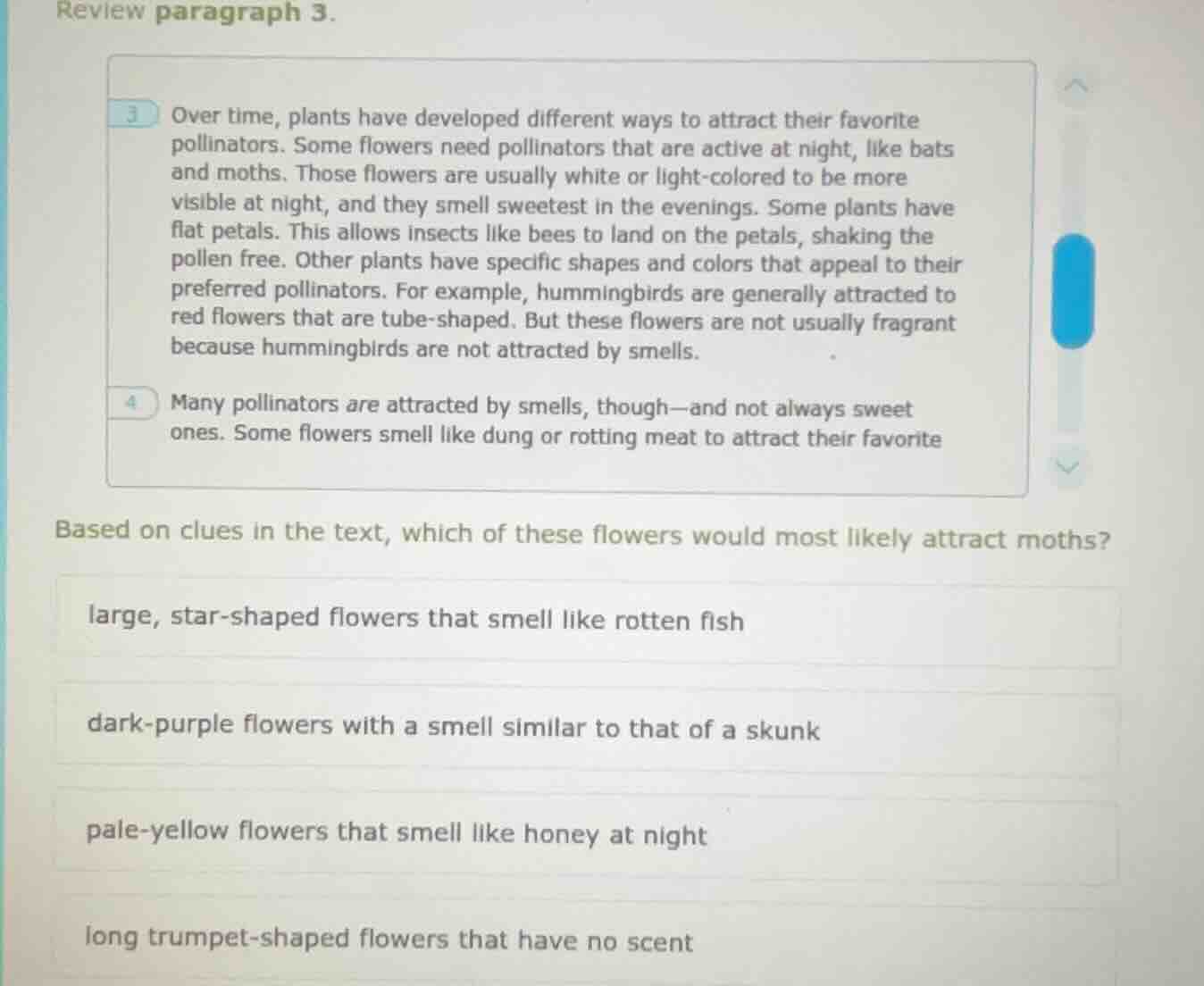
3 over time, plants have developed different ways to attract their favorite pollinators. some flowers need pollinators that are active at night, like bats and moths. those flowers are usually white or light - colored to be more visible at night, and they smell sweetest in the evenings. some plants have flat petals. this allows insects like bees to land on the petals, shaking the pollen free. other plants have specific shapes and colors that appeal to their preferred pollinators. for example, hummingbirds are generally attracted to red flowers that are tube - shaped. but these flowers are not usually fragrant because hummingbirds are not attracted by smells.
4 many pollinators are attracted by smells, though—and not always sweet ones. some flowers smell like dung or rotting meat to attract their favorite
based on clues in the text, which of these flowers would most likely attract moths?
large, star - shaped flowers that smell like rotten fish
dark - purple flowers with a smell similar to that of a skunk
pale - yellow flowers that smell like honey at night
long trumpet - shaped flowers that have no scent
From the text, moths (nocturnal pollinators) are attracted to flowers that are white/light - colored (to be visible at night) and smell sweetest in the evenings. The "pale - yellow flowers that smell like honey at night" match these criteria: pale - yellow is a light color (visible at night), and the honey - like smell at night is sweet, which aligns with what attracts moths. The other options either have non - sweet or off - putting smells (like rotten fish, skunk - like) or don't match the color/smell pattern for moths (dark - purple, no scent).

Snap & solve any problem in the app
Get step-by-step solutions on Sovi AI
Photo-based solutions with guided steps
Explore more problems and detailed explanations
pale - yellow flowers that smell like honey at night