QUESTION IMAGE
Question
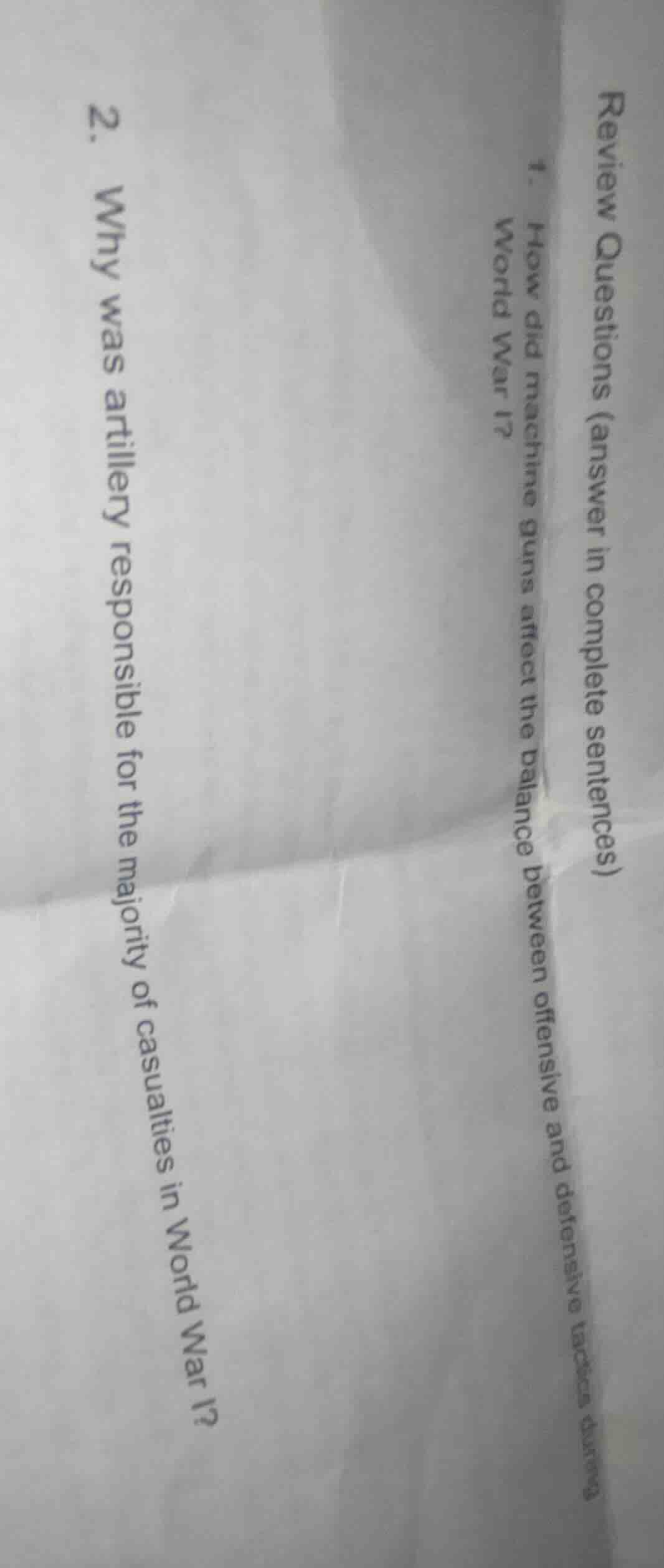
review questions (answer in complete sentences)
- how did machine guns affect the balance between offensive and defensive tactics during world war i?
- why was artillery responsible for the majority of casualties in world war i?
Brief Explanations
- Machine guns gave a massive firepower advantage to defensive forces in WWI. Their high rate of fire allowed small groups of soldiers to repel large-scale infantry charges, making offensive tactics like frontal assaults extremely costly and ineffective. This shifted the balance heavily toward defensive warfare, leading to the prolonged stalemate of trench warfare, as attackers could not easily overcome well-defended positions with machine gun coverage.
- Artillery caused most WWI casualties for several key reasons. First, it was used on an unprecedented scale, with armies firing millions of shells across battlefields. Second, artillery could strike enemy positions from long distances, hitting soldiers in trenches, supply lines, and assembly areas without direct contact. Third, advancements like high-explosive shells, shrapnel, and gas shells increased their lethality, and soldiers often had limited effective cover from the widespread, sustained barrages that could destroy trenches and inflict massive injuries or death even without direct hits.

Snap & solve any problem in the app
Get step-by-step solutions on Sovi AI
Photo-based solutions with guided steps
Explore more problems and detailed explanations
- Machine guns shifted the balance of WWI tactics heavily in favor of defensive warfare; their high, sustained firepower allowed small defensive units to easily repel large-scale infantry offensives, making frontal assaults extremely costly and leading to the stalemate of trench warfare where defensive positions were far easier to hold than to capture.
- Artillery was responsible for the majority of WWI casualties because it was deployed on an enormous scale, could strike targets from safe long distances to hit soldiers in trenches and behind lines, and used highly lethal ammunition like high-explosive and shrapnel shells that could inflict massive harm even without direct hits, with soldiers often lacking adequate protection from widespread, sustained barrages.