QUESTION IMAGE
Question
review the sixth paragraph.
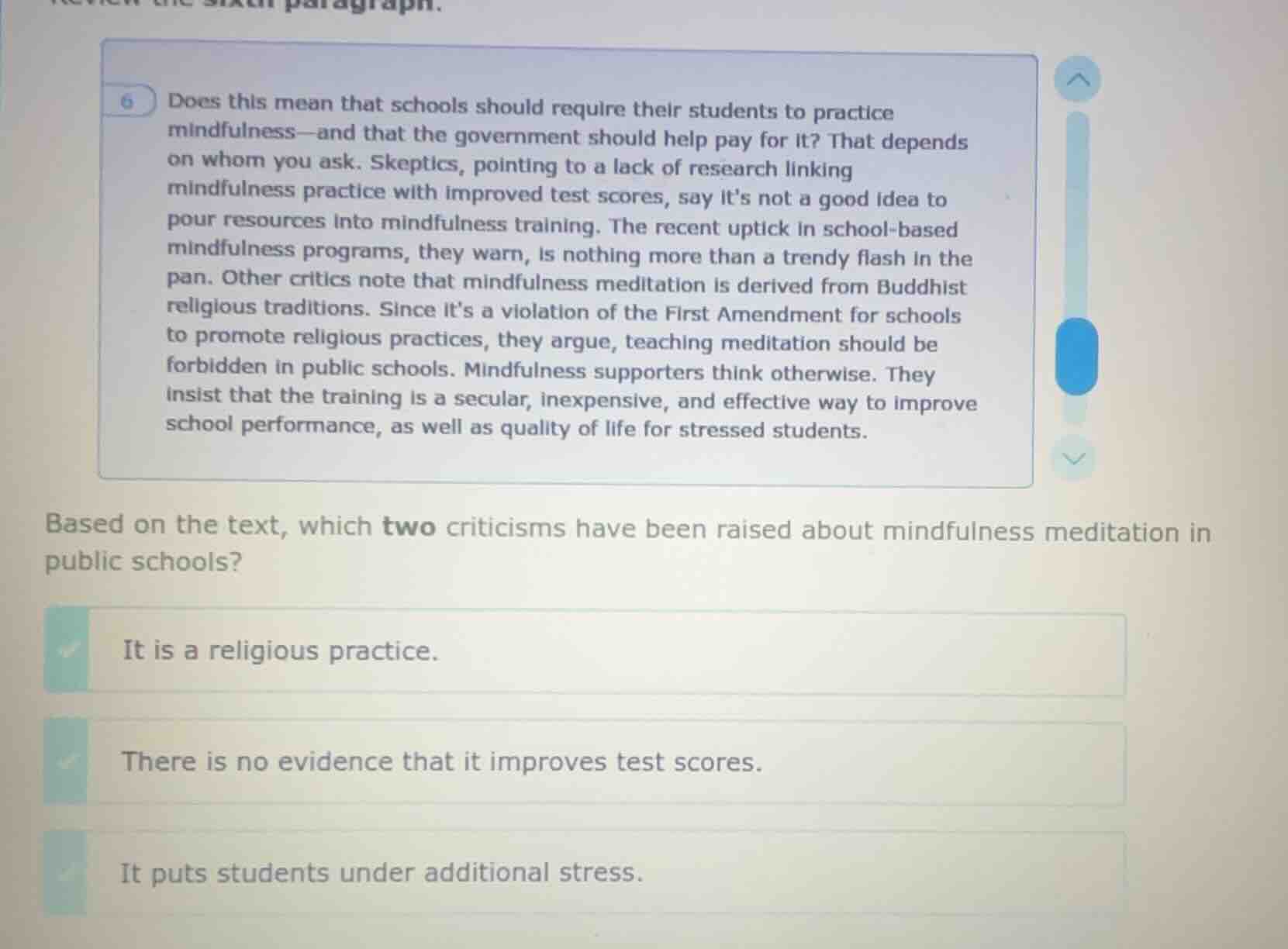
6 does this mean that schools should require their students to practice mindfulness—and that the government should help pay for it? that depends on whom you ask. skeptics, pointing to a lack of research linking mindfulness practice with improved test scores, say it’s not a good idea to pour resources into mindfulness training. the recent uptick in school - based mindfulness programs, they warn, is nothing more than a trendy flash in the pan. other critics note that mindfulness meditation is derived from buddhist religious traditions. since it’s a violation of the first amendment for schools to promote religious practices, they argue, teaching meditation should be forbidden in public schools. mindfulness supporters think otherwise. they insist that the training is a secular, inexpensive, and effective way to improve school performance, as well as quality of life for stressed students.
based on the text, which two criticisms have been raised about mindfulness meditation in public schools?
- it is a religious practice.
- there is no evidence that it improves test scores.
- it puts students under additional stress.
- The text states skeptics criticize mindfulness in schools due to a lack of research linking it to improved test scores, matching the second option.
- Other critics note mindfulness comes from Buddhist religious traditions, arguing it violates the First Amendment as a religious practice in public schools, matching the first option.
- The claim that it adds student stress is not mentioned as a criticism in the text.

Snap & solve any problem in the app
Get step-by-step solutions on Sovi AI
Photo-based solutions with guided steps
Explore more problems and detailed explanations
- It is a religious practice.
- There is no evidence that it improves test scores.