QUESTION IMAGE
Question
separation of powers scenario #8
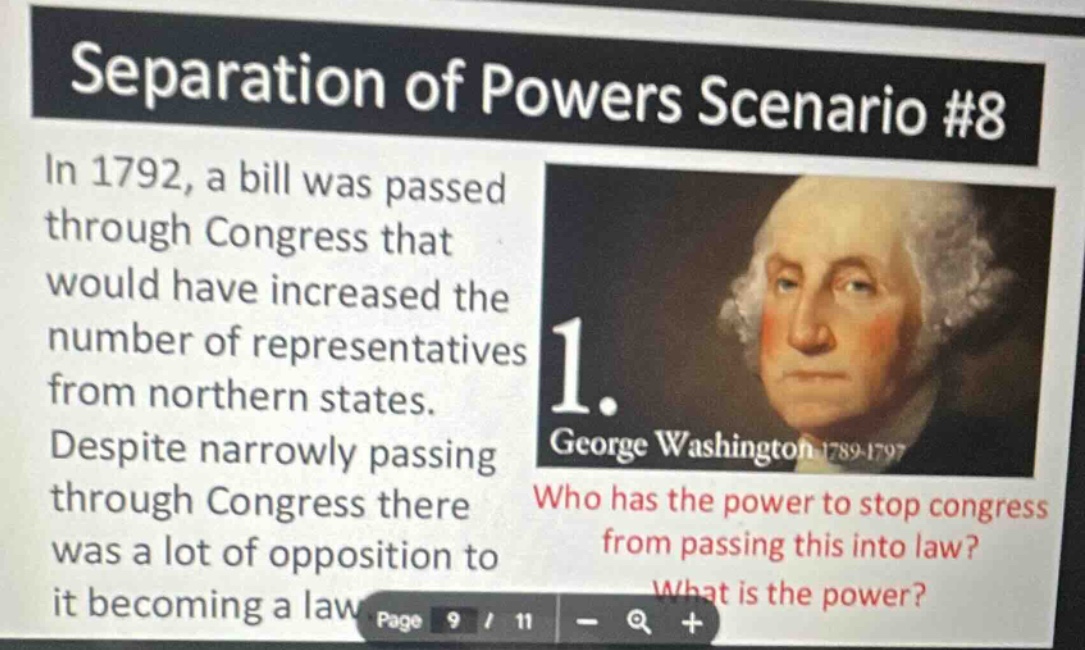
in 1792, a bill was passed through congress that would have increased the number of representatives from northern states.
despite narrowly passing through congress there was a lot of opposition to it becoming a law.
1.
george washington 1789-1797
who has the power to stop congress from passing this into law?
what is the power?
Under the U.S. separation of powers system, the executive branch holds the authority to reject legislation passed by Congress to prevent it from becoming law. For this 1792 scenario, the sitting president (George Washington) is the official with this power.

Snap & solve any problem in the app
Get step-by-step solutions on Sovi AI
Photo-based solutions with guided steps
Explore more problems and detailed explanations
- The person with the power to stop Congress from passing this into law is George Washington (the President of the United States at that time).
- The power is the presidential veto (the ability of the president to reject a bill passed by Congress, preventing it from becoming law unless Congress overrides the veto with a two-thirds majority in both chambers).