QUESTION IMAGE
Question
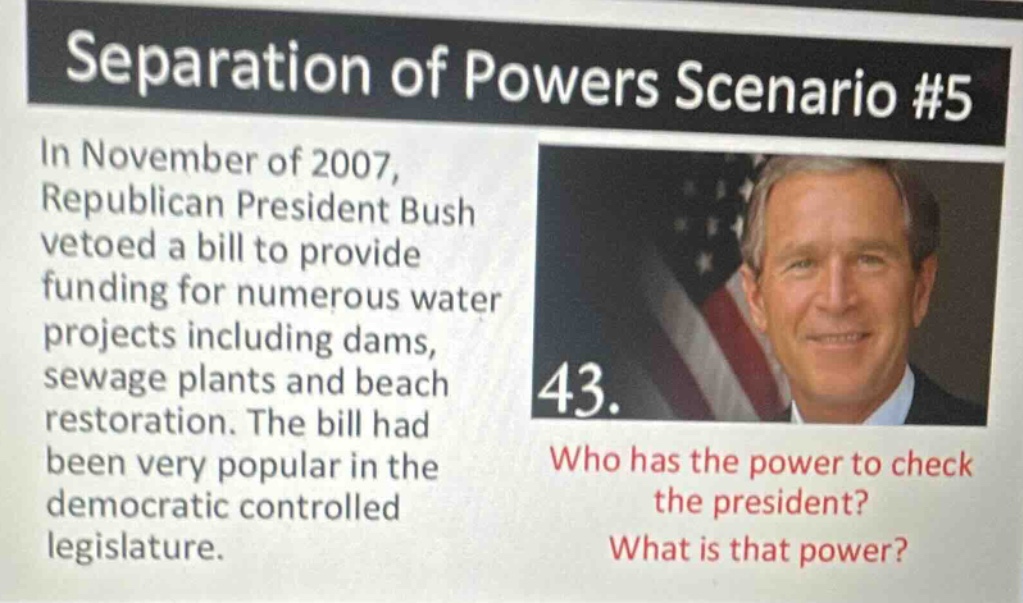
separation of powers scenario #5
in november of 2007,
republican president bush
vetoed a bill to provide
funding for numerous water
projects including dams,
sewage plants and beach
restoration. the bill had
been very popular in the
democratic controlled
legislature.
43.
who has the power to check
the president?
what is that power?
Under the U.S. separation of powers system, the legislative branch (Congress) has the authority to check a presidential veto. This check comes in the form of a veto override, which requires a two-thirds majority vote in both the House of Representatives and the Senate to enact the bill despite the president's veto.

Snap & solve any problem in the app
Get step-by-step solutions on Sovi AI
Photo-based solutions with guided steps
Explore more problems and detailed explanations
- The U.S. Congress (the legislative branch, specifically both the House of Representatives and the Senate) has the power to check the president in this scenario.
- The power is the veto override: a two-thirds majority vote in both chambers of Congress can pass the bill into law despite the president's veto.