QUESTION IMAGE
Question
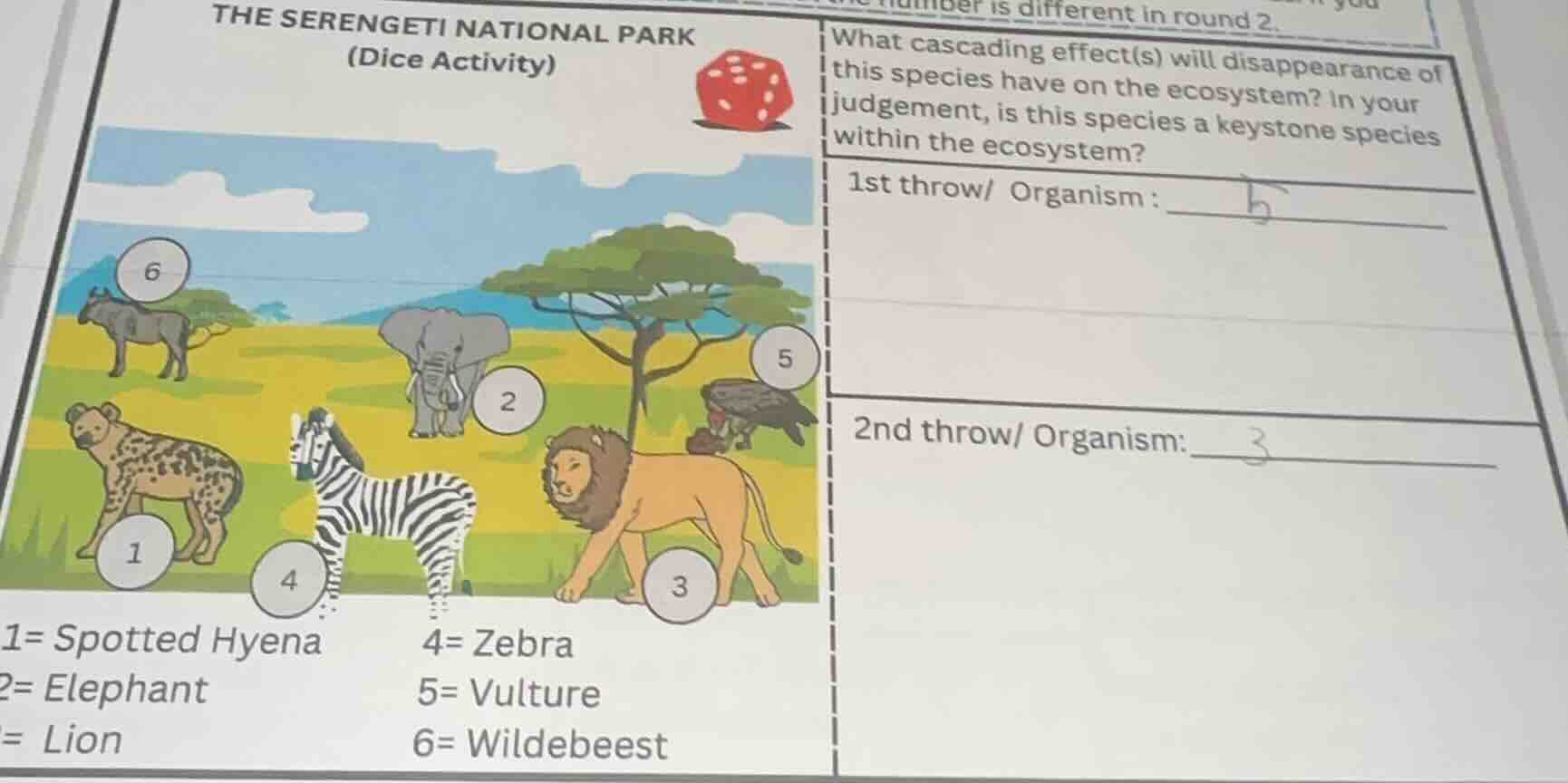
the serengeti national park (dice activity)
what cascading effect(s) will disappearance of this species have on the ecosystem? in your judgement, is this species a keystone species within the ecosystem?
1st throw/ organism :
2nd throw/ organism:
1= spotted hyena 4= zebra
2= elephant 5= vulture
= lion 6= wildebeest
To answer this, we analyze the ecosystem impacts for a chosen organism (e.g., Vulture, number 5):
1. Cascading Effects of Vulture Disappearance:
- Scavenging Role: Vultures clean up carcasses. Without them, carcasses decompose slower, increasing disease - spreading organisms (e.g., bacteria, flies) as rotting flesh lingers.
- Food Web Disruption: Other scavengers (e.g., hyenas, jackals) might struggle to process all carcasses, leading to resource competition. Herbivores could face more disease from contaminated environments, affecting their populations.
2. Keystone Species Judgement:
Vultures are keystone species here. Their scavenging is vital for nutrient cycling, disease control, and maintaining a balanced food web. Removing them triggers widespread ecosystem changes (e.g., disease outbreaks, altered scavenger dynamics), showing their disproportionate impact on ecosystem structure/function.
(Repeat for other organisms: e.g., Lion (3) – Disappearance would let herbivores (zebra, wildebeest) overgraze, degrading grasslands. Lions are keystone as they regulate herbivore populations, maintaining grassland health and supporting species like vultures (via carcasses).)

Snap & solve any problem in the app
Get step-by-step solutions on Sovi AI
Photo-based solutions with guided steps
Explore more problems and detailed explanations
(for Vulture as 1st throw example):
- Cascading effects: Slower carcass decomposition, increased disease - spreading agents, scavenger competition.
- Keystone? Yes, due to vital roles in disease control, nutrient cycling, and food web balance.