QUESTION IMAGE
Question
significance of third parties
many \third parties,\ or independent parties unaligned with republicans and democrats,
influence elections in powerful and unexpected ways, even though they usually do not win
major third party influences (examples)
theodore roosevelt (1912)
a former republican president, roosevelt founded the bull moose party in opposition to the
incumbent republican president, william taft. with republicans divided, woodrow wilson
won easily as the democratic candidate.
ross perot (1992)
perot mounted a powerful economics - focused campaign that overlapped many republican
ideas, giving an advantage to the democratic candidate, bill clinton, over the republican
george h. w. bush
ralph nader (2000)
nader’s campaign appealed to many democrats, providing an advantage to the republican
george w. bush over the democratic al gore in an election decided by only a few hundred
votes
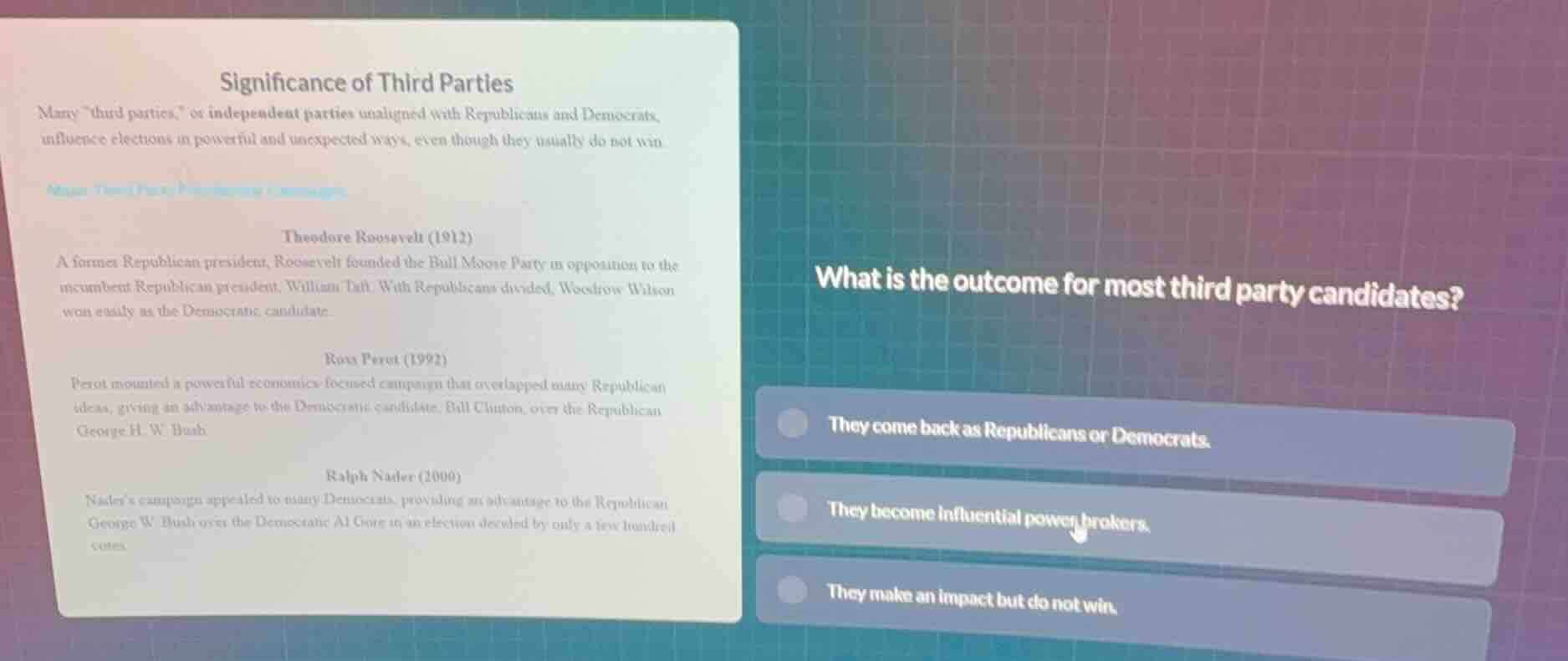
what is the outcome for most third party candidates?
- they come back as republicans or democrats.
- they become influential power brokers.
- they make an impact but do not win.
The introductory text states third parties "usually do not win" but influence elections in impactful ways, and the examples show they shifted election outcomes without winning themselves. The other options are not supported by the provided material.

Snap & solve any problem in the app
Get step-by-step solutions on Sovi AI
Photo-based solutions with guided steps
Explore more problems and detailed explanations
They make an impact but do not win.