QUESTION IMAGE
Question
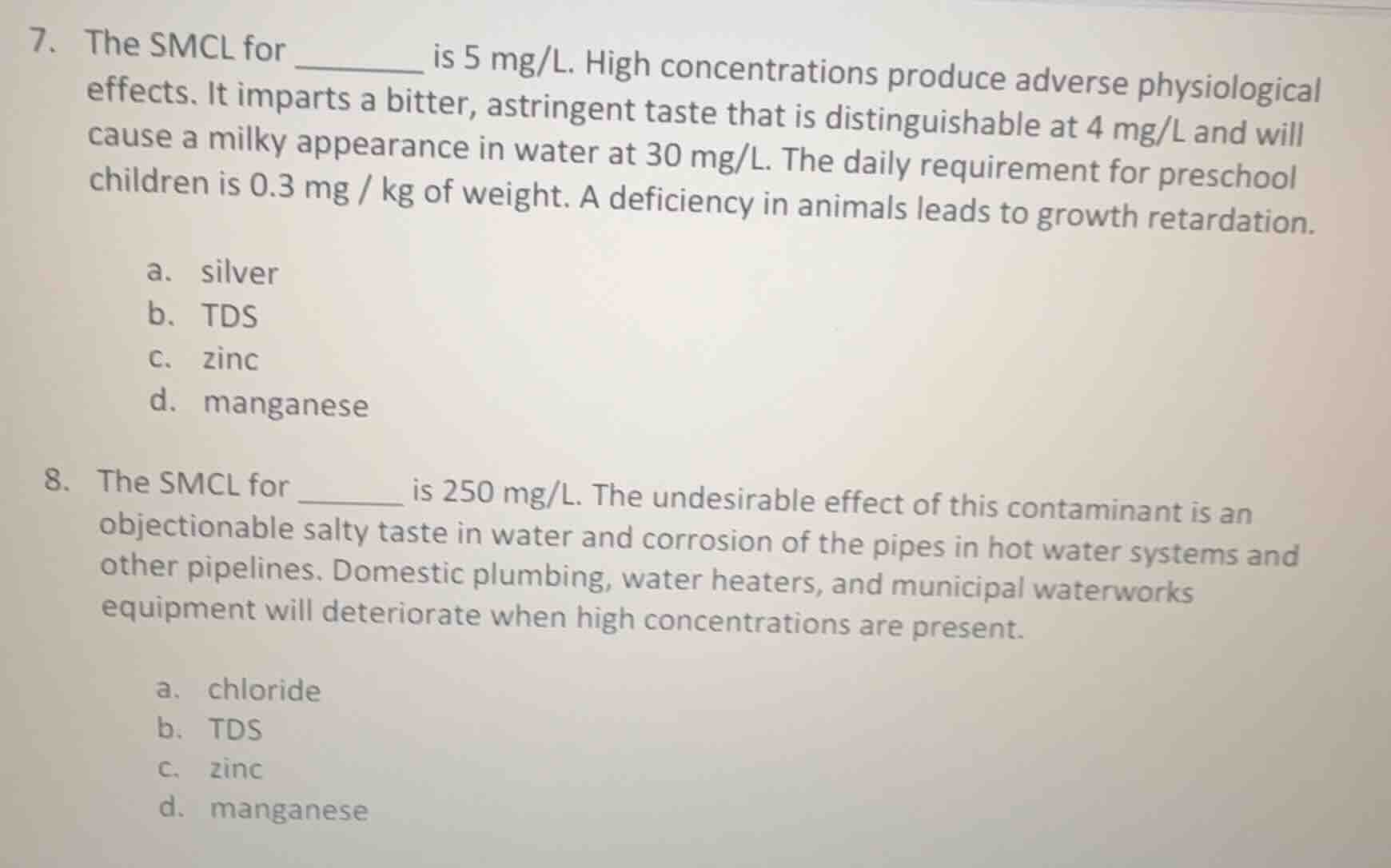
- the smcl for _______ is 5 mg/l. high concentrations produce adverse physiological effects. it imparts a bitter, astringent taste that is distinguishable at 4 mg/l and will cause a milky appearance in water at 30 mg/l. the daily requirement for preschool children is 0.3 mg / kg of weight. a deficiency in animals leads to growth retardation.
a. silver
b. tds
c. zinc
d. manganese
- the smcl for _______ is 250 mg/l. the undesirable effect of this contaminant is an objectionable salty taste in water and corrosion of the pipes in hot water systems and other pipelines. domestic plumbing, water heaters, and municipal waterworks equipment will deteriorate when high concentrations are present.
a. chloride
b. tds
c. zinc
d. manganese
Brief Explanations
- Manganese has a Secondary Maximum Contaminant Level (SMCL) of 5 mg/L, creates a bitter/astringent taste at 4 mg/L, causes milky water at 30 mg/L, and deficiency leads to animal growth retardation, matching the description.
- Chloride has an SMCL of 250 mg/L, produces a salty taste in water at high levels, and causes corrosion of plumbing and water systems, aligning with the given details.

Snap & solve any problem in the app
Get step-by-step solutions on Sovi AI
Photo-based solutions with guided steps
Explore more problems and detailed explanations
- d. manganese
- a. chloride