QUESTION IMAGE
Question
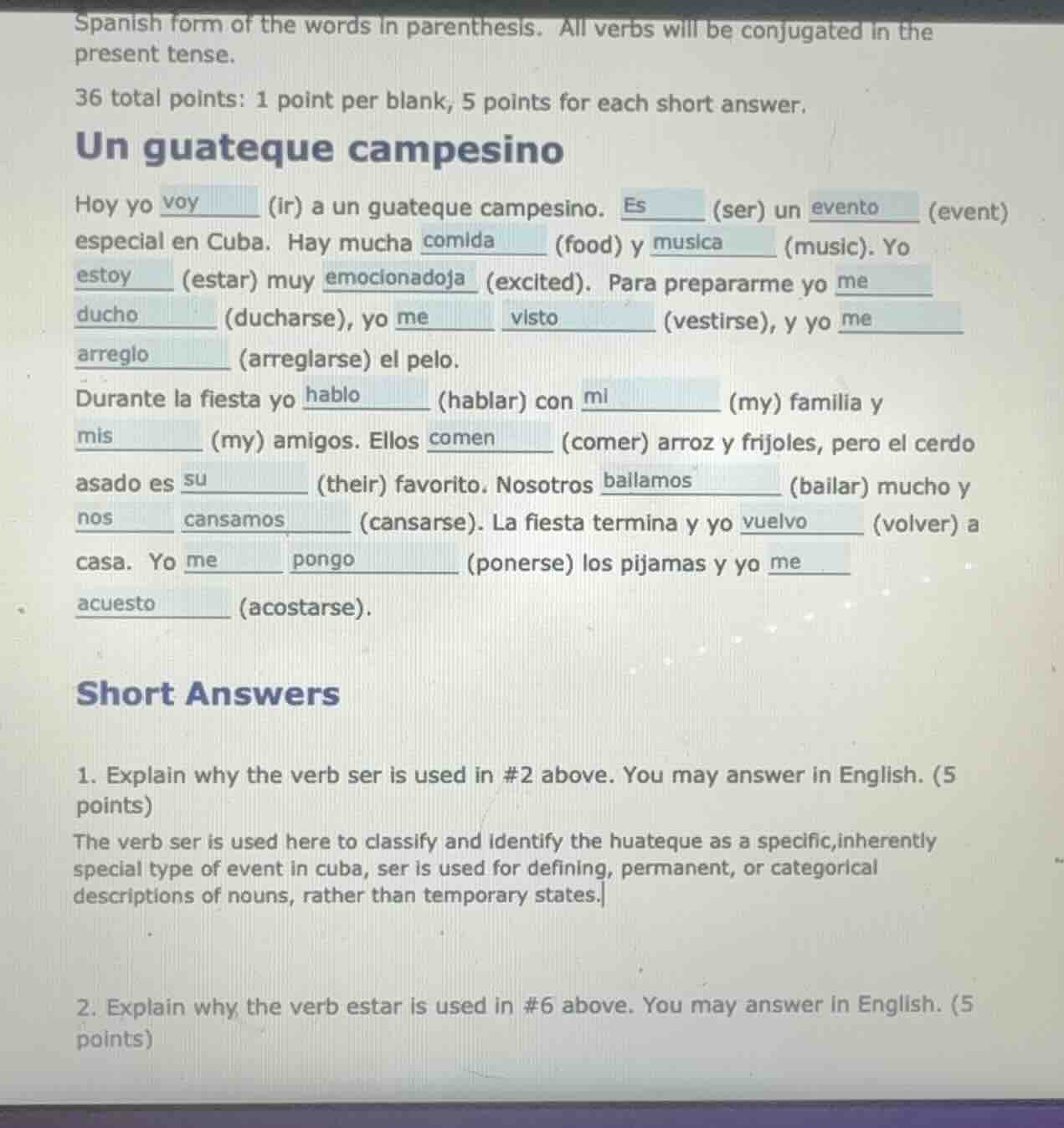
spanish form of the words in parenthesis. all verbs will be conjugated in the present tense.
36 total points: 1 point per blank, 5 points for each short answer.
un guateque campesino
hoy yo __ (ir) a un guateque campesino. (ser) un (event) especial en cuba. hay mucha (food) y (music). yo (estar) muy (excited). para prepararme yo (ducharse), yo (vestirse), y yo __ (arreglarse) el pelo.
durante la fiesta yo __ (hablar) con (my) familia y (my) amigos. ellos (comer) arroz y frijoles, pero el cerdo asado es (their) favorito. nosotros (bailar) mucho y nos (cansarse). la fiesta termina y yo (volver) a casa. yo (ponerse) los pijamas y yo me __ (acostarse).
short answers
- explain why the verb ser is used in #2 above. you may answer in english. (5 points)
- explain why the verb estar is used in #6 above. you may answer in english. (5 points)
For the fill-in-the-blank section, the correct Spanish translations and conjugated verbs are as follows (corrected for minor errors in the original draft):
- (ir) → voy
- (ser) → Es; (event) → evento
- (food) → comida; (music) → música
- (estar) → estoy; (excited) → emocionado/a
- (ducharse) → me ducho
- (vestirse) → me visto
- (arreglarse) → me arreglo
- (hablar) → hablo; (my) → mi; (my) → mis
- (comer) → comen; (their) → su
- (bailar) → bailamos; (cansarse) → nos cansamos
- (volver) → vuelvo
- (ponerse) → me pongo; (acostarse) → me acuesto
For Short Answer 2: The verb estar is used to describe a temporary, subjective state (the speaker's current excited feeling) rather than a permanent or inherent characteristic of a noun. Estar is reserved for temporary conditions, moods, or locations, unlike ser which applies to fixed traits.

Snap & solve any problem in the app
Get step-by-step solutions on Sovi AI
Photo-based solutions with guided steps
Explore more problems and detailed explanations
Fill-in-the-Blank Corrected Answers:
- voy
- Es; evento
- comida; música
- estoy; emocionado/a
- me ducho
- me visto
- me arreglo
- hablo; mi; mis
- comen; su
- bailamos; nos cansamos
- vuelvo
- me pongo; me acuesto
Short Answer 2:
The verb estar is used here because it describes the speaker's temporary, current emotional state (feeling excited). Estar is used for temporary conditions, moods, or states, rather than the permanent or categorical traits that ser describes.