QUESTION IMAGE
Question
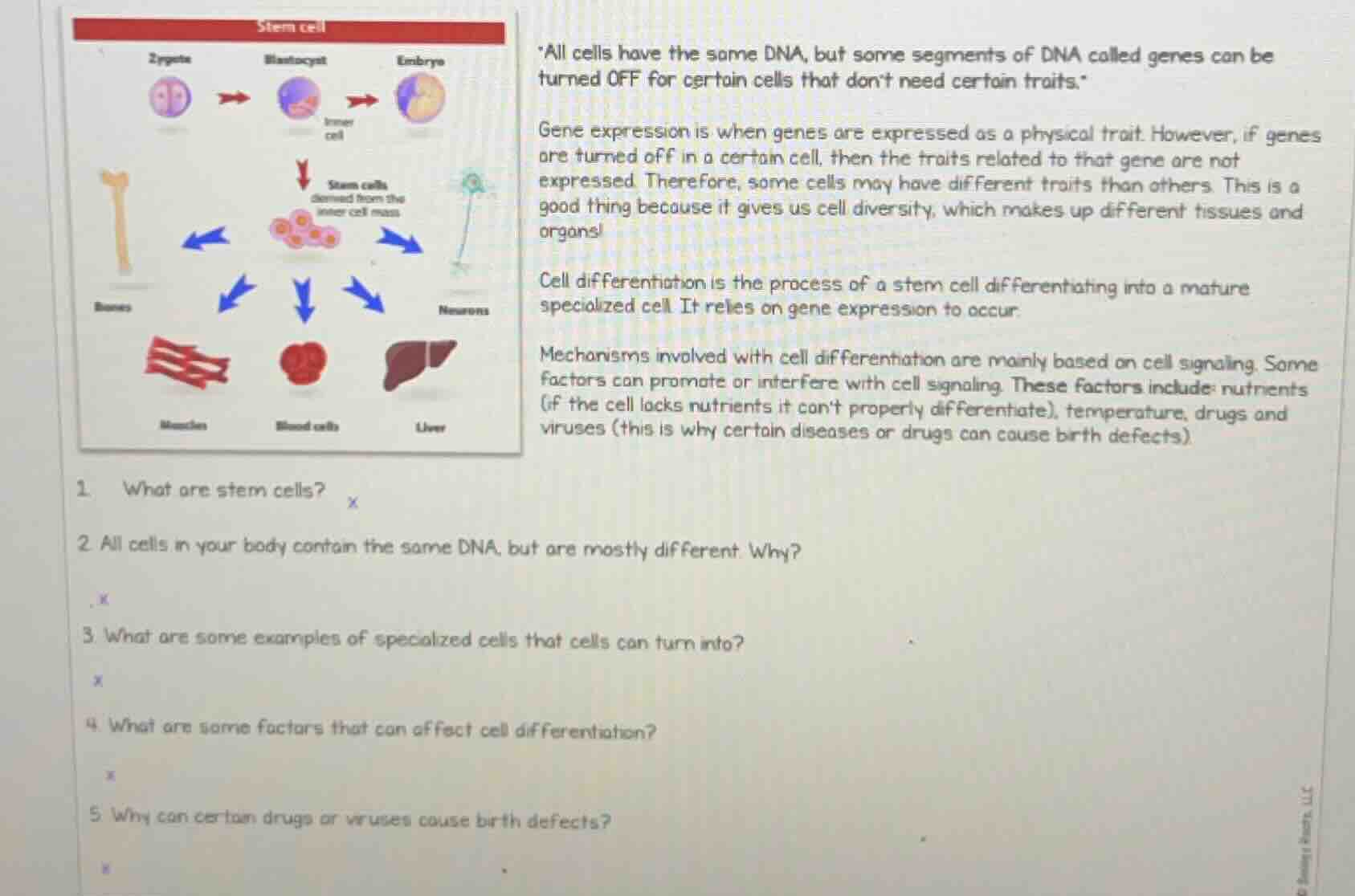
stem cell
all cells have the same dna, but some segments of dna called genes can be turned off for certain cells that dont need certain traits.
gene expression is when genes are expressed as a physical trait. however, if genes are turned off in a certain cell, then the traits related to that gene are not expressed. therefore, some cells may have different traits than others. this is a good thing because it gives us cell diversity, which makes up different tissues and organs!
cell differentiation is the process of a stem cell differentiating into a mature specialized cell. it relies on gene expression to occur.
mechanisms involved with cell differentiation are mainly based on cell signaling. some factors can promote or interfere with cell signaling. these factors include: nutrients (if the cell lacks nutrients it cant properly differentiate), temperature, drugs and viruses (this is why certain diseases or drugs can cause birth defects).
- what are stem cells?
x
- all cells in your body contain the same dna, but are mostly different. why?
x
- what are some examples of specialized cells that cells can turn into?
x
- what are some factors that can affect cell differentiation?
x
- why can certain drugs or viruses cause birth defects?
x
- Defined using the provided stem cell origin and function text.
- Explained using the gene expression/turn-off logic from the material.
- Pulled directly from the diagram and text examples.
- Listed from the factors outlined in the cell differentiation section.
- Linked to the interference of cell signaling during differentiation.

Snap & solve any problem in the app
Get step-by-step solutions on Sovi AI
Photo-based solutions with guided steps
Explore more problems and detailed explanations
- Stem cells are cells derived from the inner cell mass of a blastocyst that can differentiate into various mature specialized cells.
- While all body cells have identical DNA, specific gene segments can be turned off in certain cells. This means the traits linked to those inactive genes are not expressed, creating cell diversity.
- Examples include bone cells, neurons, muscle cells, blood cells, and liver cells.
- Factors that affect cell differentiation include nutrients, temperature, drugs, and viruses.
- Certain drugs or viruses interfere with cell signaling, which is a key mechanism for stem cell differentiation. Disrupted differentiation during development can lead to birth defects.