QUESTION IMAGE
Question
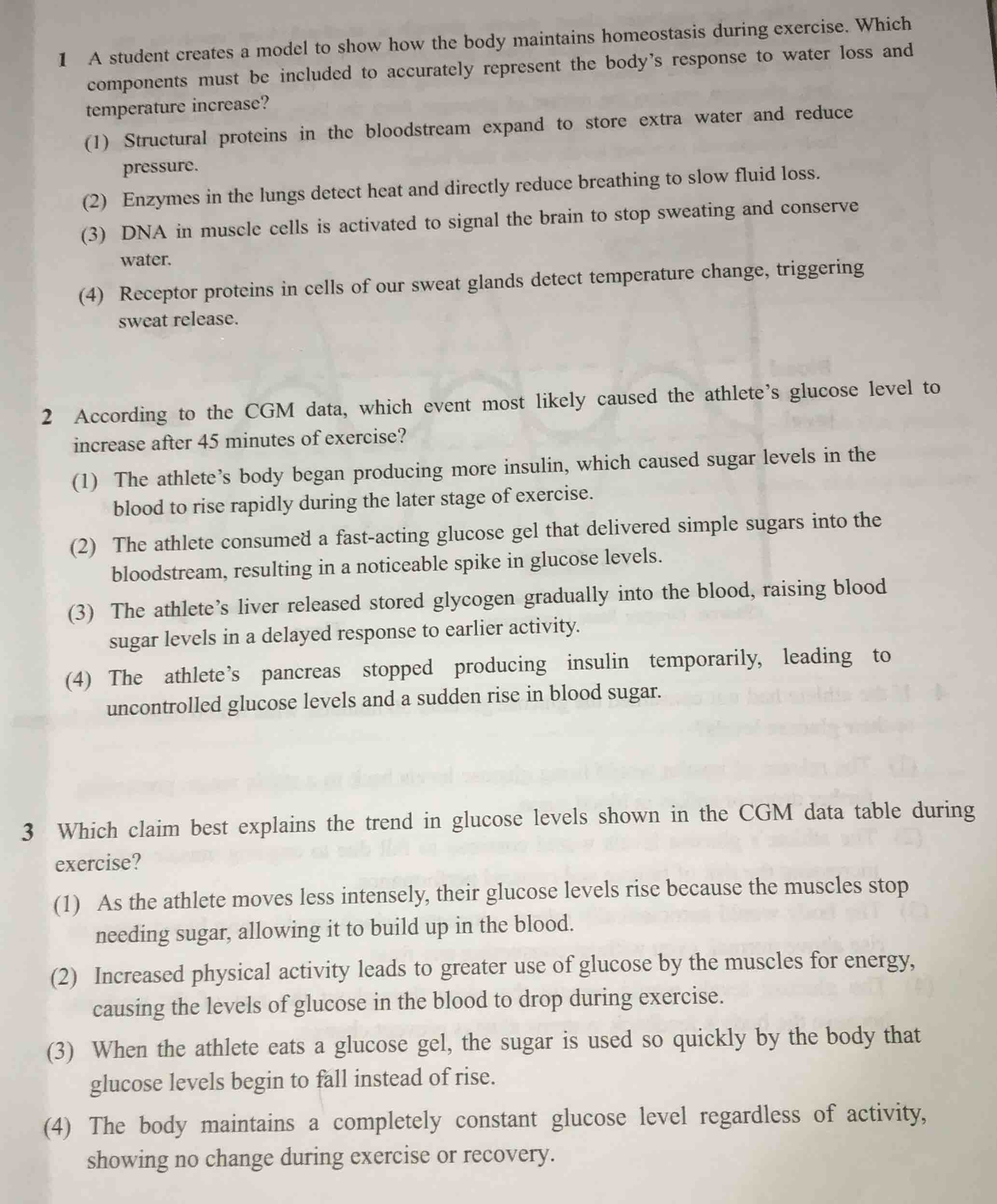
1 a student creates a model to show how the body maintains homeostasis during exercise. which components must be included to accurately represent the body’s response to water loss and temperature increase? (1) structural proteins in the bloodstream expand to store extra water and reduce pressure. (2) enzymes in the lungs detect heat and directly reduce breathing to slow fluid loss. (3) dna in muscle cells is activated to signal the brain to stop sweating and conserve water. (4) receptor proteins in cells of our sweat glands detect temperature change, triggering sweat release. 2 according to the cgm data, which event most likely caused the athlete’s glucose level to increase after 45 minutes of exercise? (1) the athlete’s body began producing more insulin, which caused sugar levels in the blood to rise rapidly during the later stage of exercise. (2) the athlete consumed a fast - acting glucose gel that delivered simple sugars into the bloodstream, resulting in a noticeable spike in glucose levels. (3) the athlete’s liver released stored glycogen gradually into the blood, raising blood sugar levels in a delayed response to earlier activity. (4) the athlete’s pancreas stopped producing insulin temporarily, leading to uncontrolled glucose levels and a sudden rise in blood sugar. 3 which claim best explains the trend in glucose levels shown in the cgm data table during exercise? (1) as the athlete moves less intensely, their glucose levels rise because the muscles stop needing sugar, allowing it to build up in the blood. (2) increased physical activity leads to greater use of glucose by the muscles for energy, causing the levels of glucose in the blood to drop during exercise. (3) when the athlete eats a glucose gel, the sugar is used so quickly by the body that glucose levels begin to fall instead of rise. (4) the body maintains a completely constant glucose level regardless of activity, showing no change during exercise or recovery.
- For water loss and temperature regulation during exercise: Receptor proteins in sweat glands sense rising body temperature, triggering sweating to release heat and water, which is a core homeostatic mechanism. The other options are incorrect: structural proteins do not expand to store water, lung enzymes do not regulate breathing for fluid loss, and muscle DNA does not signal the brain to stop sweating.
- For post-45-minute glucose spike: Insulin lowers blood glucose, so option 1 is wrong. Glycogen release provides steady glucose, not a sudden spike, eliminating option 3. Temporary insulin cessation would cause uncontrolled, sustained rise, not a targeted spike after 45 minutes, eliminating option 4. A fast-acting glucose gel directly delivers simple sugars, causing an immediate spike.
- For exercise glucose trend: Muscles require glucose for energy during exercise, so increased activity increases glucose uptake, lowering blood glucose. Option 1 is wrong because reduced intensity would not make muscles stop needing glucose. Option 3 contradicts the effect of glucose gel, and option 4 is incorrect as glucose levels change during exercise.

Snap & solve any problem in the app
Get step-by-step solutions on Sovi AI
Photo-based solutions with guided steps
Explore more problems and detailed explanations
- (4) Receptor proteins in cells of our sweat glands detect temperature change, triggering sweat release.
- (2) The athlete consumed a fast-acting glucose gel that delivered simple sugars into the bloodstream, resulting in a noticeable spike in glucose levels.
- (2) Increased physical activity leads to greater use of glucose by the muscles for energy, causing the levels of glucose in the blood to drop during exercise.