QUESTION IMAGE
Question
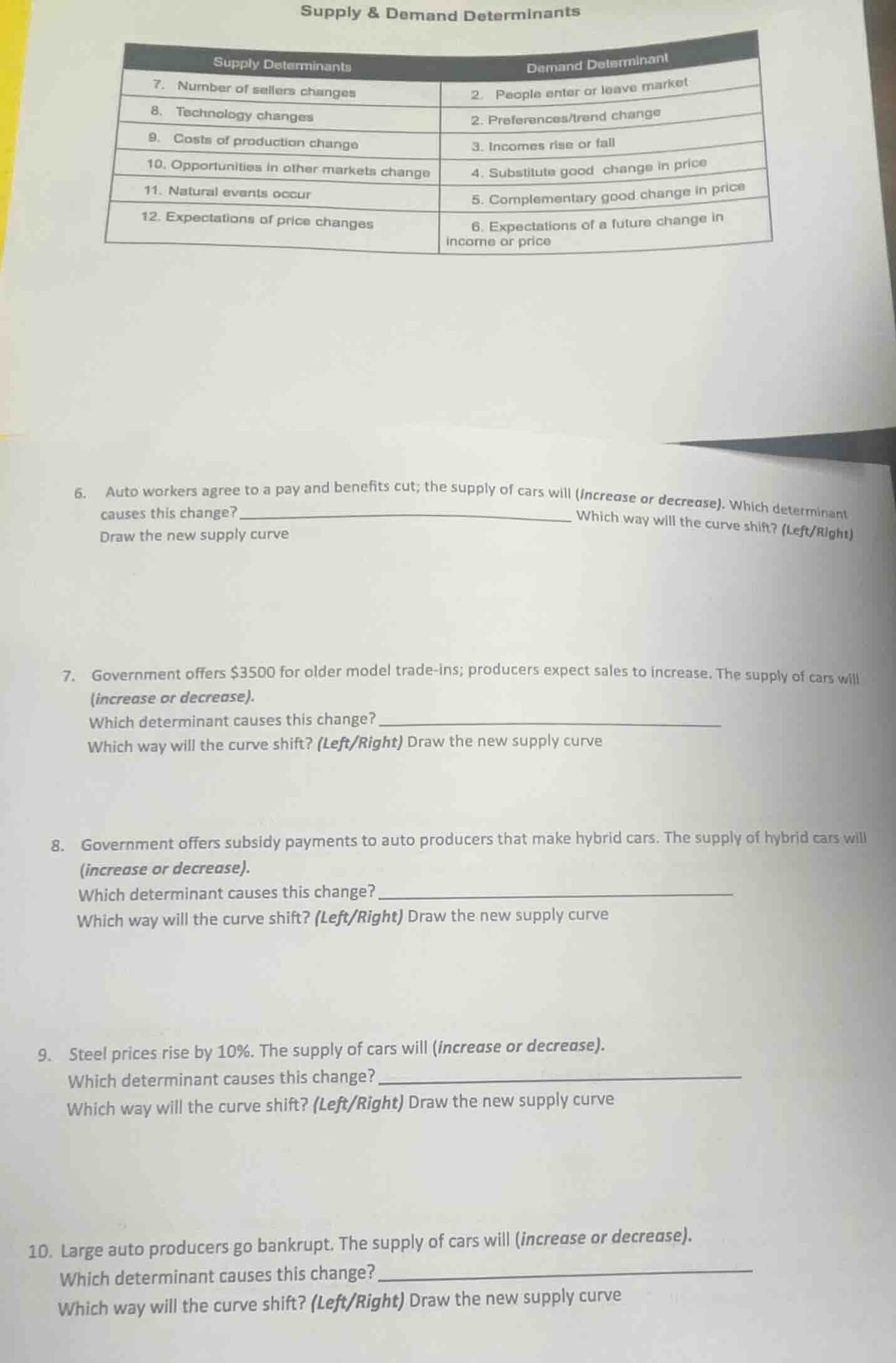
supply & demand determinants
supply determinants
demand determinant
- number of sellers changes
- people enter or leave market
- technology changes
- preferences/trend change
- costs of production change
- incomes rise or fall
- opportunities in other markets change
- substitute good change in price
- natural events occur
- complementary good changes in price
- expectations of price changes
- expectations of a future change in income or price
- auto workers agree to a pay and benefits cut; the supply of cars will (increase or decrease). which determinant causes this change? ____________ which way will the curve shift? (left/right) draw the new supply curve
- government offers $3500 for older model trade - ins; producers expect sales to increase. the supply of cars will (increase or decrease).
which determinant causes this change? ____________
which way will the curve shift? (left/right) draw the new supply curve
- government offers subsidy payments to auto producers that make hybrid cars. the supply of hybrid cars will (increase or decrease).
which determinant causes this change? ____________
which way will the curve shift? (left/right) draw the new supply curve
- steel prices rise by 10%. the supply of cars will (increase or decrease).
which determinant causes this change? ____________
which way will the curve shift? (left/right) draw the new supply curve
- large auto producers go bankrupt. the supply of cars will (increase or decrease).
which determinant causes this change? ____________
which way will the curve shift? (left/right) draw the new supply curve
Question 6
Step 1: Analyze Cost Impact
A pay and benefits cut for auto workers reduces production costs (labor cost is part of production costs).
Step 2: Determine Supply Change
Lower production costs mean producers can supply more at each price, so supply increases.
Step 3: Identify Determinant
From the table, "Costs of production change" (item 9 in Supply Determinants) is the cause.
Step 4: Determine Curve Shift
An increase in supply shifts the curve to the right (more quantity supplied at each price).
Step 1: Analyze Expectations Impact
Producers expect sales to increase due to the trade - in offer, so they will adjust their current supply based on expectations of future sales.
Step 2: Determine Supply Change
If producers expect higher future sales, they may increase current supply (or be more willing to supply now). So supply increases.
Step 3: Identify Determinant
From the table, "Expectations of price changes" (item 12 in Supply Determinants) - here it's expectations of sales (related to price - quantity relationship) that drives the change.
Step 4: Determine Curve Shift
An increase in supply shifts the curve to the right.
Step 1: Analyze Subsidy Impact
A subsidy to auto producers for making hybrid cars reduces their production costs (the government is offsetting some costs).
Step 2: Determine Supply Change
Lower production costs (due to subsidy) lead to an increase in supply (producers can supply more hybrid cars at each price).
Step 3: Identify Determinant
This falls under "Costs of production change" (item 9 in Supply Determinants) as the subsidy affects production costs.
Step 4: Determine Curve Shift
An increase in supply shifts the curve to the right.

Snap & solve any problem in the app
Get step-by-step solutions on Sovi AI
Photo-based solutions with guided steps
Explore more problems and detailed explanations
- Supply change: Increase
- Determinant: Costs of production change
- Curve shift: Right