QUESTION IMAGE
Question
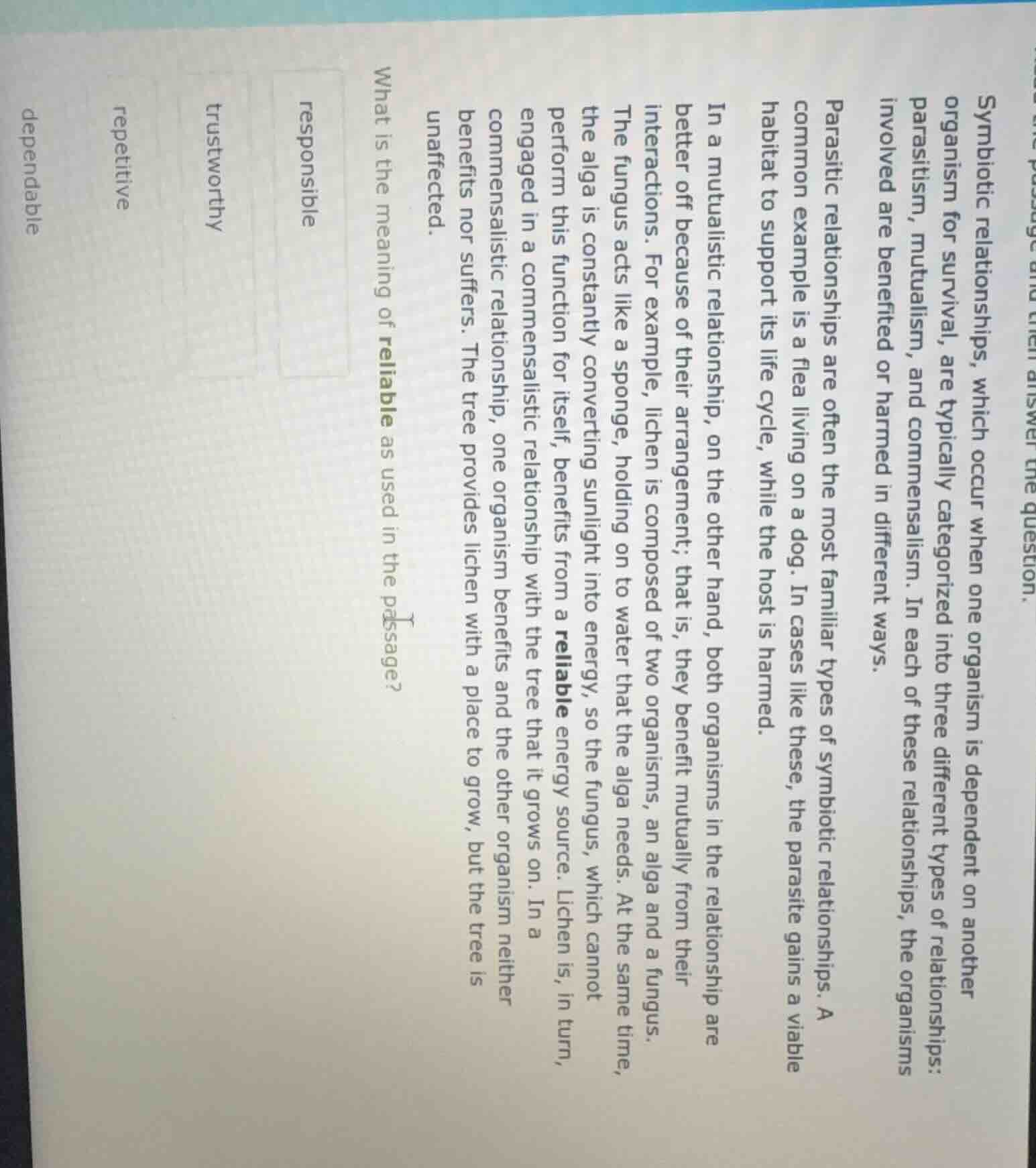
symbiotic relationships, which occur when one organism is dependent on another organism for survival, are typically categorized into three different types of relationships: parasitism, mutualism, and commensalism. in each of these relationships, the organisms involved are benefited or harmed in different ways.
parasitic relationships are often the most familiar types of symbiotic relationships. a common example is a flea living on a dog. in cases like these, the parasite gains a viable habitat to support its life cycle, while the host is harmed.
in a mutualistic relationship, on the other hand, both organisms in the relationship are better off because of their arrangement; that is, they benefit mutually from their interactions. for example, lichen is composed of two organisms, an alga and a fungus. the fungus acts like a sponge, holding on to water that the alga needs. at the same time, the alga is constantly converting sunlight into energy, so the fungus, which cannot perform this function for itself, benefits from a reliable energy source. lichen is, in turn, engaged in a commensalistic relationship with the tree that it grows on. in a commensalistic relationship, one organism benefits and the other organism neither benefits nor suffers. the tree provides lichen with a place to grow, but the tree is unaffected.
what is the meaning of reliable as used in the passage?
responsible
trustworthy
repetitive
dependable
In the passage, the alga constantly converts sunlight into energy, which the fungus relies on as a consistent, steady source of energy. "Dependable" means able to be relied on, which matches this context of a consistent energy source the fungus can count on. "Responsible" refers to being accountable, "trustworthy" relates to being honest, and "repetitive" means doing the same thing over and over without the connotation of reliability, so these do not fit.

Snap & solve any problem in the app
Get step-by-step solutions on Sovi AI
Photo-based solutions with guided steps
Explore more problems and detailed explanations
dependable