QUESTION IMAGE
Question
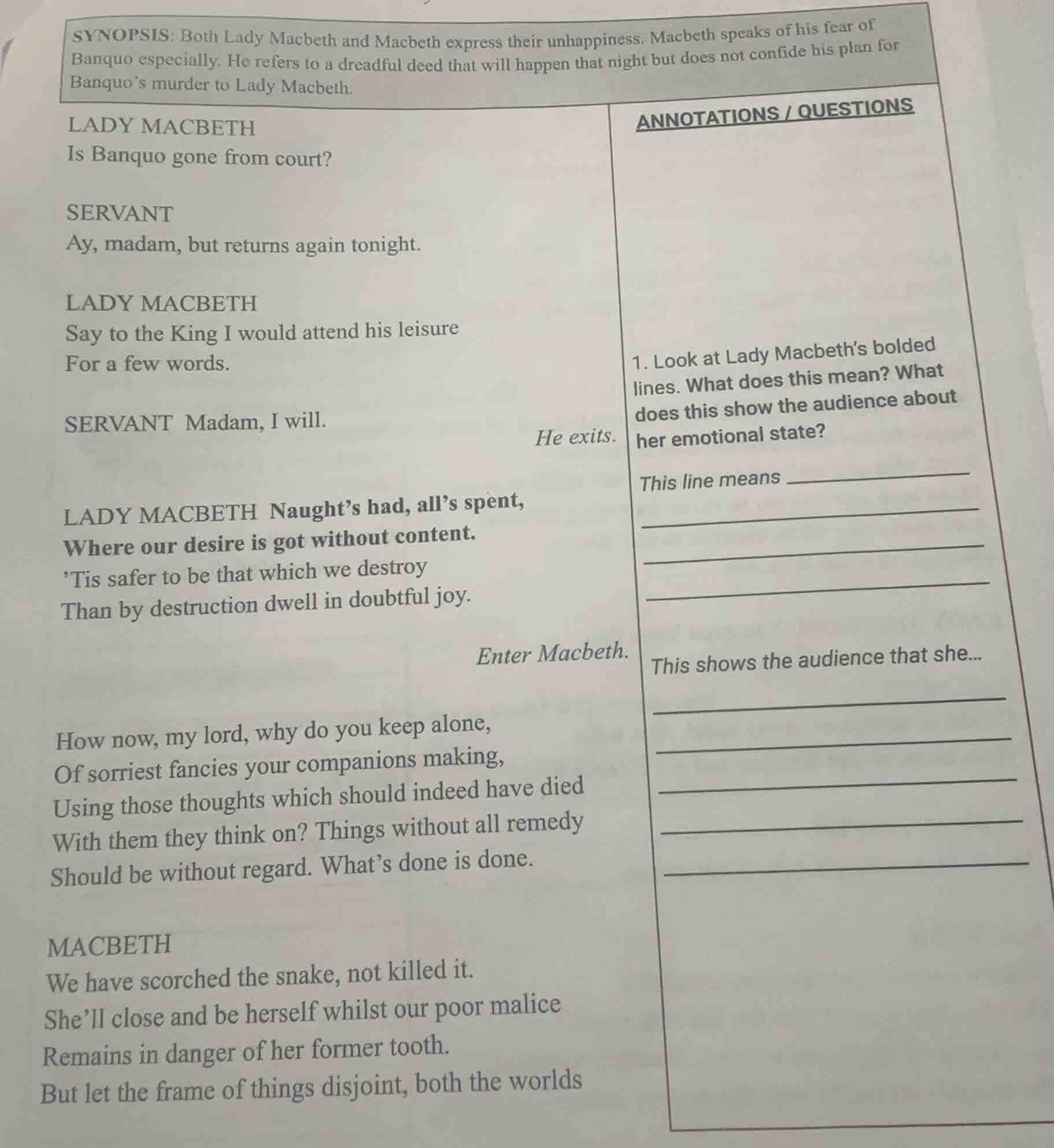
synopsis: both lady macbeth and macbeth express their unhappiness. macbeth speaks of his fear of banquo especially. he refers to a dreadful deed that will happen that night but does not confide his plan for banquo’s murder to lady macbeth.
lady macbeth
is banquo gone from court?
servant
ay, madam, but returns again tonight.
lady macbeth
say to the king i would attend his leisure
for a few words.
servant madam, i will. he exits.
lady macbeth naught’s had, all’s spent,
where our desire is got without content.
’tis safer to be that which we destroy
than by destruction dwell in doubtful joy.
enter macbeth.
how now, my lord, why do you keep alone,
of sorriest fancies your companions making,
using those thoughts which should indeed have died
with them they think on? things without all remedy
should be without regard. what’s done is done.
macbeth
we have scorched the snake, not killed it.
she’ll close and be herself whilst our poor malice
remains in danger of her former tooth.
but let the frame of things disjoint, both the worlds
annotations / questions
- look at lady macbeth’s bolded lines. what does this mean? what does this show the audience about her emotional state?
this line means
this shows the audience that she...
For the line "Naught’s had, all’s spent, Where our desire is got without content":
- Meaning: We have gained nothing (naught’s had) and everything is used up (all’s spent) because when we achieved our desire (becoming king/queen), it didn't satisfy us (without content). We got what we wanted but it didn't bring the fulfillment we expected.
- Emotional State: This shows Lady Macbeth is unhappy and dissatisfied. Despite achieving power (through murder), she feels empty. She's reflecting on the emptiness of their ambition - the goal they killed for didn't bring the joy or satisfaction they thought it would, indicating regret or disillusionment.
For the line "’Tis safer to be that which we destroy Than by destruction dwell in doubtful joy":
- Meaning: It would be better to be the one we destroyed (like King Duncan) than to live in the uncertain happiness (doubtful joy) that comes from having destroyed others. The "doubtful joy" implies their happiness is fraught with fear, guilt, or uncertainty.
- Emotional State: It reveals her inner turmoil. She's anxious and conflicted. The "doubtful joy" suggests she's not at peace with their actions. She may feel that the cost of their ambition (murder, guilt) makes their current position (with power) unsafe or unfulfilling, showing regret and anxiety about their situation.
For the line "What’s done is done":
- Meaning: The actions (like the murder of Duncan) have been committed and can't be undone. She's trying to accept or convince herself (and Macbeth) that they should move on from the past actions.
- Emotional State: This shows a mix of resignation and an attempt to be pragmatic, but also possibly a way to hide her inner guilt or unease. She's trying to downplay the significance of their deeds, but her earlier lines about emptiness suggest this is a surface-level attempt to cope, while internally she's still troubled.

Snap & solve any problem in the app
Get step-by-step solutions on Sovi AI
Photo-based solutions with guided steps
Explore more problems and detailed explanations
Meaning of "Naught’s had, all’s spent, Where our desire is got without content":
We've gained nothing and exhausted everything, for our desire (power) was achieved but brought no satisfaction.
Emotional State from this line:
Is unhappy and disillusioned; their ambition (murder for power) failed to fulfill them, showing regret/emptiness.
Meaning of "’Tis safer to be that which we destroy Than by destruction dwell in doubtful joy":
It’s better to be the one we killed (e.g., Duncan) than to live in the uncertain, guilt - ridden “happiness” from our violent deeds.
Emotional State from this line:
Is anxious and conflicted; she’s tormented by guilt/fear, finding their “joy” (from power) unstable and “doubtful”.
Meaning of "What’s done is done":
Our actions (e.g., murder) are irreversible; we must accept them and move on.
Emotional State from this line:
Shows resignation (trying to accept the past) but also hints at hidden guilt/unease (she downplays deeds to cope, contrasting with her earlier disillusionment).